
After Plunging 3%, Oil Prices Rise to US$78.11
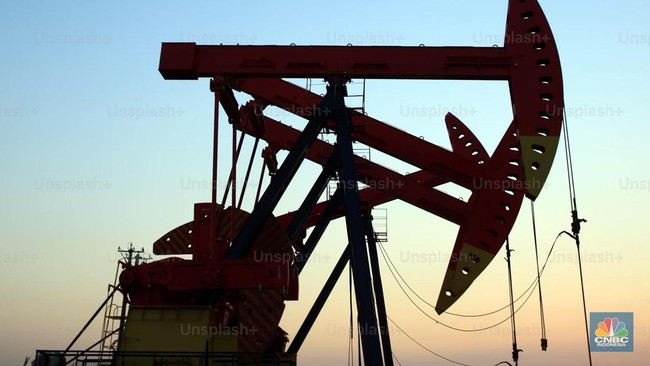
Jakarta, CNBC Indonesia - Global oil prices edged higher in early trading on Tuesday (23/6/2026) after coming under heavy pressure in the previous session. Based on Refinitiv data as of 10.15 WIB, the Brent contract stood at US$78.11 per barrel, up 0.27% from Monday’s close of US$77.90 per barrel. Meanwhile, West Texas Intermediate (WTI) strengthened 0.45% to US$74.16 per barrel.
The increase occurred as the market adjusted positions after plunging more than 3% during Monday’s trading. The earlier weakness was triggered by easing concerns over supply disruptions from the Middle East following diplomatic developments between the United States and Iran.
Washington reportedly granted a 60-day sanctions waiver after initial peace talks took place, while tensions in Lebanon also eased under a broader agreement. Nevertheless, market participants remain cautious because the implementation of the deal has not yet been fully tested. US President Donald Trump said Iran would agree to weapons inspections to ensure compliance with nuclear commitments. Trump also stressed he would take action if Iran fails to meet the agreement reached.
The market’s main focus is now on the Strait of Hormuz, the shipping lane that serves as the lifeblood of global energy trade. Last week, threats to close the strait had triggered a spike in risk premiums in the oil market. However, vessel tracking data shows activity beginning to recover. Two tankers carrying nearly 2 million barrels of oil were recorded transiting the Strait of Hormuz on Monday, signalling that shipping flows are slowly returning to normal after weakening the day before.
KCM Trade analyst Tim Waterer assessed that the market still harbours doubts about the sustainability of the Washington-Tehran deal. According to him, the low level of trust between the two countries makes it difficult for oil prices to return to pre-conflict levels in the short term. Investors are still waiting for concrete evidence that the agreement can hold and that vessel traffic in the Strait of Hormuz is truly recovering.
From a fundamental perspective, the US Department of Energy reported that crude oil inventories in the Strategic Petroleum Reserve (SPR) fell to 331.2 million barrels last week. That position is the lowest since June 1983. The decline in strategic stocks comes as global energy supply continues to adjust to the impact of the US-Iran conflict over recent weeks.