
After Paying Rp200 Million in Instalments, This Home Is Now Offered for Free Takeover
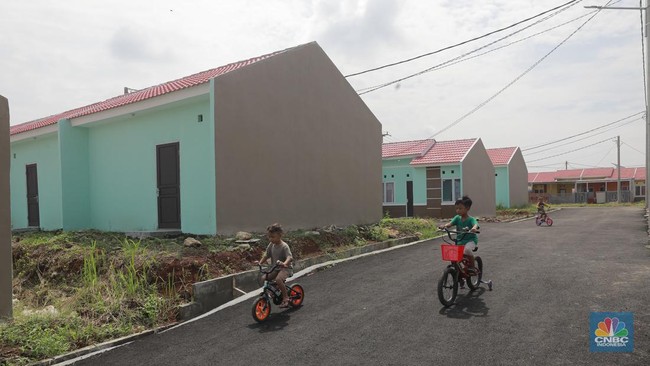
The phenomenon of homeowners offering free take over (TO) of their mortgages (KPR) has resurfaced. One such case is Banana (not her real name), a homeowner in Bekasi Regency who says she has already spent more than Rp200 million on instalments but has now chosen to transfer the property without asking for any compensation.
Banana made the decision after her financial situation changed drastically. The business she ran went bankrupt about two years ago, and her subsequent income has not yet returned to a stable level.
“I am over-crediting because two years ago my business went bankrupt and my income dropped drastically. Since then I still have savings, but my income is still very unstable,” Banana told CNBC Indonesia on Friday (28/6/26).
The decision to release the house for free is also linked to intense competition in the area where she lives. Many similar units are being offered for sale or rent, making it difficult for her property to attract a buyer even after being marketed for quite a long time.
“I am applying for a free TO because in this housing estate many similar houses are being sold or rented out. I think the competition here is very fierce, and in this difficult economy it takes a long time to sell a house,” she said.
She has already tried to sell the house through conventional means for two years. After considering her financial condition and credit risk, she concluded that a free take over was a more sensible option than continuing to use her savings to cover the instalments.
“After going through many calculations, it will be more profitable to transfer it for free than to keep eroding my savings or risking my good name (BI checking),” she said.
Another problem arises from the house price and the instalments. For prospective buyers who can access bank financing, the house has to compete with new units offered by developers. Meanwhile, the instalment amount that must be borne is seen as further limiting the number of interested buyers.
“The obstacle for people who are bankable is competing with developers selling new houses. Then the house price and instalments are quite expensive and there are not many interested buyers. The location is also not very strategic and the development has stalled or there is nothing more that can be developed,” Banana said.
Instalment pressure is also one of the reasons Banana chose to release the house. The instalment, which was previously around Rp4 million per month, has now risen to around Rp5.7 million, with the current floating interest rate at 8.97%.
“Then the instalment is also one of the reasons. Initially it was around Rp4 million, now it is Rp5.7 million, and that does not even include the floating rate according to the current interest rate. The remaining tenor is Rp577 million, the floating interest rate is 8.97%, the instalment is Rp5.7 million. No penalty, the credit is guaranteed to be current. It has been running for four years, with 16 years remaining, and it can still be adjusted,” Banana concluded.
Previously, the Chairman of the National Association of Housing Developers and Marketers (ASPRUMNAS), Syawali Pratama, said there needs to be clearer limits on increases in floating mortgage interest rates. The aim is to prevent consumers from facing excessively large instalment spikes in the middle of their credit period.
“Government policy is indeed needed, especially in the housing sector. There need to be limits — what the bottom is, what the upper is. If it falls, that may not be possible, but if it rises, a maximum of two times might be a good proposal. Or one and a half,” Syawali told CNBC Indonesia on Thursday (27/8/2026).
For developers, certainty about the financing scheme is also important for maintaining the housing ecosystem. Instalment increases that are too sharp could cause consumers to lose their ability to pay and ultimately choose to release their homes.
“This is very necessary; government intervention is very much needed. The housing sector is one of the sectors that must be maintained and protected. Its ecosystem must be preserved. If it is not maintained and not controlled, then limits are indeed needed — what the bottom is, what the upper is,” Syawali said.