
After Jakarta, Bali Eyes Issuing Municipal Bonds — What's Behind It?
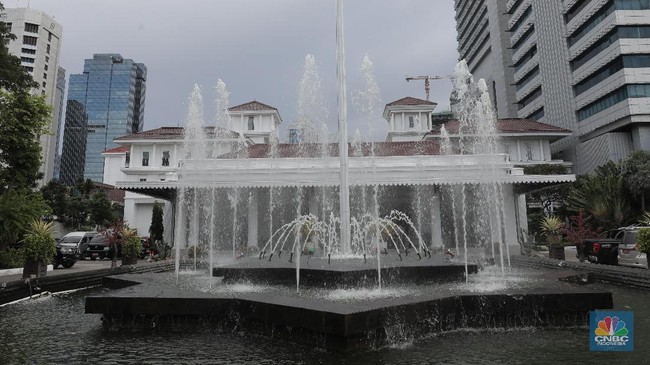
Jakarta Governor Pramono Anung received Bali Governor I Wayan Koster and Badung Regent I Wayan Adi Arnawa early last week, on Tuesday (4/8/2026), to discuss alternative development financing, such as regional bonds or municipal bonds.
During the meeting at Jakarta City Hall, Pramono said that in addition to regional bonds, the discussion also covered the utilisation of the Floor Area Ratio (KLB), the Principle Approval Letter for Land/Location Acquisition (SP3L), and various other financing instruments.
“In any case, in the current economic conditions, the challenge of increasing regional budgets can no longer be addressed through conventional means. There must be breakthroughs or out-of-the-box approaches,” Pramono said, as quoted from a written statement on Monday (10/8/2026).
Pramono revealed that specifically regarding the regional bonds to be issued by the Jakarta Provincial Government in 2027, the success of the process would be shared with the Bali Provincial Government according to needs and applicable regulations.
“In the preparation process for issuing regional bonds, the Jakarta Provincial Government can share its experience with the Bali Provincial Government, from drafting the policy framework, coordinating with relevant ministries and institutions, to fulfilling regulatory requirements,” he said.
On a separate occasion, the Head of the Economic Policy Research Centre at the Faculty of Economics and Business, Brawijaya University (PPKE FEB UB), Prof. Candra Fajri Ananda, assessed that the central government must open up space for Jakarta and Bali’s plans to issue regional bonds.
According to him, the central government need not be overly concerned about the risks of such instruments as long as all requirements and governance principles are met.
“The central government, both the Ministry of Finance and the Ministry of Home Affairs, need not be too afraid to give the Jakarta Provincial Government room to issue regional bonds as long as all requirements, transparency, governance, and project feasibility are truly fulfilled,” he said.
He emphasised that regional bonds are not a new instrument. The government has been building the regulatory framework since 2006 and has continued to refine it, most recently through Minister of Finance Regulation (PMK) Number 87 of 2024.
“This means the government is actually very cautious in regulating the issuance of these regional bonds,” he said.
This caution is reflected, among other things, in the application of the debt service coverage ratio (DSCR) to measure a region’s ability to meet its debt obligations.
“If I am not mistaken, the minimum DSCR is 2.5. So, if the ratio is above that threshold, the region is deemed capable of paying its obligations,” Candra asserted.
Candra said risk control is important because several countries have experienced problems due to regional debt issuance that was not matched by repayment capacity.
Argentina, for example, once gave regions the freedom to issue debt securities until a number of regions eventually defaulted.
“At that time, almost all regions in Argentina competed to issue debt securities. But when the ability to pay was inadequate, defaults eventually occurred,” he said.
Therefore, regional bonds must be directed towards financing productive projects with economic benefits. Such projects should ideally have a cost recovery mechanism so that a clear source of repayment is available.
“For example, to finance the construction of toll roads, markets, hospitals, LRT development, or other projects that can generate revenue,” he said.
Candra assessed that the bond issuance mechanism involving the central government, the Financial Services Authority (OJK), and rating agencies has become a risk control instrument to ensure issuance is carried out selectively.
For Jakarta, he assessed the risk as relatively low because it is supported by strong fiscal capacity. The planned issuance of around Rp3.5 trillion is also relatively small compared to Jakarta’s regional budget of around Rp81 trillion, while the remaining budget surplus (SILPA) is recorded at around Rp5 trillion.
“If payment problems occur, in theory there is still fiscal room that can be used. Moreover, the figure of Rp3.5 trillion is relatively small compared to Jakarta’s regional budget of around Rp81 trillion. Jakarta’s fiscal capacity is very high and need not be doubted,” Candra said.
According to him, these conditions give Jakarta the opportunity to become an example of prudent regional bond implementation while also serving as a reference for other regions.
“If Jakarta succeeds in issuing and managing them well, this could become a role model for other regions. This means we have a real example that regional bonds can be carried out prudently,” he said.