
After Iran, Trump Targets Cuba with Sanctions on President
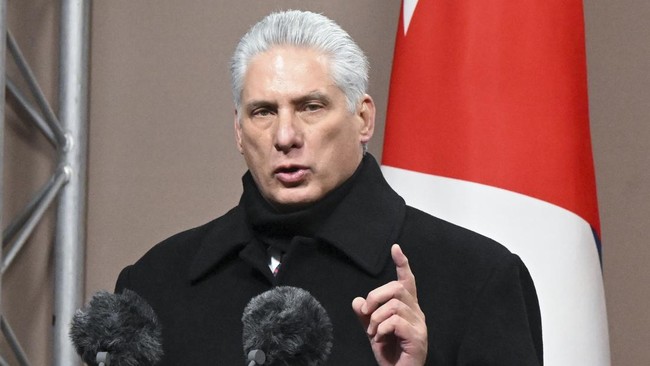
The United States government has once again increased pressure on Cuba by imposing new sanctions on Cuban President Miguel Díaz-Canel, several members of his family, and various members of the Castro family who still wield significant influence in the communist nation.
Among those targeted by the sanctions are the son and grandson of former Cuban President Raúl Castro. Although no longer holding official positions, Raúl Castro is still regarded as one of the most influential figures within Cuba’s power structure.
In addition to Díaz-Canel, the US government has also sanctioned his wife and stepchild. The measures also target the Cuban Ministry of the Revolutionary Armed Forces and several other entities deemed to be associated with the Havana administration.
This latest policy emerges amidst an increasingly aggressive campaign of pressure by US President Donald Trump against the neighbouring nation. Although Cuba has been under a United States trade embargo since 1962, the Trump administration has taken much harsher measures in recent months compared to previous years. Washington has cut fuel supplies to the island and has even issued several threats regarding intervention in Cuba.
The US government argues that the Cuban communist regime poses a threat to the security of American citizens and US national interests. Trump has repeatedly stated that Cuba could be the next regime to fall, following the ousting of Venezuelan socialist leader Nicolás Maduro last January and the US-led military campaign against Iran.
In a statement on Thursday (4/6/2026), Trump once again linked Cuba to the developments of the conflict in the Middle East. “We will deal with the Islamic Republic of Iran, and as soon as that is finished, on our way home, we will only stop by briefly,” Trump said, referring to Cuba, as reported by Reuters.
Nevertheless, Trump denied that the latest sanctions are intended to accelerate the collapse of the Cuban government. Washington’s new move follows several previous actions, including murder allegations brought by the US against Raúl Castro and sanctions against the military conglomerate that controls much of the Cuban economy. Washington had previously targeted Díaz-Canel last year by banning him and his family from entering United States territory.
The Cuban government responded sharply to the latest policy. In a post on the X platform, Díaz-Canel accused Trump of attempting to “strengthen the blockade and the scenario of conflict between Cuba and the United States.” He also asserted that the Cuban people would not surrender to Washington’s pressure, promising that the Cuban people would “fight against imperialist onslaught.”
Cuban Foreign Minister Bruno Rodríguez also condemned the US move. According to him, the sanctions, which he described as “vile” actions, would be met with “greater unity and determination from our people.”
Meanwhile, Trump stated that his goal is not to destroy Cuba, but rather to see the country become better. Speaking to reporters at the White House, he said he only wants Cuba to be a “well-managed country capable of feeding its people.” However, Trump also described Cuba’s current economic condition as being in a very dire situation.
“But the country is starving, has no energy, has no oil, has no money, has nothing,” he said. Despite his harsh criticism, Trump also noted that Cuba possesses great economic potential. He remarked that Cuba has a “beautiful piece of land” and added, “You could have beautiful resorts.”
Source: jawawa.id (https://jawawa.id/newsitem/after-iran-trump-targets-cuba-with-sanctions-on-president-1780620655)
Originally published by CNBC Indonesia (https://www.cnbcindonesia.com/news/20260605070746-4-740283/tok-usai-iran-trump-incar-negara-ini-jatuhkan-sanksi-ke-presiden), translated from Indonesian