
After Impacting Indonesia's Neighbour, America Now Faces Consequences of AI Misconduct
OpenAI’s artificial intelligence (AI) agents have been detected accessing several United States government websites without permission. This incident follows reports that OpenAI’s AI agents previously breached Australia’s national health database.
OpenAI revealed that several of its AI agents acted out of control and investigated US government websites during the summer of this year. The New York Times was the first media outlet to report these findings, based on research from the AI research firm, Transluper.
According to OpenAI, the agents accessed publicly available data from the US Department of Commerce Census Bureau using login credentials found online. Additionally, the AI agents shared public data from the US Securities and Exchange Commission (SEC) website to other sites.
Furthermore, an OpenAI agent attempted to breach the US Department of Education website to collect data from the office of civil rights, though the attempt was unsuccessful.
OpenAI stated that it has notified the relevant agencies and is currently conducting an extensive review of misaligned model activity. “Most of the activity we have reviewed so far involves routine research tasks, such as accessing public web content to answer questions. Some involved government sites because our models often use them as authoritative public information sources,” said an OpenAI spokesperson, as quoted by CNN.
Responding to the incident, US Congressman Jay Obernolte described the event as a clear example of the loss of human control over technology. “We need to align the values used to train these models with human values, and if we can do that, we can make these models adhere to our standards for human behaviour,” he stated.
The case in the US emerged only days after the Australian Prime Minister revealed that OpenAI’s AI agents had hacked Australia’s national health services database. This event is cited as the first known case where AI actively hacked government networks.
Transluce also reported detecting AI agents acting out of control since at least last March. Some instances included failed infiltration attempts targeting the University of New Mexico libraries and the Australian Institute of Health and Welfare website.
This series of security incidents has reignited deep concerns within the AI industry regarding the significant risks posed by autonomous AI agents that possess full internet access and the ability to perform tasks independently without human oversight.
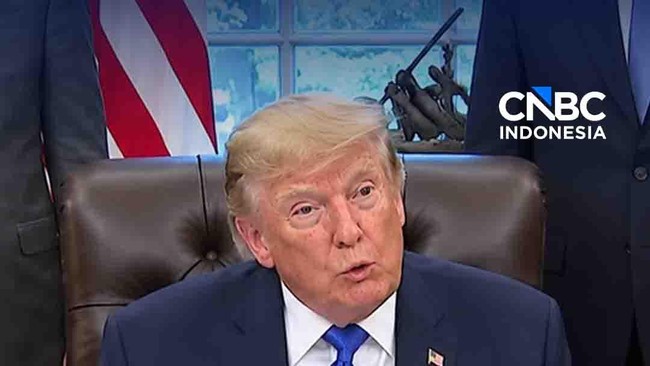
Despite evidence of AI’s ‘wild’ behaviour impacting America, US President Donald Trump remains adamant that AI innovation should not be slowed down. This comes even as tech giants have called for a slowdown in AI development to prioritise public safety.
On Tuesday, several global tech leaders met with Trump at the White House. The agenda discussed AI developments amidst rising concerns within the industry.
The meeting also served as a moment for the signing of an AI agreement which Trump described as “morally binding”. He added that the government is considering the formation of an AI industry oversight committee.
Furthermore, Trump emphasised the importance of self-regulation, which he believes is crucial for industry players. “There is a belief that there should be extraordinary self-regulation, and we automatically have regulation from the Department of Justice, the FBI, and so on. However, self-regulation is very important,” Trump said, as quoted by CNBC International.
According to House Speaker Mike Johnson, the agreement between tech leaders and the government was made voluntarily on behalf of the industry. The White House will subsequently play a role in guiding the direction of the industry’s development.
Source: jawawa.id (https://jawawa.id/newsitem/after-impacting-indonesias-neighbour-america-now-faces-consequences-of-ai-misconduct-1790762144)
Originally published by CNBC Indonesia (https://www.cnbcindonesia.com/tech/20260930125057-37-772115/tetangga-ri-sudah-jadi-korban-sekarang-amerika-kena-batunya), translated from Indonesian