
After Digital Literacy, How Do We Measure Whether We Are Tolerant?
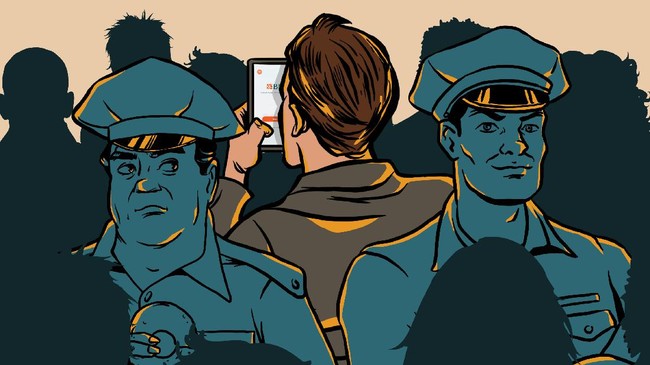
After nearly everyone has become connected and increasingly adept at using technology, have we also become more tolerant? The question is easy to ask but difficult to answer. Without clear measures, our answers are based only on impressions: some people feel comment sections have become harsher, while others believe digital spaces bring people with different views together.
Policy cannot be built on impressions. The problem is not that we lack indices. We have quite a few, but none was designed to answer that question. Let us look at them one by one.
The Agency for Pancasila Ideology Education (BPIP) has the Pancasila Actualisation Index, a composite indicator on a scale of 0 to 100 measuring the extent to which Pancasila values are practised in social, national and state life. Results are broken down by each precept, making it useful as a broad framework. However, it was not designed specifically to capture people’s behaviour in digital spaces.
The Ministry of Religious Affairs has the Religious Harmony Index (IKUB). In 2025, its score was 77.89, the highest since measurements began in 2015. The tolerance dimension scored 88.82 and equality 79.35, while togetherness scored only 65.49. The 23.33-point gap between tolerance and togetherness offers an important lesson: accepting differences does not necessarily lead to practical cooperation across groups.
Even so, the IKUB is deliberately limited to harmony between religious communities. It does not show how we treat people with different political choices, from different regions or age groups, or with different abilities.
The Ministry of Communication and Digital Affairs has the Indonesian Digital Society Index (IMDI). In 2025, its national score was 44.53, with digital skills (literacy) at 49.28 and empowerment as its lowest-scoring pillar. The IMDI measures capacity, not attitudes and behaviour towards others. Someone can be highly skilled and still enjoy humiliating other people.
The only measure that touches on online behaviour is Microsoft’s Digital Civility Index. In its 2020 edition, Indonesia scored 76 and ranked 29th out of 32 countries; a lower score indicates lower online risk.
The figure was widely debated, and understandably so: it measures exposure to hoaxes, hate speech and discrimination, rather than tolerance, and comes from a survey that is now dated. We cannot rely on an overseas organisation that no longer regularly produces the measure to give us a picture of ourselves.
The gap is clear. There is no measure that systematically and repeatedly asks whether people behave tolerantly towards different kinds of people in their everyday conduct online. This is where BPIP, as the coordinator of Pancasila ideology education, could play a role: not by creating an index to compete with existing ones, but by bringing them together and filling in what is missing.
I propose a Digital Tolerance Index. Its structure would borrow from the established logic of the IKUB, using several dimensions scored from 0 to 100, but mapped to Pancasila values and expanded to cover all kinds of difference. Religion would be one category, not the only one. Political views, ethnicity and region, age, gender, disability and economic status would all be taken into account.
Five dimensions could be considered. First, respect, drawing on the second precept of Pancasila: can people distinguish criticism of an idea from personal attacks, and how often are they perpetrators or victims of bullying and identity-based insults?
Second, unity across identities, drawing on the third precept: are people willing to interact and work with different groups, and how often do they share content that demeans others? Third, deliberation, drawing on the fourth precept: are people willing to pause when a discussion becomes heated and change their minds because of an argument, rather than pressure from the number of likes?
Fourth, responsibility for information and actions: do people check sources before sharing, and report or defend victims when they witness bullying? Fifth, the ecosystem: how quickly do platforms act on people’s reports, and how quickly do public institutions correct inaccurate information? This last dimension matters because responsibility cannot be placed on individuals alone.
Three principles would help ensure the index does not remain a figure on paper. First, do not ask only about attitudes. Attitude surveys tend to produce idealised answers, because almost everyone claims to be tolerant. Behaviour and hypothetical scenarios should therefore receive considerable weight, and the gap between attitudes and behaviour should be reported openly, as with the gap between tolerance and togetherness in the IKUB.
Second, do not report a single overall figure. Scores for each dimension, broken down by age, region and user groups, would be more useful to policymakers than one index that could easily become a slogan or a performance target susceptible to manipulation.
Third, involve independent parties. Measurement conducted jointly with Statistics Indonesia (BPS), universities and polling organisations would be more credible. The questions could also be added to existing national surveys to keep costs under control.
The most interesting benefit lies in the question that opened this article. If the Digital Tolerance Index were calculated by region, it could be compared with digital skills scores in the IMDI.
The results would show, with data, whether regions with greater digital capability are indeed more tolerant, or whether skills and tolerance operate independently. Both possibilities matter for policy: the first would strengthen the case for digital literacy programmes, while the second would warn that literacy alone is not enough.
Of course, this is only a proposed framework. The weighting of dimensions, questions and category thresholds would need to be tested through pilot studies and with the involvement of measurement experts. The ecosystem dimension would also require platforms to share data. But these difficulties are no reason not to begin. We are used to measuring how many people are connected to the internet; it is time we also dared to measure how well we live together online.
Ultimately, what matters is not how often the word “tolerance” is spoken, but whether differences in comment sections increasingly lead to conversation rather than hostility. If that indicator moves in the right direction, only then can we say that digital literacy is truly making us more humane.
Source: jawawa.id (https://jawawa.id/newsitem/after-digital-literacy-how-do-we-measure-whether-we-are-tolerant-1793875865)
Originally published by CNBC Indonesia (https://www.cnbcindonesia.com/opini/20261105171638-14-782720/setelah-melek-digital-bagaimana-mengukur-kita-toleran), translated from Indonesian