
After Collapsing and Triggering a Tsunami, Mount Anak Krakatau is Now Growing Again
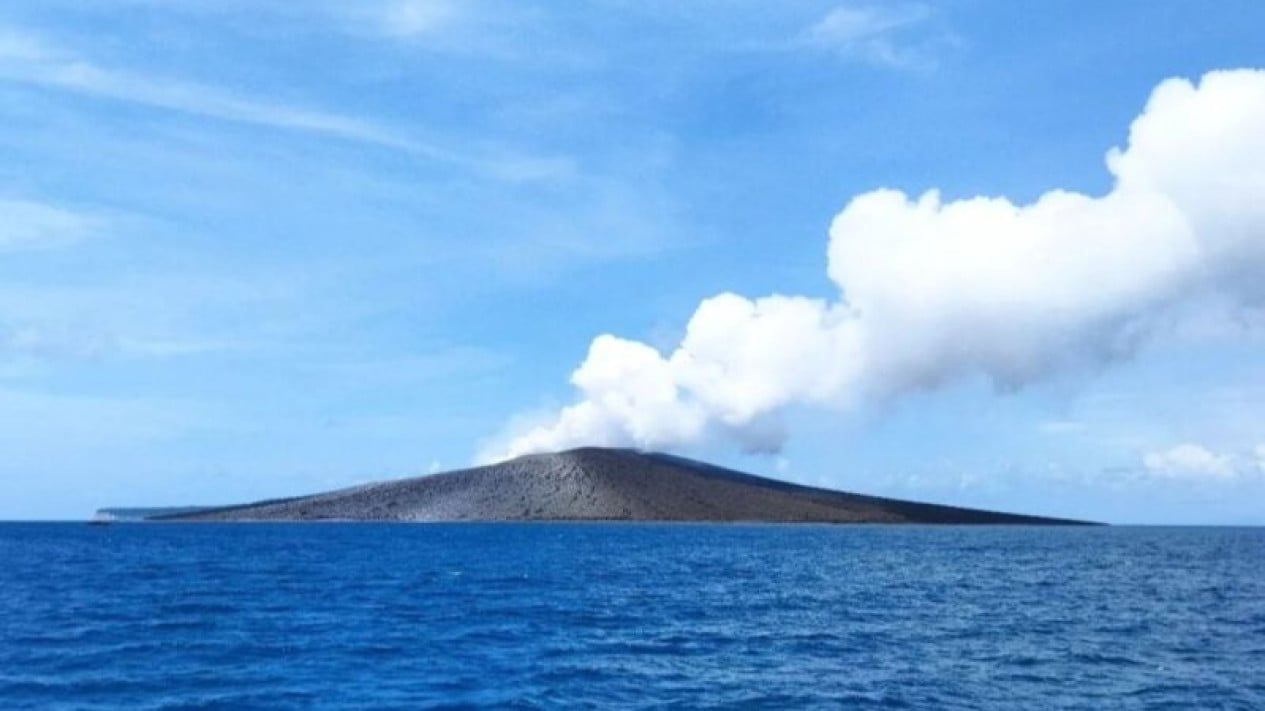
Mount Anak Krakatau has not stopped changing following its major collapse in 2018. The volcano, a portion of which slumped into the sea, is now slowly reforming its structure through a series of eruptive activities.
Dini Nurfiani, a researcher at the Geological Disaster Research Centre of the National Research and Innovation Agency (BRIN), revealed that this process is part of the natural cycle of Anak Krakatau as a volcano that is constantly undergoing change.
Research involving BRIN, the Centre for Volcanology and Geological Disaster Mitigation (PVMBG), the University of Birmingham, ITB, Penn State University, the British Geological Survey, and the University of Oxford is ongoing to understand these changes.
According to Dini, the history of Anak Krakatau demonstrates a pattern of growth, eruption, collapse, and reconstruction. This pattern has become evident once again following the mountain’s collapse in 2018.
“The eruption history of Anak Krakatau shows that this volcano develops through cycles of growth, eruption, collapse, and rebuilding. After the collapse in 20lar, the morphology and eruption style changed drastically, followed by a regrowth phase through eruptions and the formation of new lava,” Dini stated in Jakarta on Wednesday, 23 September 2026.
The Collapse of Mount Anak Krakatau into the Sea
The 2018 collapse was one of the most significant changes in the modern history of Anak Krakatau. The southwestern sector of the volcano collapsed into the sea, with an estimated material volume of approximately 0.116 cubic kilometres.
As a result, a large portion of Anak Krakatau that was previously above sea level disappeared. The peak height changed drastically, from approximately 330 metres to only about 120 metres.
The event also triggered a tsunami in the Sunda Strait region.
However, the impact of the collapse did not end with the change in the mountain’s shape. According to Dini, the condition also affected Anak Krakatau’s eruption system.
The sudden loss of a large part of the mountain’s body reduced the pressure on the magma conduit. Simultaneously, seawater was able to enter the exposed crater.
“A comparison of the morphology before and after the 2018 collapse shows a very large change. The cone shape, which was previously relatively high, changed into a lower and more open morphology, which is then gradually being rebuilt by subsequent eruptive activity,” said Dini.
Source: jawawa.id (https://jawawa.id/newsitem/after-collapsing-and-triggering-a-tsunami-mount-anak-krakatau-is-now-growing-again-1790168054)
Originally published by VIVA.co.id (https://www.viva.co.id/berita/nasional/1930647-sempat-runtuh-dan-picu-tsunami-gunung-anak-krakatau-kini-tumbuh-lagi), translated from Indonesian