
After Checkmating JD Vance with ‘Habibi’, El-Sayed Makes Another Political Move
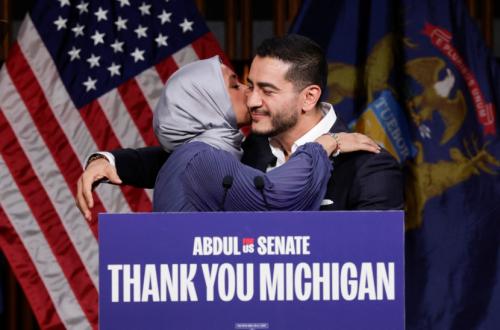
JAKARTA — Muslim American politician Abdul El-Sayed has made a new political move after winning a US Senate election in Michigan. Just days after making history as the first Muslim elected to the US Senate, the 42-year-old Democrat formed a political action committee called Habibi PAC. The organisation is designed to raise funds and support his political allies, while creating opportunities to expand the progressive movement’s influence within the Democratic Party.
The creation of Habibi PAC was disclosed in official documents filed with the US Federal Election Commission (FEC). According to the agency’s records, the committee was registered on Friday, 6 November 2026, just three days after the midterm elections on Tuesday, 3 November. El-Sayed is listed as its sponsor.
Several US media outlets reported on Friday, 6 November, that Habibi PAC is a leadership political action committee: a fundraising organisation established by a candidate or public official to support other candidates. It is legally separate from El-Sayed’s main campaign committee, after his hard-fought victory over Republican candidate Mike Rogers.
Turkey’s Anadolu Agency and Al Jazeera also reported on Saturday, 7 November, that the formation of Habibi PAC indicated El-Sayed intended to remain politically active beyond his personal election victory. The mechanism could allow him to help fund other candidates who share his political agenda, including in future legislative elections.
However, the creation of Habibi PAC does not establish that El-Sayed has raised any particular amount. FEC records reviewed as of Monday, 9 November 2026, contained no financial reports showing the committee’s contributions, expenditure or beneficiaries.
Habibi PAC formally registered with the US government
FEC documents list Habibi PAC under registration number C00964767, with active status. The organisation is classified as a non-qualified leadership PAC, an administrative category subject to specific provisions under US federal campaign-finance law.
In its registration documents, El-Sayed is named as the principal sponsor, while Howie Stanger is listed as treasurer. The administrative address reported to the FEC is in Los Angeles, California, although the politician sponsoring the committee is from Michigan.
The FEC defines a leadership PAC as a political committee established, financed, maintained or controlled by a candidate or federal office-holder. Such organisations may raise funds to support other candidates in federal or state elections, subject to applicable limits and rules on the sources of funding.
The key distinction is the committee’s relationship to a candidate’s official campaign committee. A leadership PAC is not part of the main campaign committee authorised to raise funds directly for its founder’s election. Consequently, money managed by the organisation cannot simply be treated as El-Sayed’s personal campaign funds.
Such committees are commonly formed by members of the US Congress seeking to broaden their political networks. Financial support for other candidates can help build relationships with fellow legislators, strengthen cooperation between groups and increase a politician’s ability to influence the party’s internal agenda.
According to political-finance watchdog OpenSecrets, leadership PACs are also often used by politicians to expand their influence in contests for party leadership and key positions on congressional committees. The intended use of Habibi PAC’s funds, however, has not been set out in detail.
An Arabic name becomes a symbol of victory
The choice of the name Habibi PAC has particular significance in El-Sayed’s political journey. The Arabic word habibi means “my beloved” or “my dear”. In everyday conversation, it can also be used as a familiar form of address for a friend or someone close.
For El-Sayed, habibi became one of the expressions associated with his campaign. The Egyptian-American politician often used Arabic phrases when speaking to supporters and openly discussed his Muslim identity at political events.
The phrase drew national attention after El-Sayed used it to address US Vice-President JD Vance during his victory speech in Detroit on Wednesday, 4 November 2026. In front of supporters, he made a humorous, pointed remark about the Republican who had attacked him during the campaign.
“JD, habibi,” El-Sayed said, before noting the irony that Vance, as vice-president and president of the Senate, would have a role in swearing in new senators in January 2027.
The remark was greeted with cheers from his supporters. The Washington Post reported on Thursday, 5 November, that the use of habibi prompted a surge in Google searches, particularly among Americans seeking to learn what the word meant.
In the context of El-Sayed’s speech, habibi was a humorous form of pointed address. Vance had previously criticised his candidacy sharply, including questioning his political views and positions. El-Sayed turned the situation around by pointing out that Vance might take part in the swearing-in of a senator he had criticised.
El-Sayed also referred to President Donald Trump, who had mocked his name and religion several times during the campaign. He told Trump that, after the swearing-in, the president could address him as “Senator”.
The use of Arabic was one of the most widely discussed parts of El-Sayed’s victory speech. The name Habibi PAC extends a phrase already familiar to his supporters into the sphere of formal political organisation.
Source: jawawa.id (https://jawawa.id/newsitem/after-checkmating-jd-vance-with-habibi-el-sayed-makes-another-political-move-1794192649)
Originally published by Republika (https://news.republika.co.id/berita/to7me3451/usai-skakmat-jd-vance-dengan-habibi-el-sayed-langsung-bikin-gebrakan-baru), translated from Indonesian