
After Being Blocked at Previous Protests, UI Student Executive Board Demonstrates Without University Jackets or a Command Structure
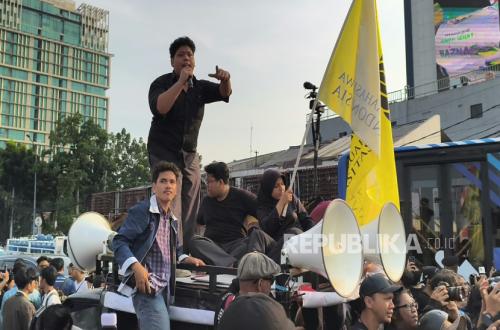
The University of Indonesia Student Executive Board (BEM UI) tried a different approach to staging a demonstration in the Tugu Tani area of Jakarta on Tuesday (20 October 2026). Students did not wear university jackets and also dispensed with the command structure used at previous protests.
The move was part of an effort to create a more flexible form of protest and reduce obstacles to participants gathering. BEM UI Deputy Chair for 2026, Fathimah Azzahra, said the decision was an experiment to assess the effectiveness of a more open model. Students were asked to make their own way to the protest site rather than relying on a single meeting point or designated command.
“We’re actually trying a new model at this protest. This time we’re not using a command structure. Everyone is just making their way here and arriving independently, so we can see how this works,” Fathimah said on Tuesday (20 October 2026).
She said the decision was informed by students’ experiences of being blocked and facing other difficulties at previous demonstrations. Obstacles encountered before protesters reached the site, she said, could affect their psychological state.
“We’ve been blocked several times. And it wasn’t just at the points where we were stopped; our command arrangements were also suddenly called off at the last minute during the previous protest, so we had to rent a venue at short notice,” she said.
Fathimah said the organisers hoped that dispensing with a command structure would make it easier for students and other members of the public to gather. Participants would then be able to arrive feeling calmer and better prepared to take part.
“Being hindered before we reach the protest site really affects our psychological state once we get there. We want people to arrive in a good frame of mind, calm and refreshed,” she said.
On the decision not to wear university jackets, Fathimah acknowledged that it presented its own challenges, including the possibility of provocation by outsiders. She said, however, that the organisers had prepared measures to deal with such situations.
“That is indeed a challenge. But we have prepared a mechanism to help us avoid provocation among ourselves,” she said.
The organisers also opted for a protest that would not consist entirely of speeches, in the hope of making it easier to coordinate participants. The turnout was smaller than at previous demonstrations, providing an opportunity to test the new approach.
Tugu Tani was chosen because of the nature of the students’ demands. Fathimah said the issues raised were more specific and directly connected to public concerns, including forest and land fires, social inequality, civic space, corruption, collusion and nepotism (KKN), and education costs.
“At HI, some of the issues were broader and more macro-level, even if people would ultimately feel their effects. The topics were quite broad. This time they are more specific,” Fathimah said.
She added that the demonstration was open to students from various universities and members of civil society. Students from Gadjah Mada University (UGM), as well as other groups, were also expected to join.