
After B50 Success, Prabowo Tasks Ministers with 100 GW Solar Power Target
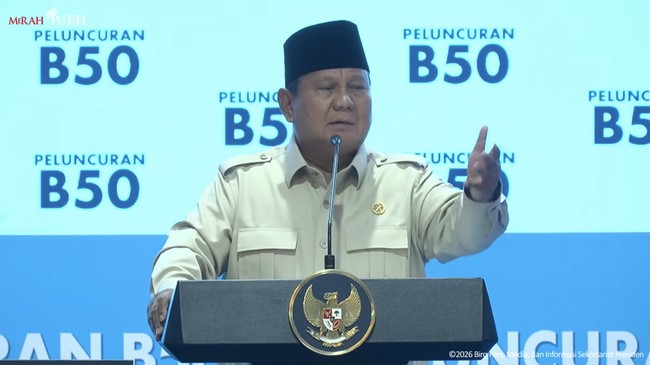
President Prabowo Subianto has handed down a new, weighty assignment to several of his ministers following the successful implementation of the B50 biodiesel mandate. Speaking at the launch of B50 fuel at a Pertamina petrol station in Karawang, West Java, Prabowo tasked his team with realising 100 gigawatts of installed solar power capacity within two years.
The directive was aimed at Minister of Energy and Mineral Resources Bahlil Lahadalia, Minister of Investment and Downstreaming and Danantara CEO Rosan Roeslani, and Coordinating Minister for Economic Affairs Airlangga Hartarto. “We’ve just done B50, what about when we build 100 GW of solar power? This year PLN will start with 17 GW. 100 GW in two years, can you do it?” Prabowo challenged his ministers during the event, adding that the government should prepare for scepticism from experts who might deem the target impossible.
The Ministry of Energy and Mineral Resources estimates the project will require funding of around US$100 billion, equivalent to Rp 1,811 trillion, with a target completion date set for 2029. Director General of New, Renewable Energy and Energy Conservation Eniya Listiani Dewi stated that the government is aligning all national electricity planning to support this goal. She emphasised that international collaboration and private sector involvement are crucial, with Independent Power Producers expected to cover up to 70% of the total investment.
A primary focus of the 100 GW solar power programme is to reduce the use of diesel power plants, which currently dominate eastern Indonesia. The government views this shift as economically critical, given that the cost of providing electricity from diesel in remote areas can exceed US$1 per kilowatt-hour. By transitioning to solar energy, the government aims to cut fossil fuel imports and bolster the national energy resilience index, which currently stands at 6.7. The Ministry of Energy and Mineral Resources has committed to simplifying regulations to facilitate investment in the new renewable energy sector.