
After an Elephant Dies in Africa, What Happens Next Is Unexpected
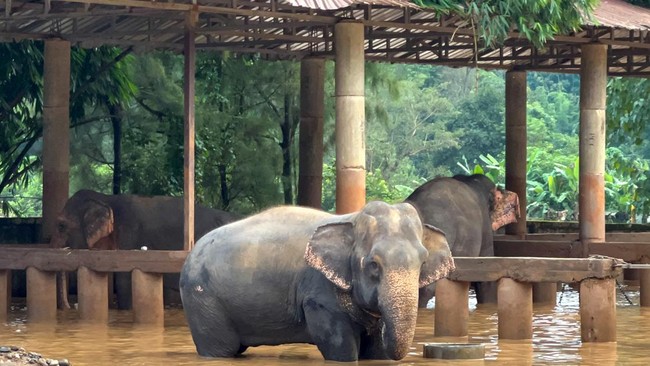
In 2009, a large bull elephant named Alexander died beside a road in South Africa’s Kruger National Park. He was alone, and his body gradually lay exposed beneath the savannah sun. No one expected what happened next to change scientists’ understanding of nature, CNBC Indonesia reported on Tuesday (13 October 2026).
Researcher Dave Thompson often passed the site. He watched Alexander’s body slowly diminish as it was consumed by vultures, insects and bacteria. Over time, he began to wonder what was happening to the soil beneath it.
It turned out that nutrients from the elephant’s remains seeped into the soil in extraordinary quantities. Nitrogen concentrations at the site soared to as much as 3,000 times the normal level.
“It was really crazy. I never imagined the figures would be so high,” said Tercia Midzi, a researcher at the national park, according to Discover Wildlife.
Such a high concentration of nutrients initially made it difficult for plants to grow. Nearby vegetation died, as if the soil had been “burnt” by the excess nutrients.
Gradually, the natural balance began to recover. But the grass that grew was no ordinary grass: it was especially nutritious and sweet, and highly favoured by herbivores.
“The grass there changed from ordinary to the tastiest, like fresh, juicy lettuce,” explained Deron Burkepile, an ecologist at the University of California, Santa Barbara.
Word spread. Deer, antelope and other grazing animals repeatedly came to the site, which had once been occupied only by a carcass. They fed there and left droppings that further enriched the soil. The cycle continued.
Researchers monitored the site for years. The results were striking: Alexander’s legacy did not simply disappear. More than eight years after his death, the soil was still richer, the grass more nutritious, and animals continued to visit.
Elephants are known as “ecosystem engineers” during their lives. They knock down trees, disperse seeds and reshape landscapes. It turns out they continue to do the same after they die.
The discovery recalls a phenomenon on the ocean floor. When whales die and sink, their bodies feed marine life for decades. Researchers now know that something similar happens on land.
“We often see nature only in terms of what is alive at the moment,” said Izak Smit of South African National Parks. “But many things we see today were shaped by something that disappeared from view long ago.”
Source: jawawa.id (https://jawawa.id/newsitem/after-an-elephant-dies-in-africa-what-happens-next-is-unexpected-1791939049)
Originally published by CNBC Indonesia (https://www.cnbcindonesia.com/tech/20261013163836-37-775798/setelah-gajah-mati-di-afrika-kejadian-selanjutnya-tak-terduga), translated from Indonesian