
After 43 Years in Power, Cameroon's President Finally Gets a Vice President
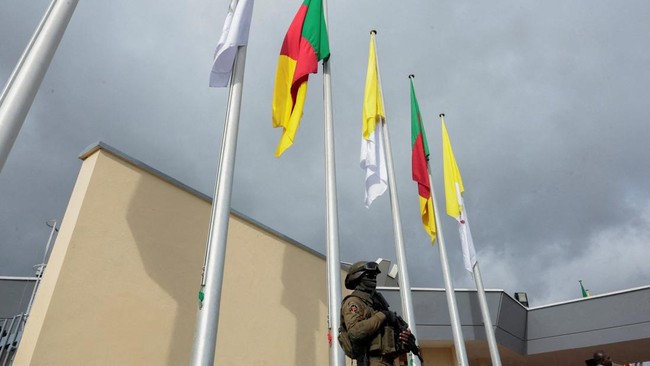
Jakarta, CNBC Indonesia – In running a country, a president usually has a vice-president. But this is not the case in the African nation of Cameroon.
President Paul Biya, the oldest head of state still in office in the world, has held power for more than 40 years without a deputy. However, in April, a new parliament officially approved a constitutional amendment that finally restores the position of vice-president for the first time in four decades.
How did this come about?
Quoting BBC International, cited on Thursday (23/7/2026), this legal step effectively serves as a red carpet for the succession of President Biya’s leadership. Understandably, the President is now 93 years old.
In the bill amending the constitution, passed at a joint sitting of both chambers of parliament, 200 legislators voted in favour of having a vice-president. However, the bill can only become law once it is officially signed by the President.
Notably, the future vice-president will not be chosen through an election, but will be appointed directly by the President.
Under the new rules, should something happen to President Biya – such as death or incapacity – the appointed vice-president would automatically ascend to the role of head of state, continuing and completing the remainder of the ongoing seven-year term.
This new mechanism replaces the old rules, under which the President of the Senate was mandated to lead on an interim basis until emergency elections could be held.
Supporters of the bill argue that appointing a vice-president will improve the efficiency of government when deputising for the president in official duties, whilst also relieving the Senate’s burden so it can fully focus on its legislative function.
However, the deal immediately ignited fierce debate over the future of Cameroon’s political stability, in the shadow of Biya’s unshakeable leadership since November 1982.
A Wave of Rejection
Parliament’s rushed passage of the amendment without broad public consultation provoked deep anger among opposition parties. The Social Democratic Front (SDF), which holds six seats in parliament, chose to boycott the vote.
The SDF had from the outset demanded that the vice-presidency be elected jointly with the president as a single ticket. This, the opposition argued, would reflect a sharing of power based on the country’s linguistic duality (anglophone and francophone).
It is worth noting that before the federal system was “closed” in 1972, Cameroon’s federal arrangement divided the two highest offices of state between the English-speaking and French-speaking communities. The abolition of the vice-presidential seat in the 1972 referendum transformed Cameroon into a unitary state, which is now seen as increasingly centralised in the hands of the ruling elite.
“This constitutional reform could have been a moment of political courage, but it is nothing less than a missed historic opportunity,” declared SDF leader Joshua Osih, condemning the passage of the bill.
“This amendment amounts to a ‘constitutional and institutional coup’ by the ruling party. The incumbent is working towards the creation of a ‘republican monarchy’,” retorted prominent opposition figure Maurice Kamto of the Cameroon Renaissance Movement, who announced his intention to spearhead an online campaign of rejection.
Sceptical voices were also heard from within the government’s own supporters, with one senator from Biya’s party openly describing the drafting process of the law as “suspicious”.
A President Who Frequently Vanishes
Behind the political dynamics in the capital Yaounde, speculation about President Paul Biya’s health has long been a sensitive and taboo subject publicly. Although he has frequently disappeared from public view for extended periods, triggering rumours of his death, Biya has always re-emerged and silenced such talk.
Last October, he won an eighth term with 53.7% of the vote in an election that the opposition alleged was rigged. Following the passage of this constitutional amendment, national discourse in Cameroon is now entirely dominated by the question of who the single appointee chosen by Biya to fill the vice-presidential seat will be.
That figure will certainly hold the key to Cameroon’s future power, ending the uncertainty over succession in one of Central Africa’s most strategic nations.
Source: jawawa.id (https://jawawa.id/newsitem/after-43-years-in-power-cameroons-president-finally-gets-a-vice-president-1784785911)
Originally published by CNBC Indonesia (https://www.cnbcindonesia.com/news/20260723080209-4-753115/pimpin-negara-selama-43-tahun-presiden-ini-akhirnya-punya-wapres), translated from Indonesian