
After 30 Years Frozen on Everest, 'Green Boots' Identified and Set for Repatriation
For climbers of Mount Everest, the figure known as ‘Green Boots’ is a familiar sight. For three decades, the body, fully dressed with bright green mountaineering boots, has lain curled beneath a rock overhang at an altitude of 8,500 metres, serving as both a route marker and a grim reminder of Everest’s dangers.
After 30 years left frozen in the Death Zone, the Indian government has finally decided to take action. They are drawing up an extremely dangerous evacuation plan to repatriate the body now believed to be Dorje Morup, an Indian soldier who died while descending from the summit during a massive storm in 1996.
The public previously thought ‘Green Boots’ was his teammate, Tsewang Paljor. But through documentary evidence of clothing and survivor testimony, the team now believes the legendary body is Morup.
Morup’s wife, Konchak Yangskit (75), admitted she never truly felt her husband was gone because she never saw his body directly. ‘Sometimes before I go to sleep I think, tonight someone will knock on the door and he will be standing there,’ she said emotionally.
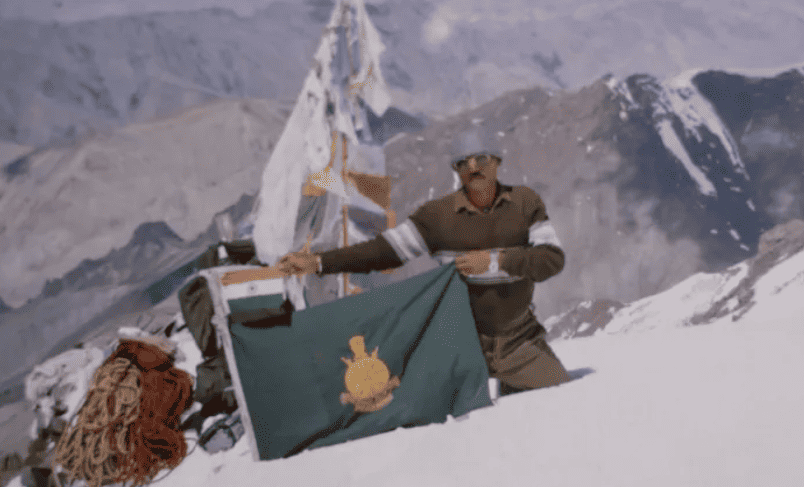
Morup, a member of the Indo-Tibetan Border Police (ITBP), was part of a six-member Indian expedition in 1996. They were ambitious to make history as the first Indian team to conquer Everest’s summit via the Chinese route (Tibet).
Three members chose to turn back due to a blizzard. However, Morup and his two colleagues, Tsewang Smanla and Tsewang Paljor, chose to press on until they successfully stood on the 8,849-metre summit. Tragically, a subsequent blizzard struck during the descent and killed all three.
For years, the body at 8,500 metres was thought to be Tsewang Paljor. However, recent analysis of clothing specifications and equipment has led to the firm conclusion that the body is Dorje Morup.
But bringing home an ‘inhabitant’ of Everest is no easy task. In the death zone, temperatures can plunge to minus 40 degrees Celsius with extremely thin oxygen levels. Moreover, Morup’s body is on the North Route (Chinese side), which is steep and inaccessible to evacuation helicopters.
‘Weather and snow conditions will be crucial. The north side (China) does have fewer crevasses, but it is far riskier because there is no helicopter evacuation system like on the Nepal side,’ said renowned Nepali climber Tshiring Jangbu Sherpa.
A body frozen solid with ice can be extremely heavy and in a rigid position. At least 12 of the best Sherpa guides and costs of up to Rp1.2 billion are needed just to bring down a single body. The risk is also very high: the guides’ lives are at stake.
Even so, the Indian team is determined to bring the hero home next September. If DNA tests prove a match, the family plans to give Morup a proper burial and keep his legendary green boots as a memento.
Source: jawawa.id (https://jawawa.id/newsitem/after-30-years-frozen-on-everest-green-boots-identified-and-set-for-repatriation-1786236629)
Originally published by Media Indonesia (https://mediaindonesia.com/internasional/919793/setelah-30-tahun-membeku-di-everest-jasad-green-boots-terungkap-dan-bakal-dipulangkan), translated from Indonesian