
After 11 Years Building Other People’s IP, PK Entertainment Group Plans Its Next Chapter
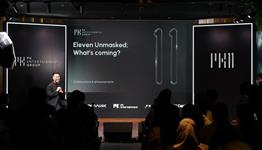
The concerts by Céline Dion and Coldplay staged by PK Entertainment Group in Indonesia, as well as activations the company has produced for YouTube, Meta and Netflix, share one feature that now shapes its business direction: none of them is the company’s intellectual property (IP). The rights to a concert return to the artist, management or record label, while corporate activations remain the property of the brands that pay for them.
“The events we work on are for other brands and corporate activations, so ultimately the product isn’t ours. We can’t claim it as IP because we’re only executing the activation. It’s the same with concerts: all the IP goes back to the artist and their management,” Harry Sudarma, PK Entertainment Group’s co-founder and chief operating officer, told Campaign Indonesia at the company’s office in Kuningan.
Harry cannot recall exactly when the realisation came, only that the company had grown and worked hard enough for its founders to begin questioning its direction. “There was a moment when we talked about what we could do with the industry we’re working in now,” he said. The conclusion was uncomfortable for a company that had been operating for a decade. “We have to own something, because we have no legacy. We only have the production or execution of IP owned by other people.”
Founder and chief executive Peter Harjani said the pandemic was the catalyst. “COVID made us think that if offline events couldn’t go ahead, we needed something else as a backbone. That was also the origin of why we started building an ecosystem,” he said. Founded in 2015, the company now operates through five units: PK Entertainment for international concerts, PK Events for activations and event production, PK Music for developing local artists, PK Films, and PK Capital as its investment vehicle.
Betting on its own track record
PK’s first client was YouTube, for the first YouTube FanFest held in Indonesia in October 2015, which happened to take the form of a concert. Peter, who promoted concerts from 2011 to 2014 before founding PK, acknowledged that the company had no track record to sell at the time. “We weren’t relying on PK’s portfolio, but more on our personal portfolios then,” he said. Harry added that the team still had to go through a series of presentations and pitching interviews with Google, but Peter said the project’s fit with his own experience helped PK win the work.
The same background led PK into concert promotion in 2018, beginning with Céline Dion in Sentul, the singer’s first concert in Indonesia, without first testing the market with a smaller artist. Peter did not hide the personal element: he was a big fan of Céline. “When I was told Céline Dion might be doing an Asian tour, I immediately thought we had to get it — by any means, we had to get it,” he said.
The people who were hardest to convince were the founders themselves, because the decision added risks they had never faced in the activation business. “Actually, the people we had to convince at the time were ourselves,” Peter said. “Concert promotion carries a lot of risk, whereas in brand activation the client pays us, so it’s very predictable.”
Growing only as far as it can afford
That risk calculation remains a guiding principle as PK targets more than 10 film titles throughout 2026 and explores Taiwan, Hong Kong and Malaysia as regional markets. Peter said the company is still financing all its expansion with internal funds. “We’re still bootstrapping; everything is still funded internally. Over 11 years, we’ve grown at a pace we can afford,” he said. He applies the same measure when considering its next steps: “We look for good opportunities that, again, are within our capabilities.”
Harry said PK’s founders were fairly conventional when it came to growth. “We’re quite cautious, and fairly conventional too, so we’re not overly aggressive. We want to make sure that whatever we do doesn’t backfire, but genuinely enables us to grow steadily as a company and as founders,” he said. He also acknowledged that not every move had gone smoothly: “It’s work — there are always things that may not be profitable here and there, but everything is still manageable. So far.”
The door is not closed to investors, provided a partnership offers strategic value. “We’re certainly not opposed to capital injections or investment, but again, we’re very careful. We don’t want to work with or accept investment from a partner whose role is purely financial. If it’s strategic, why not?” Harry said.
Strategic partnership through PK Capital
That criterion also underpinned K+ Entertainment, a joint venture with CT Corp announced by the two companies last May. It is due to launch with a BOYNEXTDOOR concert in December 2026, followed by ENHYPEN in January 2027. Peter said the partnership would not change PK Entertainment Group’s structure, as the collaboration applies only to K+, with both parties sharing its investment needs. “Structurally, nothing is changing at PK Entertainment Group. We have PK Capital, and one of our investments is investing alongside CT Corp in K+ Entertainment,” he said.
Peter said K+ was set up to bring content from overseas, with the possibility of expanding beyond the domestic market. “We want to bring content from abroad here, and perhaps beyond Indonesia as well,” he said.
“The partnership with CT Corp is genuinely strategic. We complement each other’s gaps and areas of expertise,” Harry said. In his view, PK brings experience staging global concerts, while CT Corp contributes experience developing spin-off content from Korean culture, such as exhibitions, city takeovers and merchandise, as well as a media network that Harry described as one of Indonesia’s largest. He stressed that K+ would not be limited to Korea. “In the future, we certainly don’t want to restrict ourselves to K-culture and K-pop content.”
Entering film through marketing
PK Films, which began operating only last year, is investing alongside established production houses, including MVP Pictures, BASE Entertainment and Wahana Kreator, on projects this year, without getting involved in production. “Our target is to invest in good production houses. We’ve entrusted production to those companies; we don’t even want to enter the production side,” Peter said.
Beyond providing capital, PK’s contribution is in marketing, an area Peter said the company understands through its concert business and brand clients. “We may still be learning about film, but we have quite a lot of experience in marketing,” he said. Harry cited launches and gala premieres, which PK has also handled for other people’s films, as well as access to talent or particular festivals for promotional purposes.
Peter divides the company’s portfolio into two tracks. “One is genuinely commercial, something that can sell in Indonesia. The other is something that can reach the world,” he said. He acknowledged that the strategy still relies on proven partners. “PK Films has only just started, so we’re trying to understand the market and work with good production houses and good producers.”
In its 11th year, Harry described the company’s position in similarly cautious terms. “As for where we are now, we’re where we should be, and there’s still a long way to go,” he said.
Source: jawawa.id (https://jawawa.id/newsitem/after-11-years-building-other-peoples-ip-pk-entertainment-group-plans-its-next-chapter-1793364646)
Originally published by campaignindonesia.id (https://www.campaignindonesia.id/article/setelah-sebelas-tahun-menggarap-ip-orang-lain-pk-entertainment-group-berencana-membangun-miliknya-sendiri/1973876), translated from Indonesian