
After 1,000 Days of War, Ecological Genocide Threatens the Lives of Gaza's Residents
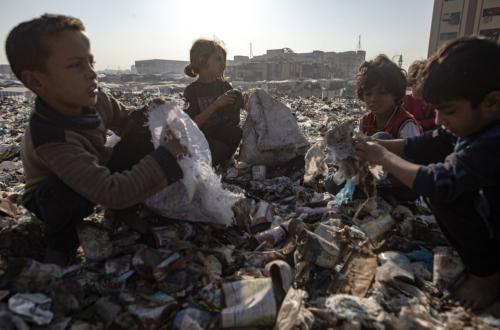
Entering the 1,000th day of war in the Gaza Strip, the impact of the destruction is no longer confined to ruined buildings and paralysed infrastructure. The damage has evolved into an unprecedented environmental and health disaster, threatening the lives of more than two million residents and complicating future recovery and reconstruction efforts.
The massive destruction of homes, public facilities, and basic services has led to the accumulation of enormous amounts of debris mixed with war waste, hazardous materials, and unexploded ordnance. This situation has rendered many areas of Gaza uninhabitable and created a serious threat to public health and the environment.
The clean water and sanitation sector is among the hardest hit. Damage to wells, distribution networks, pumping stations, and sewage treatment plants has caused basic services to decline drastically. At the same time, groundwater contamination by domestic sewage increases the risk of spreading waterborne diseases.
Rising soil and marine pollution further worsens environmental conditions, while the scarcity of safe, clean water heightens health risks for the population.
The collapse of the waste management system has caused household, medical, and hazardous waste to accumulate in residential areas and displacement camps. This creates an ideal environment for the proliferation of rats, insects, and various disease vectors. Meanwhile, the discharge of untreated wastewater directly into the sea accelerates the destruction of coastal ecosystems and threatens fishery resources, adding to the health risks for communities dependent on the sea.
The aggression has also devastated the agricultural sector. Farmland, orchards, and various natural resources have been destroyed and uprooted on a massive scale. The impact is felt not only on food production but also on the local economy and the livelihoods of thousands of Palestinian families. This situation further exacerbates the food security crisis in Gaza, which has long faced restricted access to basic necessities.
Beyond environmental pollution, the presence of unexploded ordnance and explosive remnants of war continues to pose a direct threat to civilians. This danger hinders debris clearance, slows reconstruction, and increases the risk of accidents across various areas. The rubble containing hazardous materials, including asbestos, also requires special handling to prevent long-term health impacts.
Efforts to restore environmental conditions in Gaza require urgent measures, starting with clearing debris and ordnance, restoring water and sanitation systems, managing waste, rehabilitating agricultural land, and controlling pollution and disease outbreaks. However, the success of this process depends on access for heavy machinery, building materials, fuel, and adequate international funding to rebuild infrastructure and restore basic services. After 1,000 days of war, the environmental crisis has become one of the greatest challenges facing Gaza. Saving the environment is now not only part of the reconstruction process but also a prerequisite for protecting public health and ensuring a decent life for the population in the future.
Source: jawawa.id (https://jawawa.id/newsitem/after-1-000-days-of-war-ecological-genocide-threatens-the-lives-of-gazas-residents-1783608901)
Originally published by Republika (https://news.republika.co.id/berita/thwvdh393/setelah-1000-hari-perang-genosida-ekologis-mengancam-kehidupan-warga-gaza), translated from Indonesian