
Aftech Reveals Causes of Alleged Corruption and Money Laundering in P2P Lending
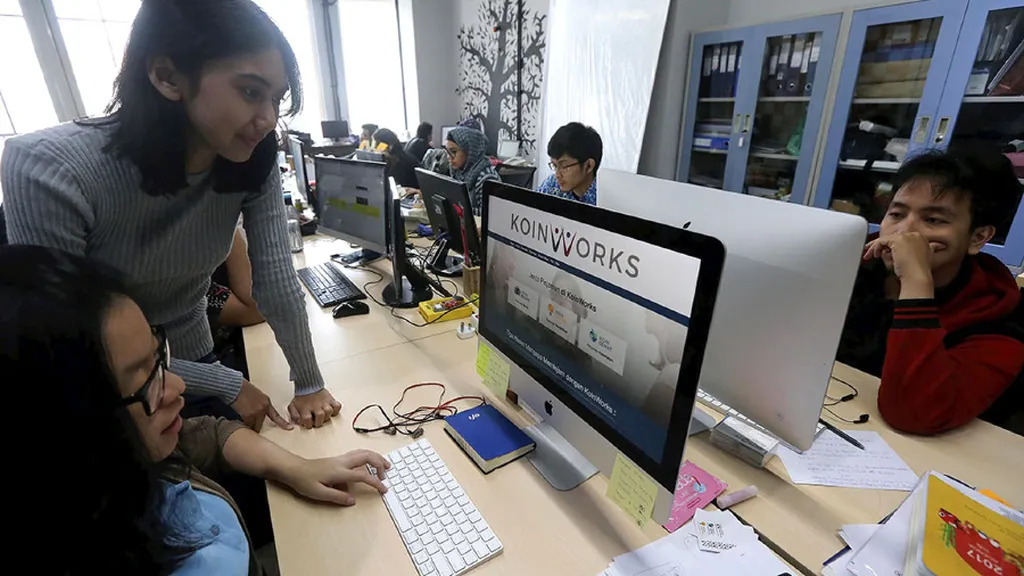
JAKARTA, KOMPAS — Cases of alleged corruption and money laundering involving the management of several licensed peer-to-peer (P2P) lending companies under the Financial Services Authority (OJK) are developing. This phenomenon reflects the persistently weak governance among some P2P lending industry players. Yonathan Gautama, Vice Chairman of the Peer-to-Peer Lending Department at the Indonesian Fintech Association (Aftech), stated that the cases generally stem from governance issues. The use of lender funds is not in accordance with their intended purpose. Funds that should be disbursed or returned to lenders are not placed properly. In fact, there are funds entering escrow accounts that are misused by individuals within the P2P lending company for other purposes, including personal interests. “It is conditions like these that then potentially enter the criminal realm,” he said during a meeting at Menara Kompas, Jakarta, on Tuesday afternoon. Another governance problem, Yonathan continued, is the use of the same invoice as the basis for funding on more than one P2P platform. Due to the absence of an integrated recording system, an invoice can be used as collateral on one platform and then reused as collateral on another. Consequently, when a default occurs, the asset underlying the funding is difficult to execute because it has been pledged multiple times. Regarding supervision, he noted that the OJK does conduct periodic evaluations of P2P lending companies. However, the main problem lies in the capacity of the management in corporate governance. He suspects there are still P2P lending companies that started as startups, grew large, but have not fully transformed into financial institutions implementing good governance standards. Therefore, the solution needed is not to limit or reduce the number of P2P lending companies. The financing needs of the public and business actors remain large, so the funding space through P2P lending platforms is still required. “What is more important is to encourage improved governance, transparency, and risk management in the industry,” said Yonathan. In recent months, the public has witnessed a spate of P2P lending companies whose managements are entangled in alleged corruption and money laundering cases. For example, KoinP2P, part of KoinWorks. Three executives of this company were detained by the Jakarta High Prosecutor’s Office over alleged corruption involving fictitious credit disbursement worth IDR 600 billion. This case originated from the manipulation of financing applications through a state-owned bank and the P2P platform. Another example is TaniFund, part of TaniHub. The alleged corruption and money laundering case ensnaring TaniFund originated from a massive default scandal on investment and loan funds in 2021-2022. Investors found alleged fraud in fund management because risk mitigation and the borrower selection process were considered very poor. Due to the protracted problems and a very high default rate, the OJK conducted a special examination and found that TaniFund did not meet the minimum equity requirements and ignored supervisory recommendations. The OJK officially revoked TaniFund’s business licence and then mandated the formation of a liquidation team. The OJK subsequently referred findings of alleged general crimes in the company to law enforcement officials. The Attorney General’s Office/South Jakarta District Attorney’s Office named and detained former TaniFund executives and related parties. The case was elevated to the realm of corruption and money laundering related to the misuse of investment fund disbursements from investors of the TaniHub Group, namely BRI Ventures and MDI Ventures. Telisa Aulia Falianty, Professor at the Faculty of Economics and Business, University of Indonesia, opined that P2P lending business models vary. In the context of the TaniFund case, for example, its loan service exposure is in the agricultural sector, which naturally has a high risk level. If a venture capital company enters to finance a P2P lending company, Telisa believes they need more mature consideration from the outset as to whether the high-risk venture capital investment model is indeed suitable for a lending business targeting an equally high-risk business sector. “Then, to determine whether an investment decision that results in a loss can enter the criminal realm or is merely a business risk, I think it requires a clearer application of the business judgment rule principle,” said Telisa.