
AfD victory reflects political polarisation in Magdeburg
Magdeburg (ANTARA) - Saxony-Anhalt, a relatively small state in eastern Germany with a population of just over two million, rarely attracts the world’s attention.
Yet on Sunday (6/9), Magdeburg, the capital of Saxony-Anhalt, became the centre of political upheaval in Germany after the far-right party, Alternative for Germany (Alternative für Deutschland/AfD), recorded a historic event by winning the state general election with around 44 per cent of the vote.
The result marks an unprecedented setback for the ruling Christian Democratic Union (CDU) and places the AfD in a position to appoint a state governor for the first time.
The political divide was clearly visible on the streets of Magdeburg over the past weekend as the election was held.
On Saturday (5/9) local time, thousands of residents gathered at Magdeburg’s Cathedral Square (Domplatz), unfurling banners in defence of pluralism and democracy.
Music echoed across the square, but the mood among the majority of participants was one of unspoken concern.
“If the cultural landscape here is strangled, I will pack my bags,” said Anja, an artist who travelled from Magdeburg’s neighbouring city, Leipzig, as reported by Xinhua.
Anja fears that an AfD-led government would cut public funding for the arts and restrict the space for freedom of expression.
Not far from the location, Matea, a local physiotherapist, acknowledged that widespread frustration had increased support for the AfD. She said she, too, was deeply dissatisfied with various policies of the federal government.
“However, handing power to the AfD would only make things worse,” she said.
Less than two kilometres away, outside the AMO Kulturhaus building, a line of police vans formed a security perimeter surrounding a sharply contrasting scene.
The AfD’s final campaign rally before the election had drawn large crowds, with some supporters standing along the pavements.
They applauded and cheered in support of Ulrich Siegmund (35), the AfD’s lead candidate, whom they described as “a good figure”.
Bastian (40) travelled across Germany from North Rhine-Westphalia to attend the rally. The employee of an automotive parts supplier viewed eastern Germany as the frontline of a broader national wave of resistance.
“I look at the young apprentices in our factory and wonder whether their jobs will still exist in five years,” he said. He cited economic stagnation and uncontrolled immigration as reasons why he wanted to “bring back the Germany of the past”.
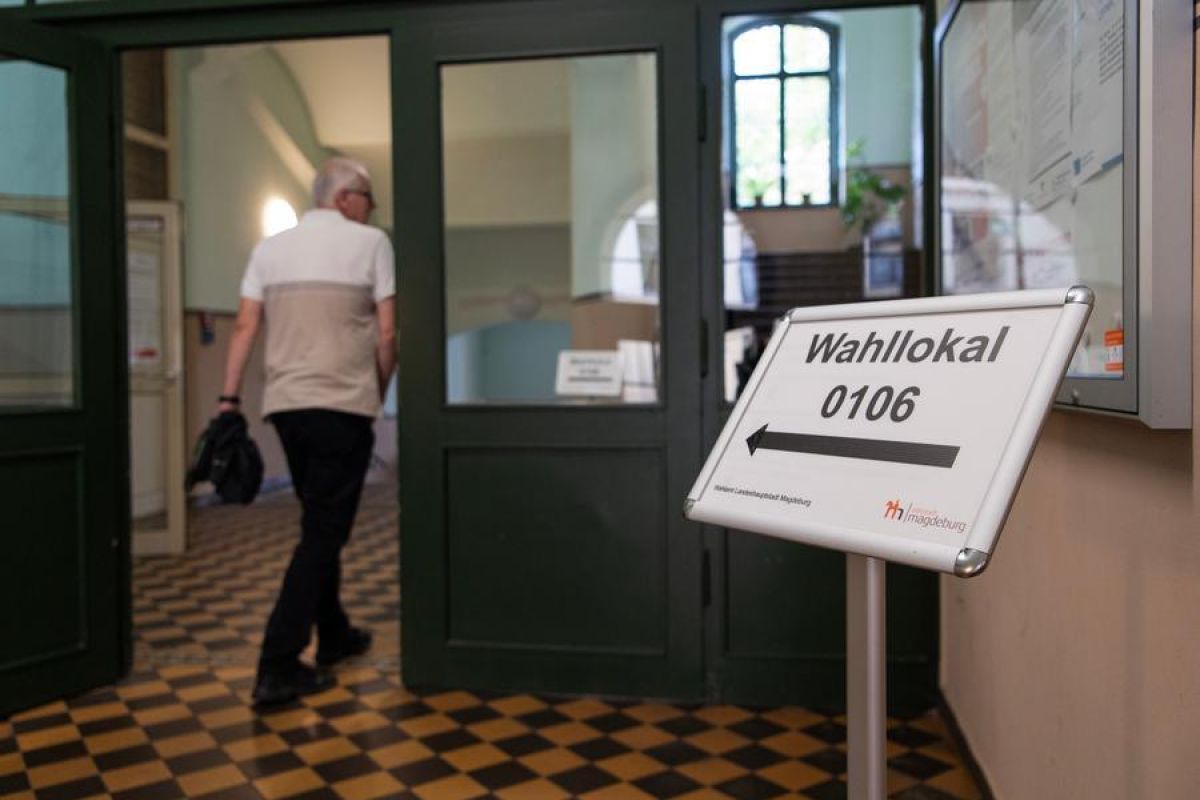
On Sunday, these clashing anxieties quietly converged at the polling stations.
Outside a polling station in the city centre, Lieas (20), a student of Syrian descent, stepped forward to cast his vote for the Green Party, hoping to help smaller parties clear the 5 per cent electoral threshold and prevent the AfD from winning an outright majority.
“We have to use our voting rights strategically,” said Lieas, describing the election as “extremely important”.
Lieas said his younger brother was preparing to move to Germany for university. Lieas had given his brother clear advice: avoid Saxony-Anhalt and consider other regions in Germany.
“The atmosphere here is changing, and that is very worrying,” he added.