
AESI Urges Acceleration of Solar Energy Adoption for Industry
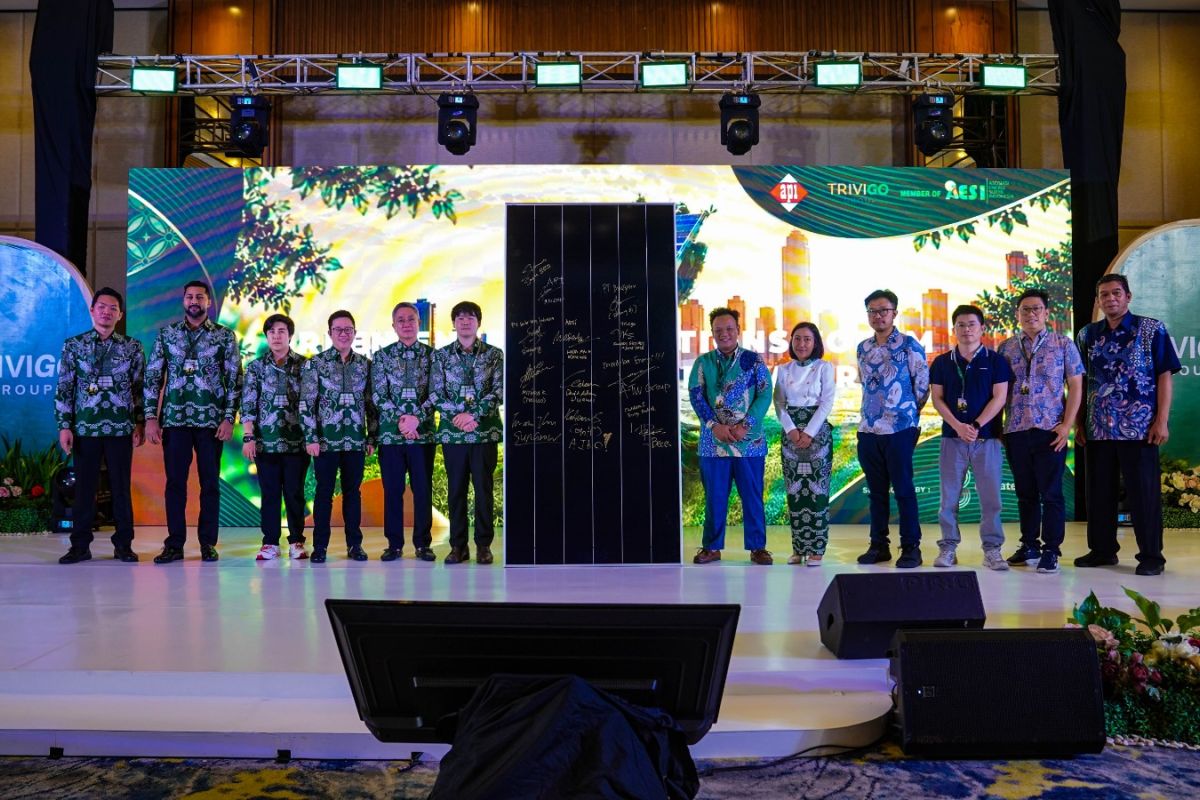
Jakarta (ANTARA) - Indonesian Solar Energy Association (AESI) Chairwoman Mada Ayu Habsari is urging the acceleration of solar energy adoption through rooftop solar power plants (PLTS) in the industrial sector to strengthen national competitiveness.
In a statement received in Jakarta on Saturday, Habsari highlighted the 2026–2030 period as a crucial momentum for accelerating PLTS adoption in industry. She noted that solar energy utilisation in Indonesia continues to show a positive trend, particularly from the manufacturing sector, which is currently the largest user of rooftop PLTS.
“However, compared to Indonesia’s enormous technical solar energy potential, utilisation is still below one percent. This means there is still vast room for future growth,” said Mada.
The call was made during the Green Energy Solutions Forum for Manufacture Owners held in Bandung, West Java, on Wednesday (10/6), bringing together industry players, factory owners, and renewable energy stakeholders to discuss strategies for enhancing industrial competitiveness through solar energy.
She further stated that a combination of policy support, increased rooftop PLTS quotas, accelerating demand from the industrial sector, and global market demands for sustainable business practices are key factors that will drive faster solar energy adoption in the coming years.
AESI assesses that Environmental, Social and Governance (ESG) requirements, carbon footprint transparency in global supply chains, and the full implementation of the Carbon Border Adjustment Mechanism (CBAM) in the European Union from early 2026 underscore that clean energy is no longer merely an option but a strategic necessity for industries seeking to maintain international market access.
Therefore, AESI is pushing for regulatory improvements, strengthening quality standards and project bankability, and acting as a bridge between industry, regulators, relevant state-owned enterprises, and solar energy businesses to accelerate the national energy transformation.
Meanwhile, Trivigo CEO Kunadi Setiadi assessed that the current moment presents a rare opportunity for industry to accelerate the transition to green energy. He noted that increasingly supportive regulations, more affordable solar panel technology prices, and global market pressure on the carbon footprint of Indonesian products are converging simultaneously.
“There are three things that rarely move together, and all three are moving now. Regulation is becoming more supportive, technology prices are more competitive, and global market pressure on carbon footprints is increasingly real. When these three factors align, delaying a decision is a loss we choose for ourselves,” said Kunadi.
He explained that energy cost pressure is now one of the biggest challenges for the manufacturing sector. In the textile industry, for example, electricity costs can account for 15 to 25 percent of total production costs. Amid increasingly fierce export competition, energy efficiency has become a factor that directly affects business margins and a company’s ability to win international markets.
“A factory does not go bankrupt overnight because of an electricity bill. But margins will continue to shrink year after year until the company realises it is no longer competitive. Energy is the fundamental foundation of industrial competitiveness,” he stressed.
Kunadi also dismissed the notion that solar energy investment remains too expensive. According to him, many industry players still focus only on the initial investment cost without seeing the long-term benefits the company can gain.
“The right question is not how much the installation costs, but how much it will cost if we do not do it. With current technology and financing schemes, many projects can achieve a return on investment within four to six years, while the savings benefits can be enjoyed for decades thereafter,” he explained.
Kunadi reminded that green energy is no longer just an environmental issue, but a determining factor for market access and business sustainability in the future. “In the next three to five years, the use of solar energy in the industrial sector will no longer be a differentiator, but a minimum standard. Companies that move faster will enjoy a competitive advantage that will be difficult for latecomers to catch up. The time is not tomorrow, not next year, but now,” he concluded.
Source: jawawa.id (https://jawawa.id/newsitem/aesi-urges-acceleration-of-solar-energy-adoption-for-industry-1781315482)
Originally published by Antara (Indonesian) (https://www.antaranews.com/berita/5606511/aesi-dorong-akselerasi-adopsi-energi-surya-untuk-industri), translated from Indonesian