
AESI Supports 30 GW Solar Target and 1 MW Per Village Programme
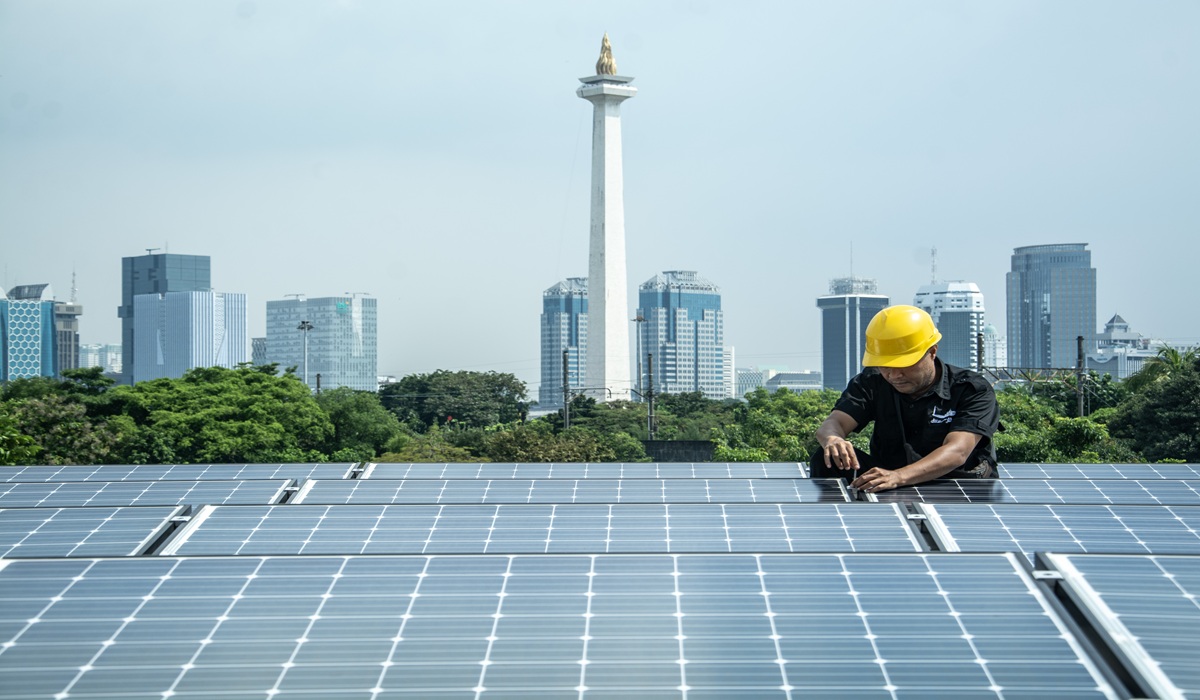
The Indonesian Solar Energy Association (AESI) has expressed its readiness to fully support the government’s commitment to accelerating the national Solar Power Plant (PLTS) programme. This move responds to the government’s ambitious target of building 30 GW of solar power capacity this year, which is seen as a strong signal of the start of a strategic execution phase for solar energy utilisation in Indonesia.
AESI Chairwoman Mada Ayu Habsari emphasised that as a national solar energy ecosystem platform, AESI will be a strategic partner to the government in overseeing the energy transition. The association’s current main focus is ensuring readiness from upstream to downstream.
‘The industry’s task now is to ensure readiness on our side, from supply chains, installation quality, to certified workforce,’ Mada said at the Indosolar 2026 event in Jakarta on Thursday (20/8/2026).
To realise the target in a measurable way, AESI has formed four task forces with specific focuses. AESI is also paying special attention to President Prabowo Subianto’s vision of targeting every village to have a 1 MW solar power plant. To support this energy equity, AESI is developing a sandbox model to achieve community-based energy independence.
This model leverages the modular nature of solar power as a solution for areas that are difficult to reach by conventional electricity networks, including for health facilities such as community health centres and village cooperatives. In this scheme, AESI places women’s empowerment as an important pillar through cooperation with the Ministry of Cooperatives.
The Merah Putih Village/Sub-district Cooperative Network will be optimised as service centres. Through the Green Workforce Task Force, AESI will train women in villages to have technical skills in repairing and maintaining solar power systems independently.
‘So far, solar power maintenance in villages still depends on technicians from outside the area. We want village women to have the skills to maintain this 1 MW solar system, providing additional income while maintaining the reliability of state assets in the field,’ Mada stressed.
Currently, AESI brings together around 164 members including manufacturers, developers, technology providers, and financial institutions. The successful launch of 1.3 GW of rooftop solar in April 2026, supported by Minister of Energy and Mineral Resources Regulation Number 2 of 2024, is clear evidence of the effectiveness of cross-party collaboration.
Mada concluded with optimism that with increased domestic component levels (TKDN) and green workforce absorption, the national energy target can be achieved.
‘This work is indeed not easy and not instant, but by working together, the path to the national energy target may be achieved,’ she concluded.