
ADKASI Urges MBG Task Force to Strengthen Oversight and Collaboration
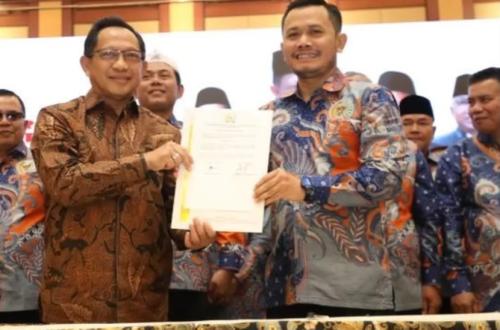
JAKARTA — The Indonesian Association of Regency Councils (ADKASI) has urged the Free Nutritious Meals (MBG) Task Force to strengthen oversight and cross-sector collaboration in delivering the programme in the regions. A stronger task force is expected to help ensure the programme reaches its intended recipients while extending its economic benefits to farmers, fishers and local businesses.
ADKASI Chairman Siswanto said the task force had an important role in connecting programme delivery with regional development needs. As well as meeting nutritional needs, the MBG programme has the potential to improve livelihoods by strengthening local food supply chains.
“The Free Nutritious Meals programme must not stop at meeting nutritional needs. It should become a development ecosystem linking the quality of human resources with regional economic self-reliance. The task force must therefore be more than an overseer: it must drive collaboration so that every rupiah of public spending genuinely benefits the community,” Siswanto said in a statement on Thursday (29 October 2026).
Siswanto welcomed Home Affairs Minister Muhammad Tito Karnavian’s call to accelerate the formation of MBG task forces in 552 regional governments, at provincial, regency and municipal levels. He said the task forces could strengthen coordination between central and regional governments and help ensure the programme was implemented effectively.
Siswanto said the success of MBG should be assessed more broadly, including its contribution to human resource development and regional economies. Oversight therefore needed to go hand in hand with collaboration among various parties so that communities could feel the programme’s benefits.
“The success of MBG cannot be measured simply by how many meals are distributed, but by its impact on the quality of the next generation, the welfare of farmers and fishers, and regional economic growth. This is where the task force matters, as both an oversight mechanism and a driver of collaboration,” he said.
Tito had previously called on regional governments to speed up the formation of MBG task forces at the launch of a socialisation programme for a circular on inspections and compliance assessments of Nutrition Fulfilment Service Units (SPPG) in the regions. The hybrid event was held at the Home Affairs Ministry’s headquarters in Jakarta on Wednesday (28 October 2026).
According to Home Affairs Ministry data, 223 regions had established MBG task forces. Regional governments that had not yet done so were asked to complete the process within a week to strengthen coordination in implementing the programme.
Alongside the push to establish task forces, Tito issued Circular Letter No. 400.5/8545/SJ on inspections and compliance assessments of regional Nutrition Fulfilment Service Units. It calls on regional governments to strengthen oversight of SPPG operations within their respective areas of authority.
Under the arrangements, regional MBG task forces are to coordinate with the National Nutrition Agency (BGN) on SPPG inspections and compliance assessments. Oversight covers 14 operational eligibility indicators, the quality and suitability of meals, and an evaluation of whether beneficiaries are being correctly targeted.
Siswanto said this coordination could make MBG more effective and transparent, and better aligned with community needs. Stronger oversight should also be accompanied by the involvement of various local economic sectors in supplying food.
Farmers, fishers and micro, small and medium-sized enterprises (MSMEs) have an opportunity to participate in the MBG supply chain, Siswanto said. Their involvement could increase local economic activity while extending the programme’s benefits to regional communities.
Tito has likewise said that MBG could have an economic impact on the agriculture and fisheries sectors. Guaranteed demand for food through the programme could open up market opportunities for local producers.
“With a clear offtaker and a clear buyer, farmers and fishers will benefit greatly,” Tito said.
Tito also said that optimising the MBG programme could help control inflation, reduce poverty and create new jobs. Regional governments’ support for its implementation is also set to be one of the criteria in the Regional Government Achievement Awards.
ADKASI hopes that stronger MBG task forces will improve cooperation among the central government, regional governments and regional councils. The collaboration is expected to safeguard the quality of the programme while expanding its benefits for communities and regional economies.
Source: jawawa.id (https://jawawa.id/newsitem/adkasi-urges-mbg-task-force-to-strengthen-oversight-and-collaboration-1793314238)
Originally published by Republika (https://ekonomi.republika.co.id/berita/tno9ag416/adkasi-dorong-satgas-mbg-perkuat-pengawasan-dan-kolaborasi), translated from Indonesian