
Adidaya Institute Survey: Majority of Public Supports Continuation of Free Nutritious Meal Programme
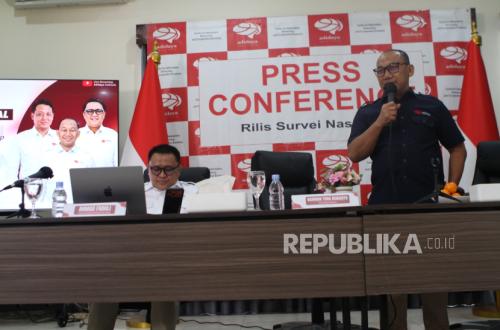
A majority of the public continues to support the continuation of the Free Nutritious Meal (MBG) programme, despite public concerns regarding governance and food safety. Findings from an Adidaya Institute survey show that 61.6 per cent of respondents requested that the MBG programme be maintained.
The survey, conducted via face-to-face interviews between 15–21 September 2026, involved 1,240 respondents across 38 provinces. The survey carries a margin of error of 2.78 per cent with a 95 per cent confidence level.
Executive Director of Adidaya Institute, Rahman Toha Budiarto, stated that public awareness of the MBG is also high, reaching 93.4 per cent. Furthermore, 66.5 perseb cent of respondents assessed that the MBG has provided benefits to the community.
“Public support for the MBG has proven to be very strong. Approximately six out of ten citizens want the MBG programme to continue, and two out of three citizens feel this programme is beneficial,” Rahman said during a press conference in Jakarta on Wednesday (7/10/2026).
From the survey, 69.9 per cent of respondents expressed agreement with the MBG, while 58.2 per cent assessed the programme as being in line with community needs. Additionally, 63 per cent of respondents acknowledged the direct impact of the MBG on families, and 63.4 per cent believed the programme contributes to nutritional improvement.
“This means the majority of the public assesses the MBG programme as meeting public needs and having a positive impact on health and nutritional improvement,” said Rahman.
The survey also noted that 73.8 per cent of students are reported to have received MBG, while recipients from the toddler group stood at 33.4 per cent and pregnant women at 25.5 per cent.
Regarding the menu, 54.6 per cent of respondents assessed the food provided through MBG as more nutritious than food at home. Respondents also assessed the MBG menu as being more varied and of higher quality.
Amidst high support for the continuation of the MBG, issues of governance and food safety remain significant tasks. Approximately 33.9 per cent of respondents cited governance as the primary issue, followed by corruption at 25.7 per cent and budget concerns at 15.1 per cent. Meanwhile, when respondents were given the opportunity to answer spontaneously, the issue of poisoning or food safety was mentioned by 21.4 per cent of respondents.
These issues also affect public sense of security. Around 41 per cent of respondents admitted they are still worried when family members receive MBG, whereas 60.4 per cent expressed happiness when family members receive the programme.
Director of Politics and Democracy at Adidaya Institute, Ahmad Fadhli, stated that these findings indicate the need to strengthen food safety aspects in the implementation of the MBG. “The survey notes that four out of ten respondents are still worried when their family members receive MBG. Therefore, the sense of security regarding the MBG programme should be restored immediately,” said Fadhli.
According to him, the majority of the public does not want the MBG to be stopped when poisoning cases occur. Approximately 83.9 per cent of respondents chose evaluation, closure, or the imposition of sanctions against problematic provider kitchens or Nutrition Fulfilment Service Units (SPPG). Conversely, only 11.9 per cent of respondents wanted the MBG to be stopped entirely.
“The public’s attitude is very rational. If poisoning cases occur, the public demands supervision and strict sanctions at the level of the provider kitchens or SPPG, rather than stopping the programme itself,” said Fadhli. He assessed that guaranteeing food safety is a crucial factor in maintaining public trust in the sustainability of the MBG.
Beyond nutrition and food safety, the survey also showed public expectations for the MBG to provide an economic impact on the regions. Approximately 78.8 per cent of respondents want local businesses and MSMEs to be involved in providing the programme’s requirements.
Economist at Adidaya Institute, Bramastyo B. Prastowo, stated that involving local economic actors can expand the benefits of the MBG beyond the nutrition sector. “The majority of the public indeed wants MBG food supplies to be purchased from local farmers, fishermen, livestock breeders, and MSMEs,” said Bram.
He mentioned that approximately 40,000 MSMEs are currently suppliers for MBG food supplies. On average, there are three MSMEs serving as suppliers for each SPPG in regencies and cities.
Bram stated that government spending through the MBG also has the potential to impact domestic economic activity. “Factually, the MBങ്ങള് is currently a driver of government consumption with goods expenditure amounting to Rp54.4 trillion. The MBG even became the fastest-growing component in the first quarter of 2026,” he noted.
Government data, Bram continued, also recorded that approximately 987,000 direct jobs have been created in SPPG kitchens. 99 per cent of these workers are residents living around the SPPG.
The Adidaya Institute survey also measured public perception of the National Nutrition Agency (BGN) as the institution responsible for the implementation of the MBG. Approximately 55 per cent of respondents expressed satisfaction with the performance of the BGN, while 52.9 per cent believe the BGN is capable of managing the MBG well.
The satisfaction level regarding the implementation of the MBG was also reported to have increased by 3 points following the change of the Head of the BGN.
“More than half of the citizens are satisfied with the performance of the BGN. They are also confident that the BGN can run the MBG well,” said Fadhli.
Trust in the Head of the BGN, Sudaryono, was recorded at 76.1 per cent, while 68.8 per cent of respondents expressed satisfaction with his performance.
“Referring to the survey, Sudaryono has earned very high trust from the public, at 76.1 per cent. Likewise, the satisfaction level reached 68.8 per cent,” said Fadhli.
Previously, the position of Head of the BGN was held by Dadan Hindayana from August 2024–June 2026 and Nanik S. Deyang from June–July 2026. The survey also showed that approximately two-thirds of respondents were aware of and recognised the figure of the Head of the BGN.
Source: jawawa.id (https://jawawa.id/newsitem/adidaya-institute-survey-majority-of-public-supports-continuation-of-free-nutritious-meal-programme-1791395658)
Originally published by Republika (https://news.republika.co.id/berita/tmjld0522/survei-adidaya-institute-mayoritas-publik-dukung-keberlanjutan-mbg), translated from Indonesian