
Addressing the Dual Oversight System and Ethical Rulings of the Judicial Commission
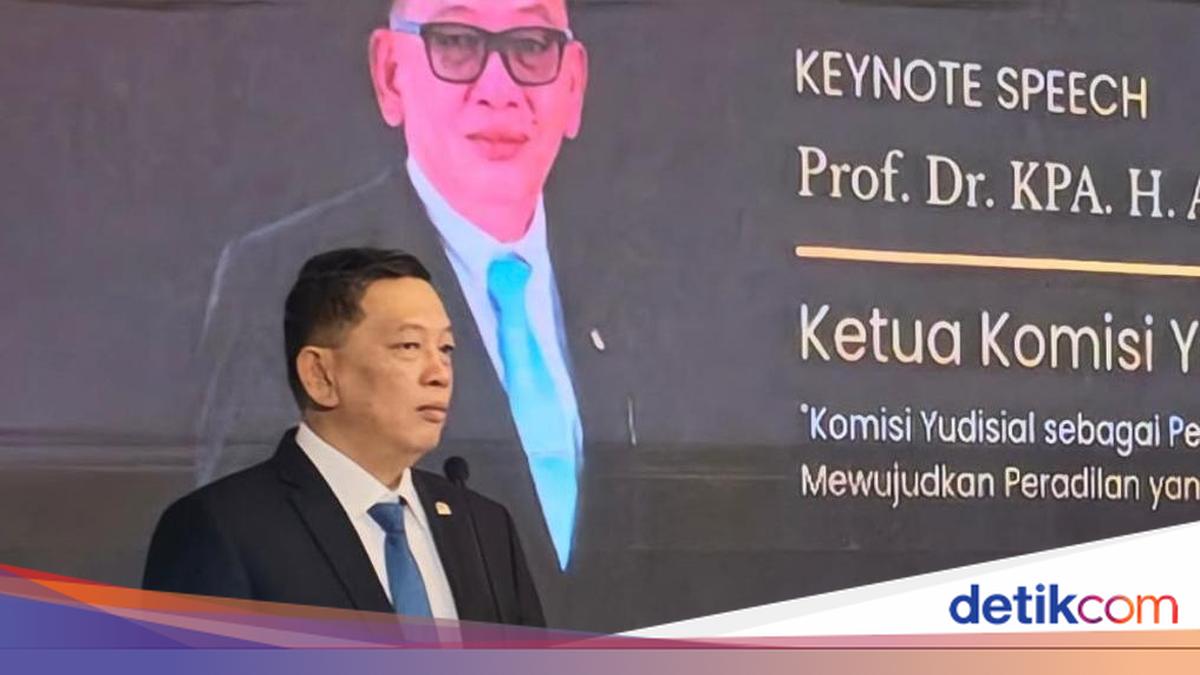
The Judicial Commission plays an important role in efforts to realise an independent judiciary, intended to uphold the law and justice as stipulated in the Constitution. Article 24B(1) of the 1945 Constitution sets out two independent powers for the Judicial Commission.
It states: “The Judicial Commission shall be independent and shall have the authority to propose the appointment of Supreme Court justices and other powers in order to safeguard and uphold the honour, dignity and conduct of judges.” These powers encompass two distinct duties in broad terms. The first concerns Supreme Court justices alone, while the second applies to all judges across jurisdictions and levels. The latter is intended both to safeguard (preventively) and uphold (correctively and punitively) the honour, dignity and conduct of all judges.
The Judicial Commission also plays a role in promoting “fair legal certainty” for the public. Legal certainty must encompass both procedural and substantive justice. In this regard, Satjipto Rahardjo said that justice is the constant and continuing will to give everyone what is due to them (iustitia est constants et perpetua voluntas ius suum cuique tribuendi). Its application is, of course, connected with judges’ ethics and conduct.
In practice, the Judicial Commission’s constitutional authority has not been matched by proportionate powers set out in legislation. The current situation continues to feature dual oversight by the Supreme Court and the Judicial Commission, causing disharmony and a loss of direction. Internal oversight by the Supreme Court also remains problematic, as its independence is questioned because it operates within the Court’s own structure. This is feared to create room for conflicts of interest and further undermine perceptions of objectivity.
The judicial system is intended to ensure fair legal certainty for all citizens. For it to function properly, a mechanism is needed to oversee judges as those who exercise judicial power. Oversight is not intended to diminish judicial independence, but to ensure that independence goes hand in hand with accountability. In practice, however, a serious problem remains: dual oversight by the Supreme Court and the Judicial Commission. This has led to overlapping powers, a problem that has become increasingly complex and persistent.
The dual system of internal oversight by the Supreme Court and external oversight by the Judicial Commission has reduced the Commission’s decisions to proposals or recommendations to the Court. Article 22D(1) of Law No. 18 of 2011 on the Judicial Commission states: “Where an alleged breach of the Code of Ethics and/or the Code of Conduct for Judges is found to have been proven, as referred to in Article 22C(a), the Judicial Commission shall propose that the Supreme Court impose sanctions on the judge alleged to have committed the breach.” The Supreme Court has not implemented some of the proposed sanctions. This illustrates the connection between dual oversight and the Commission’s ethical rulings.
Because the Judicial Commission’s recommendations are not binding, its ethical rulings are weak and have ultimately failed to guarantee integrity and accountability in judicial practice. Yet the Commission helps maintain public confidence in the judicial system, which depends on integrity and professionalism. These qualities enable the system to operate effectively and deliver justice to the public. The Commission’s ethical rulings, which remain non-binding proposals, are therefore open to question. Its recommendations have legal standing, but lack legitimacy.
The failure to implement the proposed sanctions points to a broader issue: the Supreme Court is not automatically required to act on the results of the Judicial Commission’s external oversight. This is because the functions of oversight are differentiated under Law No. 48 of 2009 on Judicial Power. Under Articles 39 and 40, the Supreme Court is the internal supervisor and the Judicial Commission the external supervisor.
The distinction between internal and external oversight also relates to judges’ “actions” and “conduct”. This has resulted in overlap between the two systems. Consequently, the Supreme Court does not have to act on the results of external oversight by the Judicial Commission. As the internal oversight body, the Court considers itself under no absolute obligation to follow the Commission’s decisions. In effect, a ruling by the external oversight body does not take effect directly as a binding decision; it must first receive the Supreme Court’s approval.
The Judicial Commission’s authority is not intended to oversee the judiciary as an institution, but individual judges. This raises the question of why a distinction should be made between judges’ actions and conduct, resulting in differentiated oversight. It also raises the question of how the relationship between the Judicial Commission as a supporting body and the Supreme Court as the main body should be framed in oversight matters; the Constitutional Court has understood it as a partnership. In Decision No. 005/PUU-IV/2006, the Court also said that a system of external oversight separate from internal oversight could not operate between the Supreme Court and the Judicial Commission on the basis of checks and balances, since checks and balances cannot be applied by a supporting (auxiliary) body to its own main body. The reasoning that checks and balances cannot apply has therefore also ruled out separate external oversight, creating confusion.
There is also disagreement over the interpretation of “judicial technical matters”, stemming from the Constitutional Court’s opinion in that decision. Differing interpretations of the boundary around judicial technical matters have led the Supreme Court to reject many of the Judicial Commission’s recommendations. From 2005 to the present, at least 75 per cent of the Commission’s rulings could not be followed up by the Supreme Court on the grounds that they concerned judicial technical matters. This demonstrates the Supreme Court’s more superior position. The supporting body’s unequal status compared with the main body has reduced the Commission’s rulings to proposals, stripping them of their corrective force.
In the second revision of the Judicial Commission Law, the Commission’s rulings should be made self-executing. They should have final and binding force once delivered in a plenary session, without requiring follow-up by the Supreme Court. This should apply only to minor and moderate breaches. The Commission’s hearings should also be open to the public. For serious breaches carrying heavy sanctions, the Judicial Commission and the Supreme Court should conduct a joint examination through an Integrated Judicial Oversight Board (BPHT). By way of comparison, the Election Organisers’ Ethics Council (DKPP), which handles ethical breaches by election organisers, issues final and binding decisions and holds public hearings. The Central Information Commission (KIP) also holds public hearings in information-dispute cases.
The internal and external oversight mechanisms currently in practice overlap. As a result, the Judicial Commission’s ethical rulings remain proposals, and the Supreme Court does not consider itself absolutely bound to implement them. Effective oversight should not operate through dual systems. The second revision of the Judicial Commission Law should therefore address this problem.
Although the Judicial Commission does not exercise judicial power, its oversight is necessary to strengthen the judiciary’s ability to uphold the law and justice. The Commission serves as a counterbalance between independence and accountability. As an institution intended to reinforce the judiciary, it should have comprehensive oversight powers. This would further strengthen public confidence in the courts.
Source: jawawa.id (https://jawawa.id/newsitem/addressing-the-dual-oversight-system-and-ethical-rulings-of-the-judicial-commission-1792295441)
Originally published by detikcom (https://news.detik.com/kolom/d-8712180/menyikapi-persoalan-dualisme-pengawasan-dan-putusan-etik-komisi-yudisial), translated from Indonesian