
Addressing Global Conflict, Government Urged to Accelerate Food Self-Sufficiency
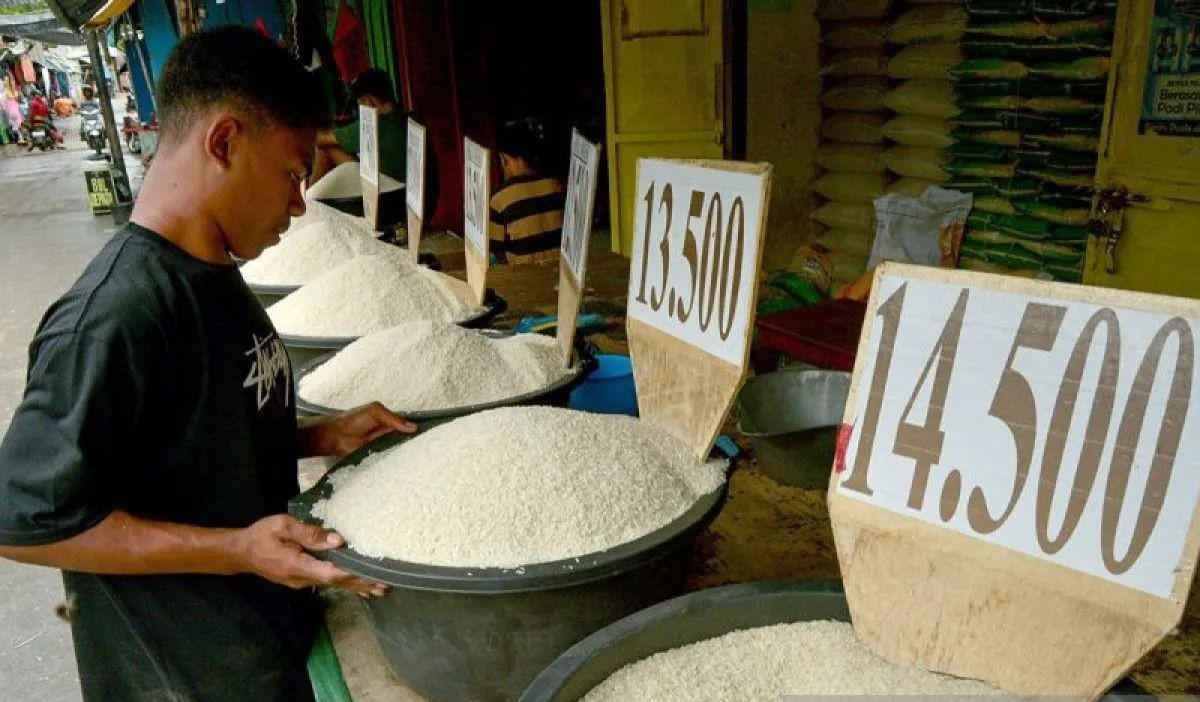
The surge in energy prices, a primary impact of the conflict, has driven up global food logistics and production costs. Indonesia, still reliant on imports for several strategic commodities, faces dual risks: global price hikes and currency depreciation. Slamet, a member of Commission IV of the Indonesian House of Representatives (DPR RI), stated that this crisis must serve as a momentum to build a stronger, more resilient national food self-sufficiency system that favours farmers and communities.
He outlined data showing that the Middle East supplies around 30% of the world’s oil, with 20% of global trade routes passing through the Strait of Hormuz. Consequently, disruptions in the region directly affect global energy prices and shipping costs.
“The most significant pressure is on strategic food commodities. Indonesia imports about 11 million tonnes of wheat annually (100% imported), facing risks of global price increases due to surges in energy and logistics costs,” Slamet said in a statement quoted on Sunday (5/4).
Soybean imports, reaching around 2.6 million tonnes per year (70%-80% imported), have also seen global price rises, recorded at approximately US$409.48 per tonne in February 2026. This is triggered by increases in fertiliser and transportation costs. Meanwhile, industrial sugar imports, targeted at 3.12 million tonnes in 2026, are experiencing an upward global price trend due to rising energy-based production costs.
Industrial salt, with import needs of around 577,000 tonnes per year, is also affected by hikes in logistics and energy costs, pushing up global prices and burdening domestic downstream industries.
Beyond food commodities, production inputs are significantly impacted. Indonesia imports about 8.5 million tonnes of LPG annually, while domestic production is only around 1.3 million tonnes, making it highly dependent on global markets.
Gas, which accounts for 70%-80% of nitrogen fertiliser production costs, has seen price increases alongside the global energy surge. This condition leads to higher fertiliser prices and implications for increased government subsidy burdens.
“Fiscal risks are also rising, including potential restrictions on subsidised fertiliser volumes, which could ultimately suppress farmer productivity and worsen national food security,” Slamet explained.
He emphasised that this situation must be addressed with strategic and measured steps. The government needs to accelerate import substitution through the development of local commodities such as sorghum and domestic soybeans. Additionally, strengthening national food reserves and reforming the logistics system to reduce distribution costs are essential.
“Protection for farmers and food SMEs must be strengthened through guaranteed subsidised fertiliser and financing support. Diversifying import source countries and enhancing a cooperative-based food ecosystem are also important steps,” he concluded.
The government continues to strengthen national food reserves as a precautionary measure against potential impacts from the El Niño phenomenon, which could disrupt food production and distribution.
The Indonesian government has reaffirmed its commitment to bolstering the national food ecosystem through strategic economic cooperation with China.
Nova explained that stocks of major commodities like rice and animal protein have been secured for the medium term.
The government is enhancing research collaborations to support the national food self-sufficiency target.
President Prabowo Subianto led a limited meeting at his private residence in Hambalang, Bogor Regency, West Java, on Monday night (9/3).
Source: jawawa.id (https://jawawa.id/newsitem/addressing-global-conflict-government-urged-to-accelerate-food-self-sufficiency-1775645608)
Originally published by Media Indonesia (https://mediaindonesia.com/ekonomi/876505/sikapi-konflik-global-pemerintah-diminta-percepat-kemandirian-pangan), translated from Indonesian