
ADBI: Private Firms and State-Owned Enterprises Can Drive Indonesia Out of the Middle-Income Trap
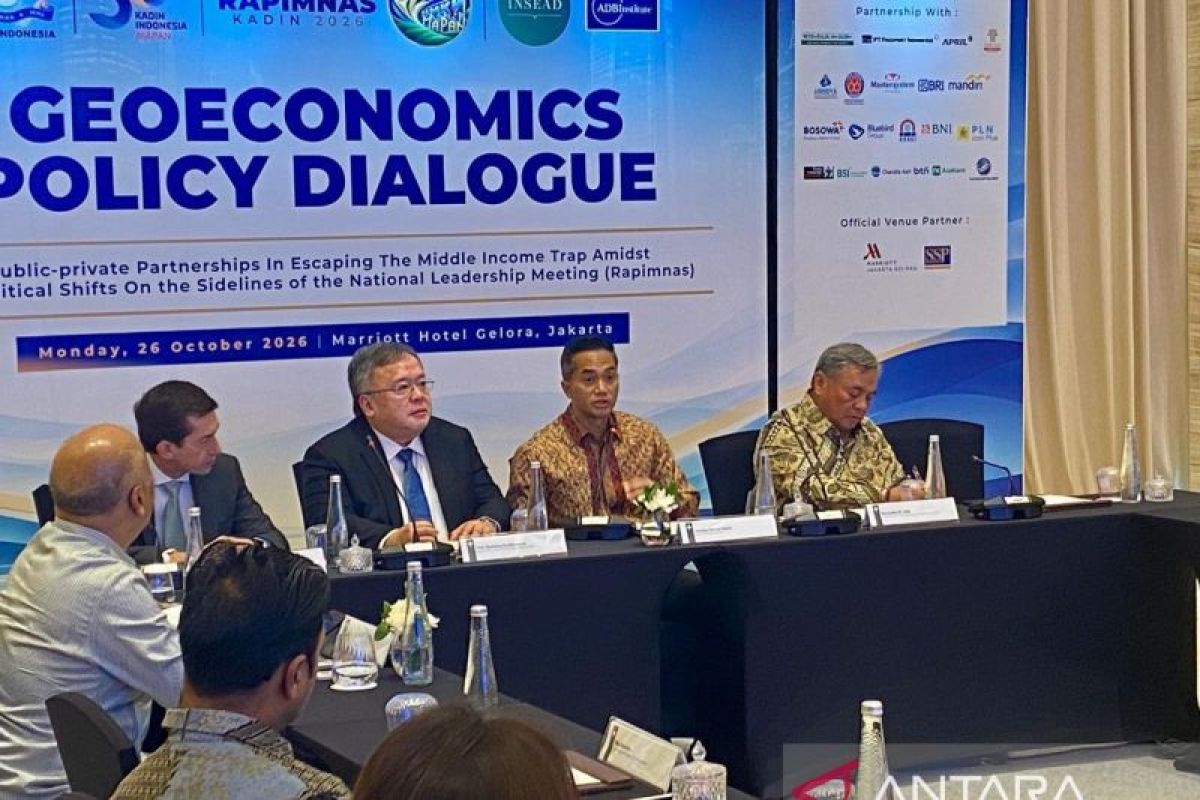
Jakarta (ANTARA) — The Asian Development Bank Institute (ADBI) believes the private sector and state-owned enterprises (SOEs) can jointly drive Indonesia’s economy and help the country escape the middle-income trap.
ADBI Dean and CEO Bambang Brodjonegoro said the establishment of Danantara reflected Indonesia’s efforts to adopt a Chinese-style model in which SOEs serve as one of the engines of economic growth. He proposed that Indonesia also strengthen the private sector as another engine.
“Why not move forward with two engines rather than relying on just one? One engine would be driven by the private sector, and the other by SOEs with a clear mandate,” Bambang said at the Kadin Geoeconomics Policy Dialogue in Jakarta on Monday.
Bambang noted that the experiences of Japan and South Korea demonstrated the importance of the private sector in driving industrialisation. Both countries became high-income economies in a relatively short period by relying on manufacturing and exports.
Their success, he said, was supported not only by the government and SOEs but also by private businesses. The government acted as an orchestrator, encouraging companies to develop industries and improve their technological capabilities.
In Japan, Bambang explained, large companies have long manufacturing traditions that have advanced alongside technological progress, with firms continuing to innovate and expand their businesses.
He cited Toyota, which began in the textile industry before expanding into automotive manufacturing, drawing on its expertise in textile machinery and learning about US automotive technology through reverse engineering.
Several major South Korean companies also transformed their businesses. Samsung began in trading, LG in cosmetics, Hyundai in civil construction and SK in textiles, before expanding into industries including electronics, automotive and telecommunications.
“That is the message I want to emphasise for Indonesia. The private sector is very important, but you cannot be complacent or simply enjoy what has been achieved today. The government must keep encouraging private businesses so that, together, they can help the nation escape the middle-income trap,” Bambang said.
He added that government support for the private sector should involve more than industrial policy and should also include financing.
Japan, for example, has provided dedicated financing schemes for industrial modernisation, while South Korea has offered export credit facilities to help companies expand into overseas markets.
Bambang also stressed the importance of integration into the global economy, citing the experiences of China and countries that joined the European Union (EU) in 2004.
China, which joined the World Trade Organization (WTO) on 11 December 2001, significantly increased its per capita income.
Meanwhile, countries including the Czech Republic, Estonia, Hungary, Latvia, Lithuania, Poland, Slovakia and Slovenia, which joined the EU in May 2004, also saw incomes rise and entered the high-income group.
“The key lesson from both these experiences — China and the European Union — is that economic integration is essential,” Bambang said.
Drawing on the experiences of Japan, South Korea, China and the EU, he said the government should provide consistent regulations and build the basic infrastructure industries need.
The government should also set contracted milestones for cooperation with the private sector, as Japan and South Korea have done.
In Indonesia’s case, he said, the Indonesian Chamber of Commerce and Industry (Kadin) could act as a link between credible buyers and suppliers. This would help build global supply and value chains and integrate Indonesia into international production networks.
Bambang proposed three pilot projects that could be launched promptly to boost the competitiveness of national industry.
The first is to build suppliers’ capabilities and competitiveness. The second is to develop supporting industrial services, such as shared utilities, logistics and testing facilities. The third is to strengthen engineering capabilities, including through technology adoption and upgrading.
Source: jawawa.id (https://jawawa.id/newsitem/adbi-private-firms-and-state-owned-enterprises-can-drive-indonesia-out-of-the-middle-income-trap-1793001256)
Originally published by Antara (Indonesian) (https://www.antaranews.com/berita/5811903/adbi-swasta-bumn-jadi-penggerak-agar-ri-keluar-middle-income-trap), translated from Indonesian