
Adaptive Governance Becomes Foundation for Sustainable Growth in Reinsurance Industry
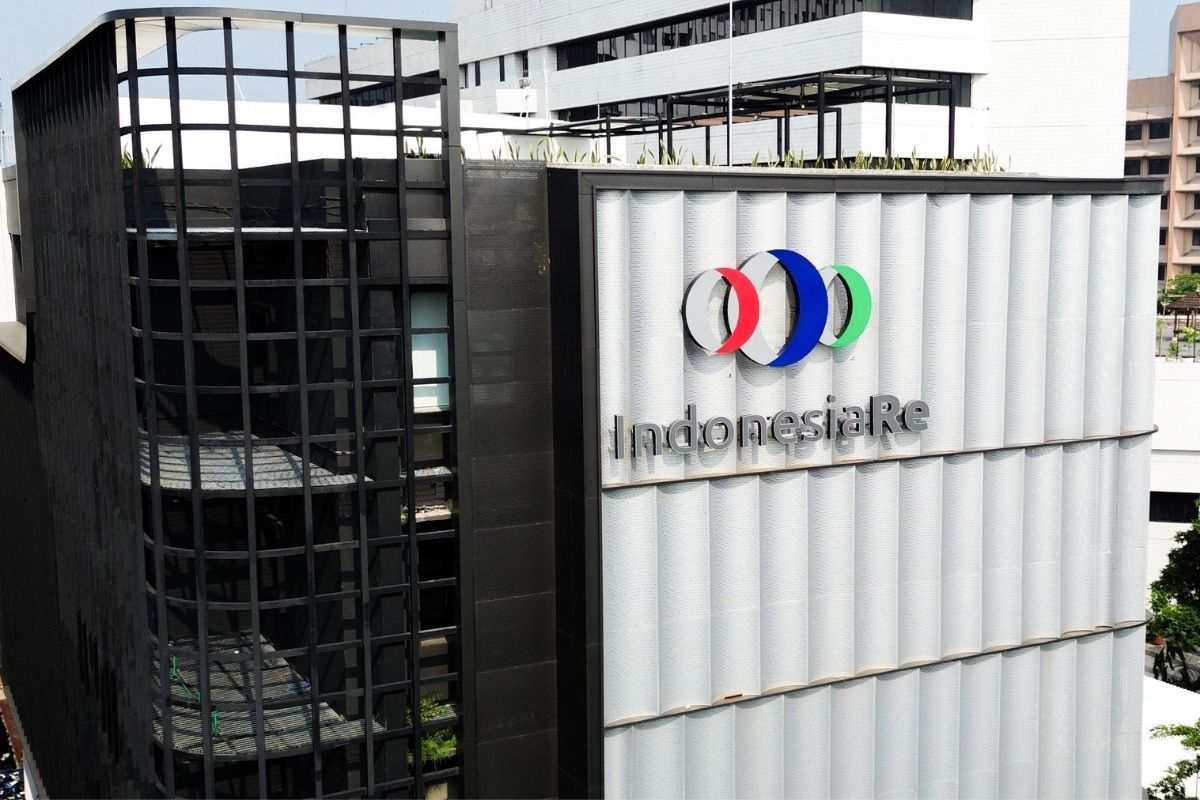
Amid increasing global risk complexity, economic volatility, and digital technology developments, the insurance and reinsurance industry is required to become more adaptive in maintaining business sustainability.
Under these conditions, a company’s competitiveness is no longer determined solely by the size of its capacity or business portfolio, but also by the quality of corporate governance, risk management, transparency, and the ability to adapt to regulatory changes and industry dynamics.
For PT Reasuransi Indonesia Utama (Persero), commonly known as Indonesia Re, strengthening Good Corporate Governance (GCG) is not merely a matter of regulatory compliance, but rather a strategic foundation for delivering reinsurance services that are increasingly reliable, accountable, and oriented towards the needs of insurance companies as business partners.
Indonesia Re President Director Robbi Yanuar Walid said that good governance is a fundamental element in building a reinsurance company. “For Indonesia Re, good corporate governance is felt to be increasingly important along with the rising business risks and challenges faced by the reinsurance industry.”
He further stated that trust is the primary capital in creating sustainable business growth together with all insurance industry partners. “We continue to strengthen governance, service quality, and risk management so that Indonesia Re can become a strategic partner capable of supporting sustainable industry growth,” Robbi asserted. The GCG commitment is an important part of the company’s culture and values, to be adopted by all employees at every level of the organisation.
Throughout 2025 to date, Indonesia Re has consistently implemented various programmes to strengthen the company’s compliance and integrity culture. These programmes include not only annual socialisation and ceremonial activities, but also periodic compliance discussion forums, compliance self-assessments, and structured measurement of risk management maturity (Risk Maturity Index) across all lines of the organisation.
The socialisation activities carried out include procedures for completing and submitting State Officials’ Wealth Reports (LHKPN), implementation of Personal Data Protection (PDP), gratification control guidelines, the World Anti-Corruption Day (HAKORDIA) campaign, and anti-bribery education through various internal company media.
As part of strengthening the compliance culture, Indonesia Re also measures the Risk Maturity Index (RMI) referring to the 2023 KBUMN Technical Guidelines on Risk Maturity Index Assessment within State-Owned Enterprises. The RMI measurement for the 2024 period, conducted from July to September 2025, produced a score of 3.10, placing it in the “Good Practice Phase”, reflecting the consistency of risk management implementation across every line of the company in accordance with the established framework.
These various initiatives are carried out to instil a culture of integrity and compliance across all business lines, as well as to demonstrate good corporate governance practices. Through strengthening this culture, Indonesia Re maintains the trust of shareholders, business partners, regulators and other policy stakeholders, while supporting the creation of accountable and transparent business processes.
All of this implementation is carried out based on eight Good Corporate Governance principles covering the effectiveness of corporate organs, governance processes, risk management, and transparent relationships with all stakeholders.
The implementation of GCG is also periodically evaluated through internal supervision and monitoring from various parties, including the Financial Services Authority (OJK), the SOE Regulatory Body (BP BUMN), PT Danantara Asset Management, and the Financial and Development Supervisory Agency (BPKP).
According to Robbi, the sustainability of governance implementation is an important factor in maintaining the company’s competitiveness amid increasingly complex industry risks. “Through the ongoing governance transformation, including strengthening risk management, digitalisation, compliance, and human resource development, we want to ensure that Indonesia Re becomes a sustainable company for all stakeholders,” said Robbi.
This consistency is reflected in the results of the 2025 GCG implementation assessment, which obtained a score of 4.84 out of 5, or 96.80 percent, with a “Very Good” classification based on OJK’s assessment. The various achievements attained by Indonesia Re throughout 2025 demonstrate that the company implements corporate governance within its employee culture and organisational layers. This implementation is part of the company’s business strategy. In the reinsurance industry, corporate governance is an important factor in maintaining the trust and confidence of shareholders, business partners, and especially insurance companies as the company’s clients.
Indonesia Re also achieved various national recognitions throughout the 2024-2026 transformation period. The company received the Trusted Companies award at the Corporate Governance Perception Index (CGPI) in 2024-2025, the Top GRC Awards 2025, The Most Committed GRC Leader 2025, and Indonesia’s Most Respected In-House Counsel 2025.
In addition to strengthening governance, Indonesia Re continues to maintain its commitment to information disclosure as part of efforts to build public trust. Indonesia Re obtained the Informative SOE predicate for two consecutive years on the Public Information Disclosure Index from the Central Information Commission of the Republic of Indonesia, with a score of 97.25 in 2024, increasing to 98.29 in 2025.
In 2026, Indonesia Re again achieved distinction by winning the highest award in the Indonesia Regulatory Compliance Awards (IRCA) 2026. This serves as evidence of the company’s consistency in implementing regulatory compliance.
One of the important transformations undertaken by the company is the implementation of Statement of Financial Accounting Standards (PSAK) 117, which adopts International Financial Reporting Standard (IFRS) 17. The implementation of this standard strengthens risk management and the quality of data-driven business decision-making.
Governance adaptation is also reflected in the process of transitioning Indonesia Re’s ownership into the Danantara ecosystem. The company proactively adjusts its supervisory mechanisms, reporting, and internal coordination structures to remain aligned with the holding company’s governance standards, without reducing compliance with applicable regulations. This adjustment is clear evidence that Indonesia Re’s governance is not static, but continues to evolve following the dynamics of industry structure and regulation.
Going forward, Indonesia Re is committed to making adaptive governance a strategic foundation in facing the dynamics of the national reinsurance industry. The company will continue to strengthen its technology-based risk supervision capacity and capability, accelerate digital transformation, and develop human resource competencies, in line with the vision of making Indonesia Re a trusted strategic partner for the national insurance industry.