
Ad Hoc Court for State-Owned Enterprises Considered at Risk of Overlapping with Corruption Court
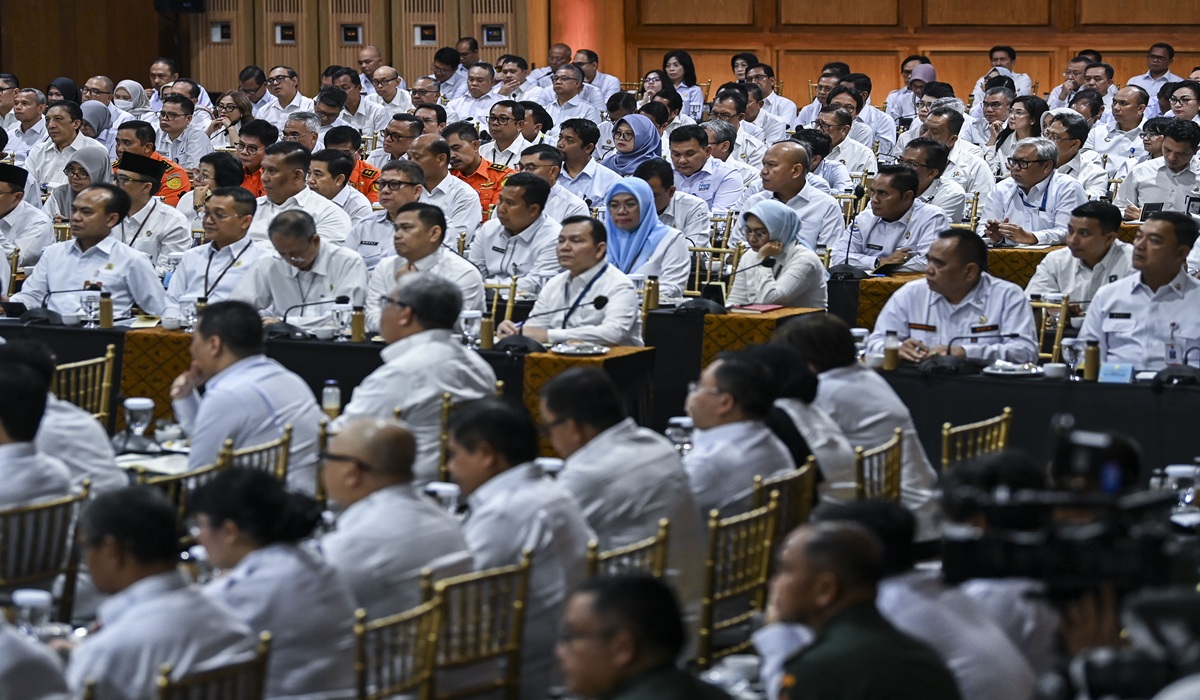
The discourse on establishing an ad hoc court specifically for state-owned enterprise cases is considered to require strict review. Besides the potential for overlap with the Corruption Court, the special court is feared to make state-owned enterprise directors increasingly reluctant to take business decisions.
University of Indonesia state-owned enterprise analyst Toto Pranoto said the establishment of an ad hoc state-owned enterprise court must have clear authority so as not to create new problems in law enforcement.
“There is already a Corruption Court, so the potential for overlap with an ad hoc state-owned enterprise court will be quite high and must be scrutinised,” Toto said in a statement to journalists on Monday (17/8).
According to Toto, the idea can indeed be directed towards strengthening good corporate governance in state-owned enterprises. However, strengthening governance must be accompanied by an understanding among law enforcement officials and judges of the character of business decisions.
“Perhaps what needs to be improved is the quality of ad hoc judges regarding mastery of commercial law, so that decisions can be more comprehensive,” he said.
He assessed that understanding the Business Judgement Rule principle is important so that losses arising from corporate decisions are not automatically categorised as criminal acts.
“At the very least, decisions based on the Business Judgement Rule must be mastered by law enforcement officials, especially judges, so that decisions can be fairer,” he said.
Toto explained that business decisions can be protected by the Business Judgement Rule as long as there is no conflict of interest, feasibility studies are carried out comprehensively, and risk management has been implemented optimally.
“If all these conditions have been met and losses still arise from a corporate action, then we call it a business risk,” he explained.
Conversely, criminal proceedings are still necessary if there are indications of wrongdoing from the outset, such as mens rea, fictitious transactions, and price manipulation.
“Fraudulent decisions by state-owned enterprise management can be detected from the initial intent of the crime (mens rea), the existence of fictitious transactions, price manipulation, window dressing practices, and several other criminal practices,” Toto said.
He also reminded that failure to distinguish business risk from criminal acts could affect directors’ courage to take strategic decisions.
“If there is no improvement in the quality of these ad hoc judges, it is feared that state-owned enterprise boards of directors will not dare to carry out corporate actions, so that state-owned enterprise performance could stagnate,” he stressed.
On that basis, he said, before establishing an ad hoc state-owned enterprise court, the government and the House of Representatives need to clarify the legal basis, authority, types of cases, procedural law, and the mechanism for appointing judges.
“These aspects are important so that the special court does not merely add another institution, but truly provides legal certainty for the management of state-owned enterprises,” he concluded.