
Acute Dependency: Europe Truly Cannot Live Without China
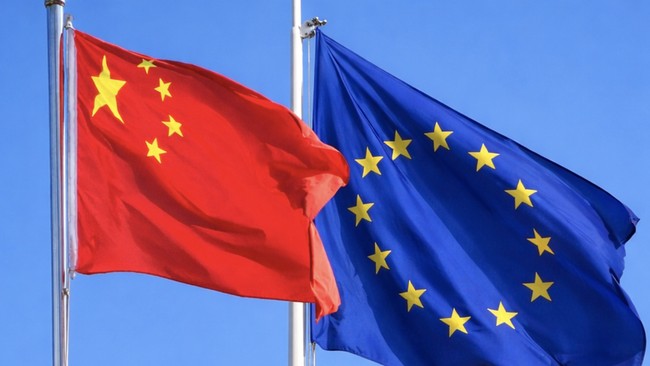
The European Union (EU) is now facing a highly complex economic dilemma ahead of the October deadline to slash its record trade deficit with China. At the same time, the continent is being battered by the worst heatwave in its history. This is forcing local residents to realise they ‘cannot live without China’, as they flock to purchase air conditioning (AC) units, the majority of which are supplied by Chinese manufacturers.
Citing a CNBC International report, the EU and China actually just issued a rare joint statement on Monday in an effort to balance trade flows. They are also attempting to resolve disputes over market access, export controls, and intellectual property rights. However, these negotiations are taking place at a very awkward time, as retail data shows that not one of the five best-selling AC brands in Europe is owned by an EU company.
Three manufacturing giants from the Bamboo Curtain country—Midea Group, Haier Group, and Gree Electric Appliances—successfully gripped a 32% share of the European retail market in 2025. The remaining spots in the top five were filled by Turkey’s Beko and Japan’s Daikin. ‘Chinese exports to the EU continue to rise, while our market share in China continues to shrink. This trend is not sustainable,’ complained European Trade Chief Maros Sefcovic after meeting Chinese Commerce Minister Wang Wentao in Brussels.
This acute dependency is exacerbated by the low AC ownership rate in Europe, which has only reached 20% of households. This figure contrasts sharply with the United States, where ownership is nearly 90%. This vast market gap has prompted Asian producers such as Midea, Samsung, and Mitsubishi Electric to compete in launching massive expansions. One of China’s flagship products, the Midea PortaSplit, even recorded a booking explosion of up to 200,000 units on Monday. The product’s success is due to its engineering advantage, which circumvents strict ancient architecture preservation rules in major cities like Paris; it can be installed without drilling walls and has a refrigerant volume below French regulatory limits.
The absence of local European corporations in the cooling supply chain confirms an industrial failure gap that is now triggering panic within the EU. Moreover, about half of the total goods imported by the EU from China have now shifted to high-tech products such as electric cars and advanced machinery. This structural change is seen as a potential systemic financial problem for the EU if its manufacturing industry continues to be eroded and slowly dies. In response, the European Commission bluntly asserted that the current trade status quo can no longer be maintained.
The EU has begun tightening rules by restricting funding for solar projects that use Chinese-made components. It has also removed tax exemptions for low-value parcel shipments to block giant e-commerce platforms like Temu and Shein. ‘China has not made any real commitment to setting actual import quotas or a tangible implementation mechanism,’ criticised Alicia García Herrero, chief economist at French investment bank Natixis. Herrero assessed that the joint agreement was merely tactical ‘smoke’ from Beijing to make Europe delay the launch of new tariff sanctions. Meanwhile, analysts project that the EU will not launch a full-scale tariff war like the one waged by the United States. The sanctions being prepared are predicted to focus specifically on strategic sectors vulnerable to being used as political tools by Beijing, including rare earth metal supplies, the chemical industry, automotive, and heavy equipment. Nevertheless, the EU must still step with extreme caution, as the Chinese government has warned that it will not hesitate to launch similar economic countermeasures if its industry continues to be pressured by Western protectionist policies.