
Activities of Women in North Kalimantan: PP Tunas a Positive and Necessary Step
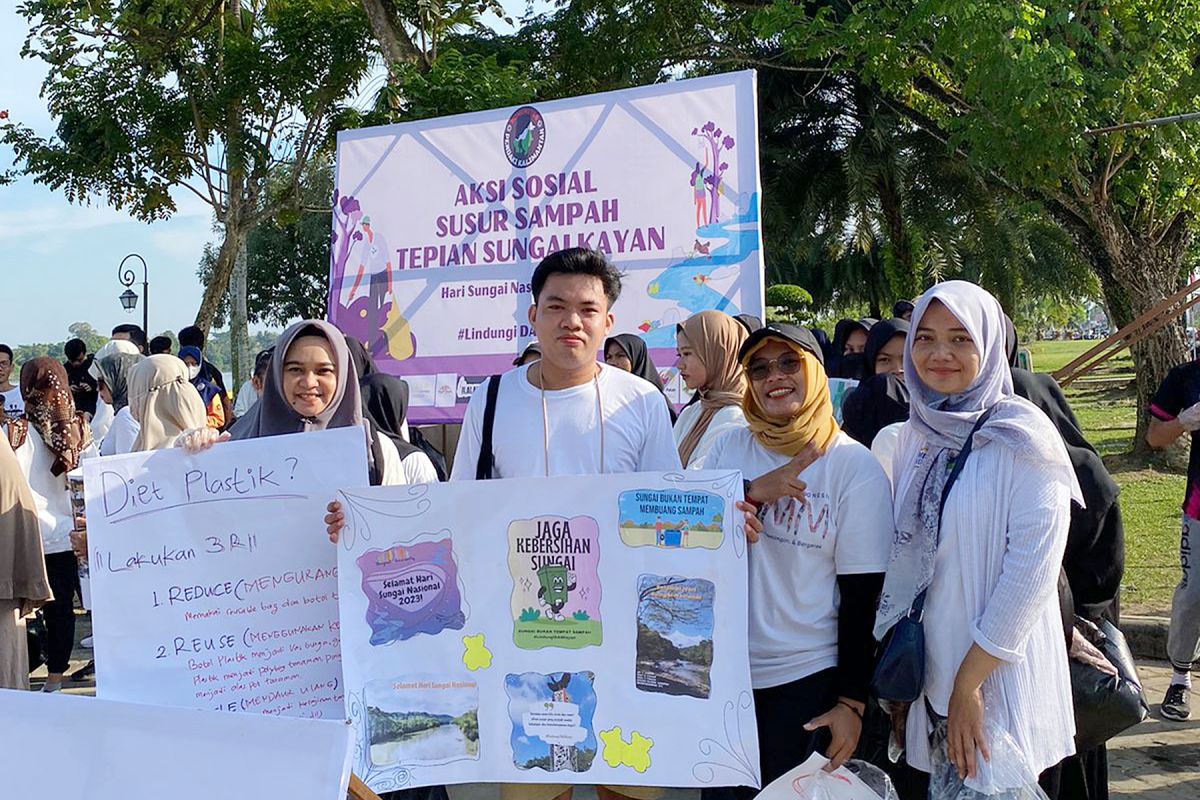
Tanjung Selor, North Kalimantan (ANTARA) - A women’s activist from North Kalimantan province, Norjannah, views the government’s restrictions on high-risk digital platforms for children under 16 as a positive and much-needed step.
“I see this as a positive and very necessary step,” she said via text message on Sunday (29/3), in response to the implementation of Government Regulation No. 17 of 2025 on the Governance of Electronic System Operators in Child Protection (PP Tunas) and Minister of Communication and Digital Regulation No. 9 of 2026.
In North Kalimantan, she noted, particularly in areas like Bulungan Regency, one can witness how children are increasingly exposed to age-inappropriate content, ranging from violence and pornography to digital exploitation.
This, she continued, undoubtedly has a direct impact on children’s psychology, especially girls who are vulnerable to becoming victims of online gender-based violence.
“This age restriction is not about ‘banning’, but about protecting the growth and development phase of children,” stressed the woman who is involved in various women’s organisations, child protection, and environmental groups.
Children under 16, she said, are still in the identity formation stage, so they need a safe space from social media pressures such as body shaming, cyberbullying, and unrealistic lifestyle standards.
However, regarding the restrictions, she added, their implementation must be accompanied by education for parents and strengthening of digital literacy. Without that, she believes the rules could become mere formalities.
On the application of sanctions to violating digital platforms, this hijab-wearing woman, an alumnus of the Faculty of Social and Political Sciences at North Kalimantan University, appreciates the government’s firm approach, which not only creates rules but also imposes sanctions on digital platforms.
“So far, technology companies have often escaped social responsibility, even though they play a major role in shaping children’s behaviour,” she stated.
Furthermore, with the restrictions on high-risk platforms and sanctions for non-compliance, she said, this demonstrates the state’s commitment to child protection rather than solely to digital industry interests.
However, she emphasised that regions like North Kalimantan must not be left behind in supervision and implementation.
“Infrastructure, local oversight, and human resource capacity must be strengthened so that these rules do not only apply in big cities but also reach the villages,” she hoped.
Regarding the benefits of these restrictions, she believes they are highly beneficial and important in rebuilding healthy family relationships. Not only for children but also for parents.
Children, said the women’s activist commonly known as Jannah, will have space to develop naturally, without the pressure of validation from social media. They can also focus on character building, empathy, and real social skills, and certainly avoid digital exploitation and online-based violence.
As for parents, of course, she said, there will be encouragement to become more involved in their children’s lives, making the family the primary space for character education, and family communication can become stronger and more meaningful.
For alternatives to digital platform habits, she mentioned that in Bulungan Regency and North Kalimantan in general, there is actually great potential for productive activities that can serve as alternatives, such as community-based ones like Karang Taruna, children’s forums, local arts and culture groups.
“There are also things like cultural and environmental preservation, learning regional dances, traditional music, or participating in activities to protect forests and rivers, as well as various other positive activities,” she explained.
Importantly, she stressed, the state and local government must also provide safe spaces and facilities for children to develop. Because for her, the regulations issued by the government are a good start. But child protection cannot be left solely to regulations.
“There must be collaboration between the state, families, schools, and society. Because ultimately, the future of children, especially girls, is determined by how seriously we protect them today,” she said.
“And one thing that also needs to be underlined is that these restrictions should not backfire as limitations on critical spaces starting from young people,” she added.
Source: jawawa.id (https://jawawa.id/newsitem/activities-of-women-in-north-kalimantan-pp-tunas-a-positive-and-necessary-step-1774828243)
Originally published by Antara (Indonesian) (https://www.antaranews.com/berita/5499854/aktivitas-perempuan-kaltara-pp-tunas-langkah-positif-dan-dibutuhkan), translated from Indonesian