
Activating Village Cooperatives
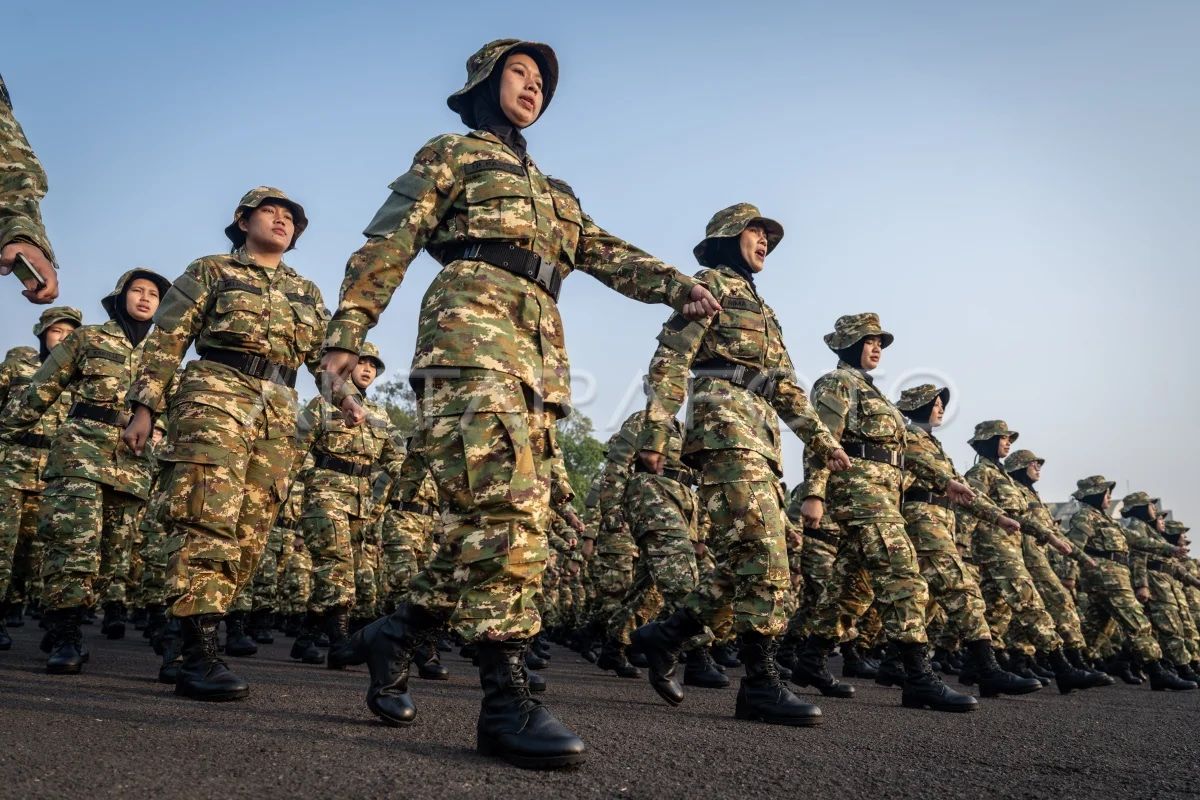
KDKMP must not replace the existing grassroots economy. Local shops, farmer groups, fishermen, livestock breeders, artisans, MSMEs, and local economic actors must be integrated into the cooperative economic network, rather than becoming new victims of a development programme.
Jakarta (ANTARA) - The Merah and Putih Village/Sub-district Cooperative (KDKMP) programme, more popularly known as the Village Cooperative (Kopdes), is now entering its most decisive stage: operationalisation.
By the end of the year, 40,000 KDKMPs are targeted to be operational out of a national target covering approximately 83,000 villages and sub-districts.
This stage is also marked by the issuance of Presidential Regulation Number 82 of 2026 regarding the Governance of KDKMP Implementation on 14 September 2026, and the appointment of KDKMP managers on 25 September 2026.
Entering the operational stage means facing issues far more complex than merely establishing a legal entity or constructing buildings. The real challenge lies in activating the community so that KDKMP becomes a living economic institution, utilised, owned, and democratically controlled by its member community.
As a cooperative, the success of KDKMP cannot be measured solely by the number of outlets opened, the availability of goods, or recorded turnover. The primary metric is the active participation of members and the tangible economic benefits they receive.
This is because cooperatives operate on a different corporate logic. A cooperative is not a capital-driven enterprise, but a people-driven enterprise. Power is not determined by the size of capital, but by the equality of members through the principle of one person, one vote. The orientation is not merely profit maximisation, but benefit maximisation for members.
Therefore, KDKMP must not stop at being just a new shop in the village. It must evolve into an aggregator of both community demand and production. Members’ needs are consolidated to form collective purchasing power, while the production of farmers, fishermen, livestock breeders, artisans, and MSMEs is gathered to build collective bargaining power.
Buildings can be completed by developers, capital can be allocated through budgetary decisions, and legal entities can be issued through administrative processes. However, a cooperative only lives when the people within it engage in cooperative action.
The activation of KDKMP, therefore, needs to be built through four mutually supporting layers: paradigm, superstructure, economic structure, and infrastructure.
The paradigm serves as the foundation because it determines the perspective on people, ownership, companies, and the objectives of economic activities. This paradigm is then translated into a superstructure consisting of constitutions, regulations, and policies. The superstructure must pave the way for changes in the economic structure so that the community can achieve greater bargaining power and a larger share of added value.
Furthermore, infrastructure provides the physical, technological, institutional, and social tools to ensure that this entire process can function in a real and sustainable manner.