
Activating Universities as Curators of Civilisation: Reflections on UIN Maulana Malik Ibrahim’s 65th Anniversary
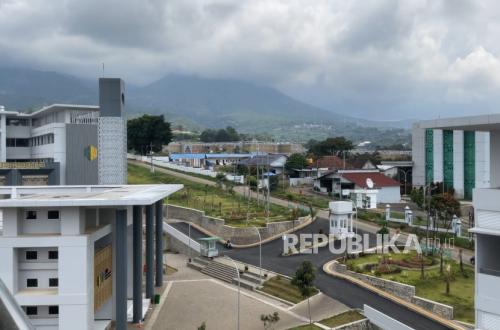
UIN Maulana Malik Ibrahim Malang turned 65 on Wednesday, 28 October 2026. The anniversary is an opportunity to strengthen its identity, reaffirm its aspirations and expand the contribution of Islamic education to Indonesia and the world. The university is seen not only as a centre of learning, but also as a place where people, culture and human values are shaped.
UIN Maulana Malik Ibrahim Malang is therefore expected to continue serving as a curator of civilisation by bringing together Islamic intellectual traditions, science, technology and morality. As an institution under the Ministry of Religious Affairs, it has the potential to become a benchmark for high-quality, integrated and competitive Islamic higher education through stronger teaching, research, community service and academic collaboration.
On this basis, the university is expected to continue improving academic standards and expanding its partnerships so that its contribution to Islamic education and society, nationally and internationally, grows further.
Making excellence an academic tradition
A university’s excellence grows from academic traditions consistently upheld by its entire academic community. Reading, research, discussion, writing and sharing knowledge form the basis of an intellectual environment that is productive, dynamic and open to renewal.
Ki Hadjar Dewantara taught the importance of guiding the development of human potential. In higher education, his thinking inspires lecturers to act as intellectual mentors who create room for exploration, foster independent thought and help students develop their abilities to the fullest.
Making excellence a tradition means creating a campus environment that encourages creativity, collaboration and the exchange of ideas. Students gain opportunities to develop critical thinking, lecturers to expand their research, and administrative staff to support professional, high-quality academic services.
A strong academic culture also requires respect for integrity, perseverance and achievement. Developing the competencies of lecturers and students can go hand in hand with character-building, stronger leadership and wider opportunities for collaboration across disciplines.
Through a tradition of excellence, UIN Maulana Malik Ibrahim Malang can continue to build an academic environment that inspires new ideas. Excellence is not merely an individual achievement, but a collective commitment to developing knowledge, extending the benefits of education and strengthening the university’s contribution to civilisation.
Academic foundations and achievement as assets for civilisation
UIN Maulana Malik Ibrahim Malang’s academic foundation is rooted in the integration of knowledge and religion. The idea of ulul albab inspires the development of people who combine intellectual ability, spiritual depth and social concern as they face the complexities of modern life.
This integration is relevant in a world increasingly in need of dialogue across disciplines. Issues including the economy, climate change, health, artificial intelligence and geopolitical shifts offer universities opportunities to bring together science, technology, the humanities and ethical considerations.
The educational philosopher John Dewey emphasised the relationship between education and lived experience. His thinking inspires learning that connects theory and practice through field research, collaborative projects, industry partnerships and community service that delivers lasting benefits.
Academic and institutional achievements are valuable assets for expanding a university’s contribution. Such accomplishments can provide a basis for new programmes, improved research quality, stronger academic networks and an increasingly productive learning environment.
By combining its academic foundations with a drive for achievement, UIN Maulana Malik Ibrahim Malang has the opportunity to strengthen its role as a centre for developing knowledge grounded in Islamic values. This approach can enable the university to contribute to progress in education, innovation, culture and community development.
Crossing global boundaries and preparing the Golden Generation
Higher education is increasingly characterised by international collaboration, academic mobility and cross-border exchanges of knowledge. UIN Maulana Malik Ibrahim Malang has opportunities to broaden its contribution through strategic partnerships, joint research and greater participation by its academic community in global education networks.
Internationalisation can take the form of student exchanges, research collaboration, joint publications, curriculum development and cross-border academic forums. These initiatives enrich the outlook of the academic community while creating opportunities for Indonesian Islamic education to contribute to global intellectual debate.
Paulo Freire’s ideas inspire an education that fosters awareness, independence and the ability to understand one’s surroundings. This thinking is relevant to preparing the Golden Generation: people able to develop ideas, understand social issues and participate actively in creating positive change.
Global Islamic education also creates opportunities to broaden dialogue on justice, peace, humanity and sustainability. Through interdisciplinary study, UIN Malang can bring the Islamic intellectual heritage into conversation with contemporary developments in knowledge at international academic forums.
The Golden Generation needs a combination of professional competence, creativity, integrity and empathy. Strengthening foreign-language skills, digital literacy, entrepreneurship and collaboration can help students prepare for changes in the world of work and make a broader contribution.
With this orientation, internationalisation becomes a way to extend the benefits of education while strengthening academic identity. UIN Malang has the opportunity to produce graduates who can compete globally without losing their spiritual and national roots or their concern for society.
Strengthening teaching, research, digitalisation and future-ready infrastructure
The quality of teaching is an important foundation for developing the university of the future. Academic discussion, project-based learning, experimentation and interdisciplinary collaboration can enrich students’ experience while fostering analytical, creative and practical thinking.
Stronger research creates opportunities for lecturers and students to generate useful new knowledge. Support for research methods, inter-institutional collaboration, scholarly publication, intellectual property protection and the commercialisation of innovation can extend academia’s contribution to society.
Digitalisation offers strategic opportunities to improve services and strengthen the learning ecosystem. Integrating academic, finance, human resources, library and research systems can support information management, widen access to knowledge and improve the effectiveness of decision-making.
The use of artificial intelligence also opens up opportunities for innovation in teaching and research. With stronger digital literacy and academic ethics, technology can support the development of learning materials, exploration of knowledge, research data processing and improvements in students’ skills.
Future-ready infrastructure can be developed to support a modern and inclusive academic ecosystem. Laboratories, digital libraries, collaborative spaces, environmentally friendly facilities and accessible amenities for students are all important to creating a high-quality learning experience.
All these developments require competent and adaptable people. Lecturers, researchers, administrative staff and students are the drivers of transformation, making investment in skills, leadership and collaboration vital to the university’s progress.
Strengthening governance, human resources and reputation for the future
The development of UIN Maulana Malik Ibrahim Malang requires a strategic plan that is forward-looking, measurable and sustainable. Such planning provides a guide for aligning academic development, research, infrastructure, human resources and international cooperation with the institution’s ambitions.
Structured evaluation gives the university an opportunity to identify its achievements, recognise successes and set priorities for the next stage of development. Clear performance indicators and regular monitoring can help ensure that university programmes deliver optimal benefits to the academic community and society.
Professional governance is the foundation of an adaptable and trusted university. Digital services, integrated data, effective resource management and coordination between units can foster a productive, transparent and quality-focused academic environment.
Human resource development is a long-term investment in the progress of higher education. Improving lecturers’ skills, strengthening researchers’ capacity, developing administrative staff and nurturing academic leadership will expand the institution’s ability to address the future needs of education.
Publication and promotion play a strategic role in introducing UIN Malang’s contributions to a wider audience. Research findings, student achievements, teaching innovations, alumni work and community service can be communicated through academic journals, mass media, policy forums and international networks.
These agendas strengthen UIN Malang’s prospects of developing into an excellent, competitive Islamic university with broad social benefits. Its 65th anniversary is an opportunity to unite pride in the institution’s journey with optimism about the future of Islamic higher education.
UIN Maulana Malik Ibrahim Malang as a curator of civilisation
Activating UIN Maulana Malik Ibrahim Malang as a curator of civilisation means positioning the university not merely as an heir to intellectual traditions, but as a driver of renewed knowledge. It means making the university a meeting place for Islamic heritage, scientific progress, technological transformation and human responsibility, in order to shape a future of dignity.
In Democracy and Education (1916), the educational philosopher John Dewey viewed education as a process of growth through experience and social interaction. Al-Ghazali, meanwhile, placed the pursuit of knowledge in close connection with moral development. Together, these perspectives offer a foundation for a university that integrates intellectual ability, spiritual depth and social responsibility.
These aspirations find concrete context in UIN Maulana Malik Ibrahim Malang’s reported achievements. In 2026, the university said that 68 per cent of its study programmes had received the highest accreditation rating, while 35 per cent had international accreditation. The number of research projects rose from 120 in 2025 to 285 in 2026, and 302 lecturers were given the opportunity to conduct independent research.
Internationally, Scopus–SciVal data for 2025–2026 recorded 351 scholarly publications and 442 international citations. Among State Islamic Religious Universities (PTKIN), UIN Maulana Malik Ibrahim Malang ranked third by publication volume and second by citation count. The university also reported that 1,086 students had achieved distinction and 671 had obtained BNSP competency certifications in 2026.
These figures can be seen as an academic asset for going further: extending the influence of knowledge, strengthening international collaboration and producing research that addresses society’s needs. Academic productivity becomes more meaningful when knowledge is not only published, but also informs policy, drives innovation and improves quality of life.
Ultimately, a curator of civilisation is an institution able to bring together three responsibilities: safeguarding the wisdom of the past, developing knowledge in the present and preparing humanity for the future. In this context, UIN Maulana Malik Ibrahim Malang has an opportunity to extend the contribution of Islamic education through academic excellence, moral integrity and intellectual dialogue across nations.
Sixty-five years of history are not a finishing line, but a foundation for a new chapter in Indonesian Islamic education. The greater ambition is for UIN Maulana Malik Ibrahim Malang to be known not only for its academic achievements, but also for ideas, graduates and scholarly work that make a meaningful contribution to world civilisation.
Source: jawawa.id (https://jawawa.id/newsitem/activating-universities-as-curators-of-civilisation-reflections-on-uin-maulana-malik-ibrahims-65th-anniversary-1793163219)
Originally published by Republika (https://opini.republika.co.id/berita/tnlnyd291/mengaktivasi-perguruan-tinggi-sebagai-kurator-peradaban-refleksi-65-tahun-uin-maulana-malik-ibrahim), translated from Indonesian