
Acting BI Governor: Monetary Policy Direction Remains Unchanged Following Leadership Transition
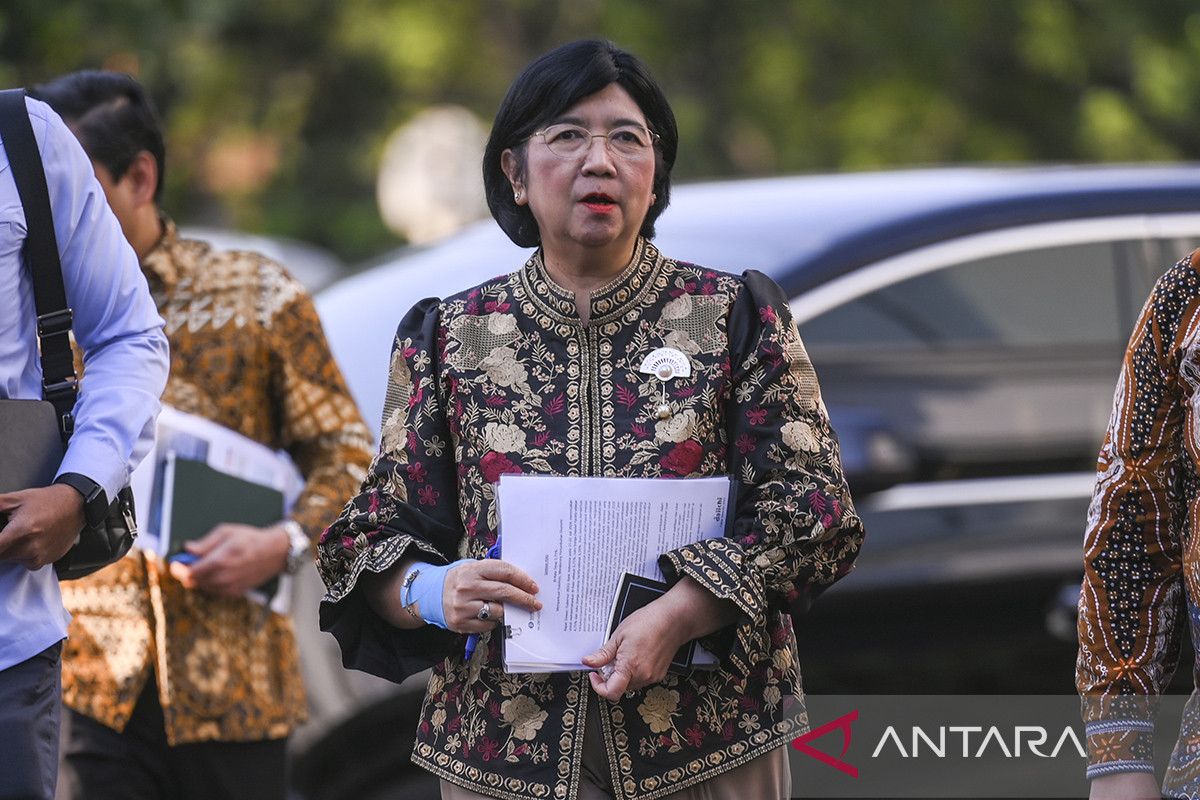
The Acting Governor of Bank Indonesia (BI), Destry Damayanti, has emphasised that the direction of monetary policy remains unchanged despite the recent leadership transition, continuing to prioritise the stability of the Rupiah exchange rate and inflation control amidst high global economic uncertainty.
“I want to emphasise that with our current formation, Bank Indonesia’s policy position remains the same. It has not changed compared to the previous stance,” Destry stated during an online presentation at a meeting with media editors in Parapat, North Sumatra, on Friday.
Leadership at the central bank changed after Perry Warjiyo resigned as Governor of Bank Indonesia on Saturday (26/7), ending his eight-year tenure. In accordance with the Bank Indonesia Law, if a vacancy occurs, the position of Governor is automatically assumed by an Acting Governor from the Senior Deputy Governor, until the President proposes a candidate and obtains approval from the House of Representatives (DPR) to appoint a definitive governor.
Destry explained that BI’s primary focus remains safeguarding the stability of the Rupiah by optimising all available policy instruments. The central bank continues to maintain its presence in the market through various intervention instruments, in both the spot market and the Domestic Non-Deliverable Forward (DNDF), to strengthen external sector stability.
According to her, global uncertainty remains high, particularly due to the prospects of the United States Federal Reserve’s interest rates, which are expected to remain at a ‘higher for longer’ level. Such conditions have the potential to exert pressure on emerging economies, including Indonesia. During the announcement mid-week on Wednesday (29/7), the Fed maintained its benchmark interest rate at 3.50-3.75 per cent, but with signals of potential rate hikes in the future.
Due to these factors, alongside global inflation dynamics, BI continues to prioritise exchange rate stability and ensuring inflation remains within target. However, beyond maintaining monetary stability, BI is also ensuring that various policies to encourage economic growth continue to function, including macroprudential and payment system policies.
In the banking sector, Destry noted that BI continues to strengthen the intermediation function to increase credit distribution to businesses, including MSMEs and priority sectors. Furthermore, she explained that BI is strengthening coordination with the government, the Financial Services Authority (OJK), and other members of the Financial System Stability Committee (KSSK) to maintain national financial system stability.
Meanwhile, in controlling food inflation, BI continues to optimise synergy through the Central Inflation Control Team (TPIP), Regional Inflation Control Teams (TPID), and the National Movement for Food Inflation Control (GNPIP).
“We remain focused on stability by optimising various instruments and policies available to us. For growth, we will certainly optimise macroprudential policies, payment systems, and our policies in developing MSMEs, the Sharia economy, and the green economy,” said Destry.