
Acquisition Plans That Fail to Meet Needs: An Il-78 Case Study
Advances in aerial refueling technology allow fighter jets to fly thousands of kilometres for several hours, with the only limitation being the pilot’s physical endurance. Generally, existing regulations allow combat pilots to conduct ferry flights lasting between eight to 10 hours continuously.
Because of this, Indonesia’s ordered F-16A/B/C/D fighters can be flown directly via ferry from the United States to Indonesia without needing transport aircraft. Only the delivery of Russian-made fighter jets to Indonesia has never utilised aerial refueling capabilities, making them heavily dependent on cargo aircraft.
By leveraging aerial refueling technology, nations such as the United States and Israel can strike targets in Iran without needing to land at intermediate bases for refuelling.
There are two methods of aerial refuelling: probe and drogue, and boom, with each fighter jet utilising a specific technique. Most fighters worldwide employ the probe and drogue method, while the remainder adopt the boom technique, particularly those used by the US Air Force.
Aerial refuelling can be performed by transport aircraft designed for such functions, or between fighter jets themselves. Considering the requirements of the probe and drogue method, several aircraft manufacturers design tankers with varying capabilities to suit consumer needs.
Turboprop transport aircraft such as the C-130 and A400M are designed as tankers for the probe and drogue technique using different schemes. Generally, the C-113 carries fuel tanks in its cargo hold to perform aerial refuelling optimally.
In contrast, the A400M does not require additional fuel tanks in the cargo hold because its internal fuel in the wings and centre wing box is sufficient to support fuel transfer to fighter jets. Meanwhile, the boom method is applied by the KC-135, although a small number of Boeing B707-based tankers also adopt the probe and drogue technique.
The KC-46 and A330 MRTT are two tanker aircraft powered by turbofan propulsion systems that combine both the probe and drogue and boom methods, facilitating aerial refuelling for various different fighter jets.
Using the B767-2C as a baseline, the fuel supplied by the KC-46 to receiving aircraft comes from internal tanks in the wings and additional tanks in the cargo hold. Meanwhile, the A330 MRTT, which utilises the A330-200 airframe, relies entirely on fuel from the wings and centre tank to be transferred to receiving aircraft.
Both the KC-46 and A330 MRTT can function as tankers for strategic purposes, whereas the C-130 and A400M can be categorised as tankers for tactical purposes, considering their more limited flight range compared to jet tankers.
For decades, Indonesia has only possessed two C-130Bs as tanker aircraft, a number which decreased to one eleven years ago after one unit crashed in Medan. With the arrival of two A400Ms, Indonesia now has three tanker aircraft, all of which are only capable of performing aerial refuelling via the probe and drogue method.
However, to date, the two A400Ms have never conducted aerial fuel transfer tests with fighter jets. The Indonesian Air Force fighter jets that can be serviced by these turboprop transport/tanker aircraft are the Rafale F4i, Su-27/30, and Hawk 100/200, whereas the F-16A/B/C/D cannot receive fuel from the C-130B and A400M because they utilise the boom technique.
Considering the aerial refuelling capabilities required for the F-16, during the Minimum Essential Force (MEF) era of 2015-2019, there were plans to acquire tanker aircraft that utilised both probe and drogue and boom methods. Competition occurred between the KC-46 and the A330 MRTT, but during the MEF 2020-2024 period, Airbus was actually the strongest candidate to supply tanker aircraft.
However, in 2021, a shift occurred, leading Indonesia to decide to purchase the A400M, which possesses probe and drogue capabilities, rather than bringing in the A330 MRTT. Following this, there was hope that during the Optimum Essential Force (OEF) era of 2025-2029, the Ministry of Defence would proceed with the procurement of the A330 MRTT or A330 MRTT+ as the latest version adopting the A330-800neo airframe.
Observing current defence strength and future defence plans, Indonesian aerial assets using the boom method for aerial refuelling include not only the F-16 but also the KF-21, should Indonesia proceed with its purchase. Currently, Indonesian F-16 pilots build aerial refuelling capabilities through cooperation with the US Air Force, the Royal Australian Air Force, and the Republic of Singapore Air Force, all of which possess boom-equipped tankers.
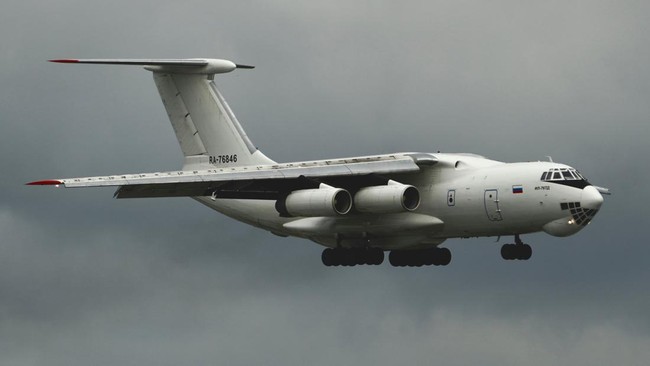
However, developments this year indicate that Indonesia is not interested in acquiring the A330 MRTT or A330 MRTT+, but is instead very keen to import the Russian-made Ilyushin Il-78 tanker. The reason Indonesia is more interested in bringing in a tanker that only uses the probe and drogue method can be guessed by observing the character of defence procurement in recent years, including the role of intermediaries.
One of the disadvantages if Indonesia adopts the Il-78 as a tanker is from a logistical aspect, as there is no population of such aircraft in Indonesia or Southeast Asia. There are also disadvantages regarding Maintenance, Repair, and Overhaul (MRO) capabilities.