
Achieving Rice Self-Sufficiency in Sumedang's Rice Fields
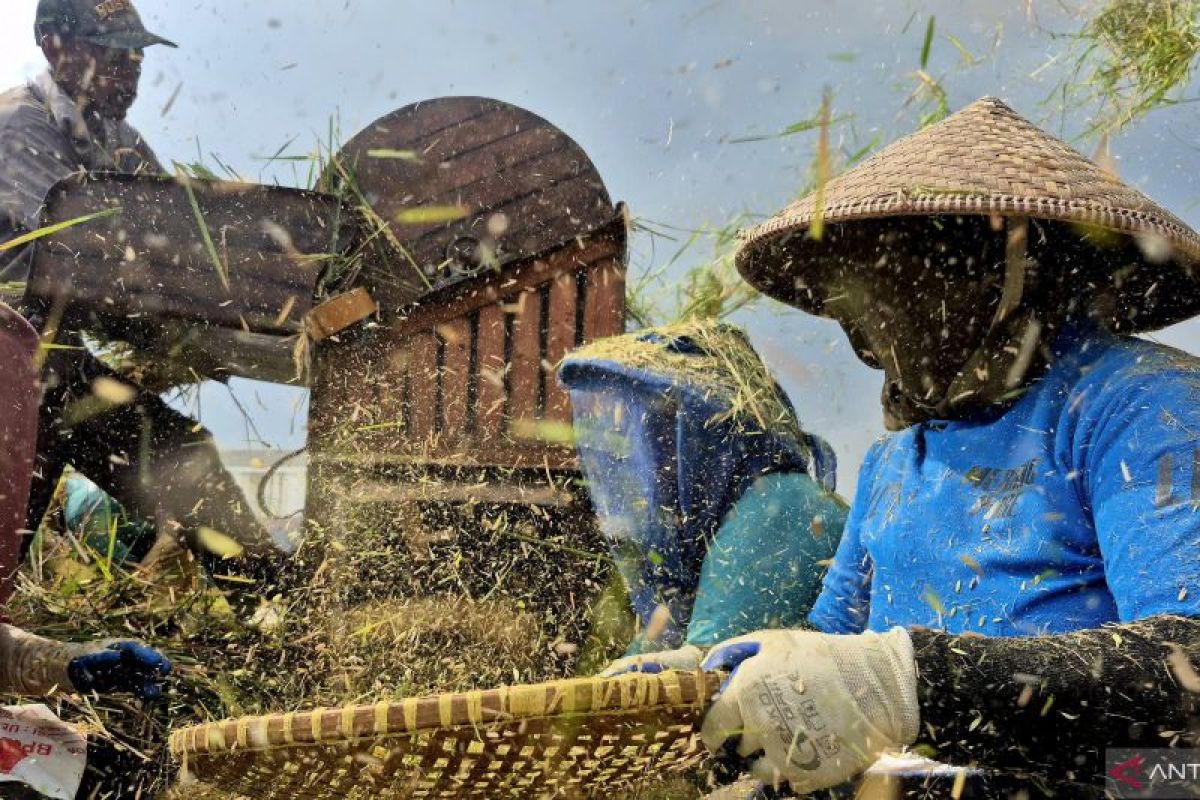
Amidst the golden rice fields each season, Sumedang is embarking on a long journey towards more resilient and sustainable agriculture.
Sumedang (ANTARA) - The rice fields in Sumedang Selatan District are turning golden in the morning, signalling the start of the harvest season.
Beneath the rising sun peeking over the hills, farmers are busy harvesting rice they have nurtured for months. The sound of threshing machines echoes as piles of paddy slowly fill sacks by the field edges.
For farmers, the harvest is not just the end of a work cycle but the beginning of new hope.
Yet behind the beauty of the golden rice fields lies a larger narrative of how Sumedang District maintains food security amid climate change threats and unpredictable weather.
Sumedang is now one of West Java’s rice-surplus regions. Its rice production exceeds local consumption needs, making it a key pillar of regional food supply.
However, maintaining this achievement is no easy task. Challenges such as water availability, irrigation infrastructure, agricultural technology adoption, and farmer generational renewal must be addressed to ensure rice self-sufficiency from season to season.
Behind every harvest season lies the hard work of thousands of farmers across Sumedang. From Buahdua to Ujungjaya, farming activities take place almost year-round to ensure a steady food supply.
This effort has yielded tangible results, with rice production reaching approximately 294,000 tonnes in 2025—far exceeding the local consumption need of around 103,000 tonnes annually.
Head of Sumedang’s Food and Agriculture Security Agency (DKPP), Tono Suhartono, explained that the gap between production and demand results in a significant surplus.
‘Our production is around 294,000 tonnes, while demand is only 103,000 tonnes. That means we have a substantial surplus of over 190,000 tonnes,’ he said.
This surplus is crucial for regional food security. Not only does it meet local needs, but Sumedang’s rice production also contributes to food supply in other parts of West Java. The largest contributions come from production hubs, with Buahdua District producing around 43,190 tonnes—the highest—followed by Conggeang (32,180 tonnes), Ujungjaya (30,250 tonnes), Tanjungkerta (24,680 tonnes), and Sumedang Selatan (23,900 tonnes).
These areas form the backbone of Sumedang’s food production. A combination of vast rice fields, adequate irrigation support, and generational farming expertise are key factors in production stability.
However, the large surplus is not the end goal. Amid rising food demands and increasingly unpredictable climate change impacts, maintaining agricultural productivity is an ongoing challenge that requires sustained effort.