
Achieving Energy Resilience and Self-Sufficiency
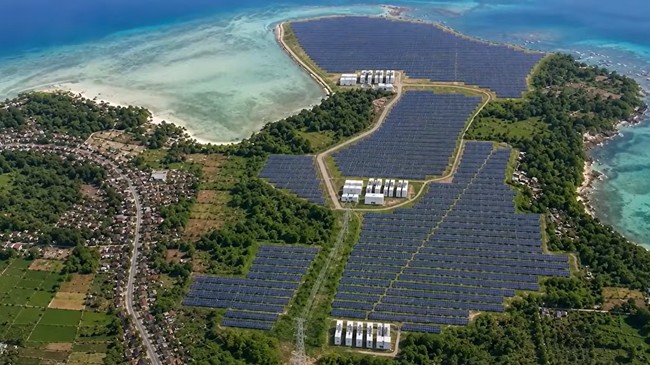
President Prabowo Subianto has stated his vision regarding the future direction of Indonesia’s energy sector development. On various occasions, Prabowo has frequently emphasised that Indonesia must achieve energy self-sufficiency as soon as possible. The intended self-sufficiency covers not only fossil-based energy but also new and renewable energy (EBT).
Efforts to achieve energy self-sufficiency are certainly not an ordinary idea; it is a grand vision. This is because, so far, the discourse regarding energy has focused more on energy security.
The level of discourse regarding energy self-sufficiency clearly “exceeds” the discussion on energy security. Energy self-sufficiency means Indonesia must be able to meet domestic energy needs through its own production capabilities, without imports or purchasing energy from abroad. On the other asides, the development of our current energy sector shows that the import component is high and tends to increase every year.
Sources of Vulnerability in the National Energy Sector
In the oil and gas sector, particularly oil (crude and fuel), Indonesia has been a net oil importer since 2004, with a trend of increasing imports annually. The increase in oil imports is caused by the declining domestic crude oil production, while on the other hand, domestic oil and fuel consumption continues to rise alongside the growing population, number of vehicles, and increased business activities.
BPS statistical data shows that the growth of the oil and gas mining sector has tended to be negative (contracted) every year over the last 15 years. While 20 years ago, domestic crude production reached more than 1 million barrels per day (bpd), it is now below 700,000 barrels per day (bpd).
This condition creates vulnerability for national energy security if geopolitical conflicts involving oil-producing countries occur, such as the current situation in the Middle East.
Geopolitical conflicts involving oil-producing nations will undoubtedly disrupt the global oil supply, not only due to hindered production and distribution activities but also due to the expansion of protectionist policies aimed at maintaining energy security in each supplying nation.
Recently, China announced it would halt its fuel exports. China is unique; it is one of the world’s largest oil importers, yet it also possesses large-scale oil refineries capable of meeting domestic fuel needs (self-sufficiency) and becoming an exporter of fuel and other petroleum products. Now, to maintain its domestic energy security, the Chinese government has halted its fuel exports.
In addition to supply disruptions, Indonesia also faces the risk of increased State Expenditure in the form of rising fuel subsidies and compensation burdens due to rising oil prices. Based on sensitivity analysis in the 2027 Draft State Budget (RAPBN) Financial Note, it is stated that a US$1 per barrel increase in the realised Indonesian Crude Price (ICP) above the 2027 APBN assumption will increase the budget deficit by Rp8.5 trillion. This occurs because the impact of an ICP increase on state expenditure is much larger than its impact on state revenue.
The global energy crisis is also a source of vulnerability for Indonesia’s electricity sector. There are at least two sources of vulnerability faced by the electricity sector due to these external fluctuations.
First, external fluctuations in the form of rising oil prices are usually followed by rising prices of other primary energy, especially coal. Consequently, rising global coal prices will encourage coal producers to export their production, potentially causing a coal supply shortage for domestic power generation.
Second, instability in the energy sector (in the form of rising oil prices) is usually followed by volatility in the financial market in the form of a weakening of the currency (including the Rupiah) against the US Dollar (USD). The weakening of the Rupiah leads to an increase in the Basic Cost of Electricity (BPP).
This is because most components of the BPP are paid in USD, whereas the electricity sales revenue received by PLN is in Rupiah. This condition creates a mismatch that results in exchange rate losses, which potentially reduces PLN’s financial capacity.
Based on the author’s calculations, between 2009 and 2024, PLN recorded a net loss due to exchange rate differences of Rp86.43 trillion, which is equivalent to PLN’s net profit over the last four years. If these exchange rate losses continue, PLN’s existence as a government agent to achieve energy security or self-sufficiency will be disrupted.
Weakening Investment Performance in the Energy Sector
To achieve energy self-sufficiency, or at least energy security, strategic efforts are required; “business as usual” is not enough. This involves massive resources and the involvement of stakeholders on a large scale.
The resources required are primarily investment funding. Stakeholder involvement includes not only regulators and energy sector players but also fiscal authorities, auditing authorities such as the Audit Board of Indonesia (BPK RI), Bank Indonesia (BI), and the Financial Services Authority (OJK), financial institutions, and law enforcement agencies (APH).
So far, energy issues are often viewed solely through the lens of sectoral regulatory responsibility, in this case, the Ministry…