
Ace Hasan and Jusuf Kalla Attend GIHES 2026, Discussing Islamic Boarding School Education
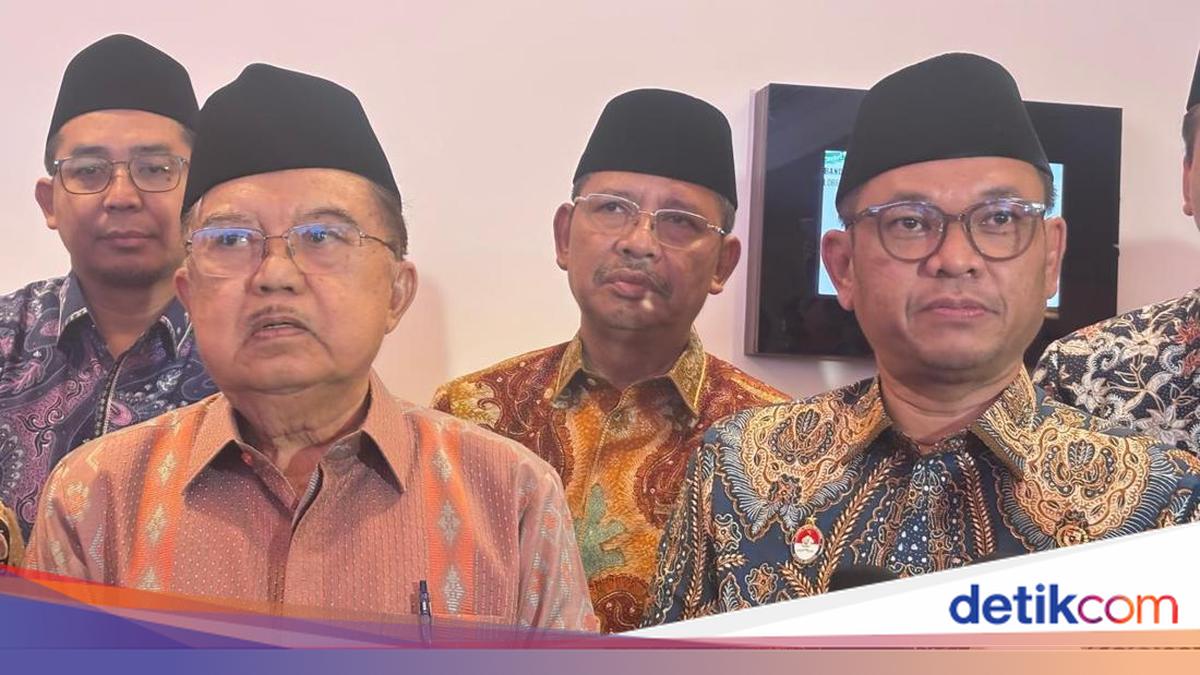
The Governor of Lemhannas RI, Ace Hasan Syadzily, revealed the potential for pesantren to become a global force in both education and peace. He noted that the educational traditions of pesantren possess values that are highly relevant to the needs of the modern world.
Ace Hasan shared these views while attending the Global Islamic Holistic Education Summit (GIHlar) 2026 at the Hotel Borobudur, Jakarta, on Saturday (5/9/2026). He stated that future education must go beyond mere academic achievement to shape whole individuals, encompassing character, spirituality, skills, and social responsibility.
“Pesantren is not merely a place for students to seek knowledge; pesantren is a school of life,” said Ace.
According to him, students do not only learn through classroom lessons. They are also forged through the discipline of daily life, learning simplicity, self-management, cooperation, service, leadership, and responsibility.
“In pesantren, values are not just taught, they are lived. Character is not just explained theoretically, but formed through habituation,” he added.
Ace believes that the pesantren experience can contribute to Indonesia’s role in the global conversation regarding holistic education, especially since pesantren possess a tradition of leadership and character building that has spanned generations.
He noted that pesantren have the potential to produce global leaders, provided these leaders maintain their moral roots and humanitarian values.
“Future global leaders must be able to understand cultural diversity, navigate complex geopolitical dynamics, utilise technology wisely, and operate across national borders,” he stated.
“However, they must also possess integrity, empathy, moral courage, wisdom, and a noble purpose in life,” he continued.
Ace also emphasised that pesantren must adapt to technological advancements, artificial intelligence (AI), research, innovation, and international collaboration, without losing their core identity.
“Preserve the values, transform the methods,” he said.
Furthermore, he assessed that strengthening pesantren would ultimately impact more than just education; it could also serve as an effort to build peace. According to Ace, the values of compassion, justice, balance, brotherhood, and respect for human dignity inherent in Islamic tradition carry a universal message.
“In a world increasingly divided by conflict, fragmentation, and mutual suspicion, these values remind us of one fundamental thing: education must not only train humans to compete, but must teach them how to coexist,” he remarked.
He expressed his hope that pesantren could evolve into a force for both education and global peace.
“From pesantren towards global leadership, from education towards peace, from dignity towards civilisation, from Indonesia for humanity,” he added.
Meanwhile, the 10th and 12th Vice President, Jusuf Kalla (JK), assessed that holistic education requires significant changes in the educational system. He argued that education cannot be solely oriented towards rote memorisation.
JK stated that holistic education must simultaneously develop three aspects: head, heart, and hand.
“Head, heart, and hand. The brain, the heart for morality and intelligence, and the hand for practical ability. That is what being holistic means,” said JK.
According to JK, education must also develop logic, innovation, science, and technology. He noted that in the current era, an emphasis solely on memorisation is no longer appropriate.
“We are no longer in the age of memorisation. Nowadays, you just take a mobile phone, use a bit of AI, and everything can be found. Why should we memorise?” he said.
Therefore, JK believes that students must be accustomed to critical thinking, discussion, debate, and the practical application of knowledge. He highlighted the importance of supporting facilities to ensure the concept of holistic education can be truly implemented.
“For holistic education, there must be facilities. It is impossible to have education without labs, without workspaces, without practical rooms, or without debate,” he said.
JK also encouraged a shift in the role of teachers. He argued that in the era of holistic education, teachers should not merely be instructors but must act as facilitators who encourage students to think and discuss actively.
“In a holistic approach, teachers are no longer just teaching, but facilitating. How can students and pesantren students debate with their teachers?” he noted.
JK suggested that the educational system must provide space for students to engage in discussion with teachers, viewing differing opinions as a vital part of the learning process.
JK assessed that changes in the educational system are essential so that graduates possess not only theoretical knowledge but also the ability to apply that knowledge in life and the workforce. He cited the many university graduates who take a long time to find jobs relevant to their studies, noting an imbalance between knowledge and practical skill.
“They might remember the formulas, but they cannot execute them, because their hands have no contact with their brains,” he explained.
Consequently, JK emphasised that holistic education requires concrete action, rather than being limited to seminars or conferences.
“What is needed is change. Perhaps that is why we need action. Not just much talk, but much action among us all,” he concluded.
Source: jawawa.id (https://jawawa.id/newsitem/ace-hasan-and-jusuf-kalla-attend-gihes-2026-discussing-islamic-boarding-school-education-1788637882)
Originally published by detikcom (https://news.detik.com/berita/d-8650343/ace-hasan-hingga-jk-hadiri-gihes-2026-bicara-soal-pendidikan-pesantren), translated from Indonesian