
ACE Convenes 'Scaling ESCO Intermediaries in ASEAN' Workshop to Unlock Energy Efficiency Investment in Indonesia
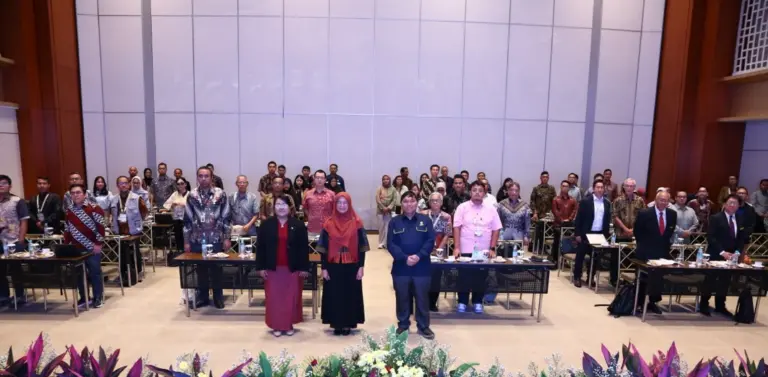
Photo 1. Group Photo of the Participants in the Workshop.
Jakarta, 19-20 May 2026 – The ASEAN Centre for Energy (ACE), through its GCF-KDB Programme, hosted a dedicated capacity-building and business-matching session as part of the Energy Efficiency Investment and Business Forum, co-organised by the Directorate of Energy Conservation, EBTKE, at the Ministry of Energy and Mineral Resources (MEMR) of Indonesia. Held at the Thamrin Nine Ballroom, Jakarta, the session was title “Scaling ESCO Intermediaries in ASEAN: Regional Lessons for Unlocking Energy Efficiency” and attracted 90 participants from ESCO companies, industrial manufacturers, technology provider, financial institutions, government bodies, and international development partners.
Photo 2. Opening Remarks delivered by Retno Woelandari (top left), Executive Director of the Department of Insurance, Guarantee, and Pension Fund Regulation and Development at OJK, Trois Dilisusendi (top right), Head of the Balai Besar Survei dan Pengujian (BBSP) EBTKE, MEMR, and Naing Naing Linn (bottom), Manager of Energy Efficiency and Conservation (EE&C) Department and Programme Manager of GCF-KDB Programme.
Retno Woelandari, Executive Director of the Department of Insurance, Guarantee, and Pension Fund Regulation and Development at the Otoritas Jasa Keuangan (OJK), delivered the opening remarks on behalf of Indonesia’s financial regulatory authority. She highlighted OJK’s commitment to sustainable finance through the Sustainable Finance Roadmap Phase II, the Taxonomy for Sustainable Finance (TKBI), and evolving ESG disclosure frameworks. Notably, she endorsed the Energy Savings Insurance (ESI) initiative as an innovative de-risking instrument and confirmed OJK’s support for developing standardised ESI products within Indonesia’s insurance regulatory framework.
Trois Dilisusendi, Head of the Balai Besar Survei dan Pengujian (BBSP) within EBTKE at MEMR, delivered the second set of opening remarks, commending ACE for convening a diverse and high-calibre assembly of regional stakeholders. He confirmed that BBSP and EBTKE are taking an active institutional role in two critical enabling initiatives: first, the incubation of an Energy Efficiency Secretariat to coordinate ESCO registration, certification, and financial institution interface; methodology to underpin ESI claims, ensuring technically credible and transparent validation of savings shortfalls.
Naing Naing Linn, Manager of Energy Efficiency and Conservation (EE&C) Department and Programme Manager of GCF-KDB Programme at ACE, delivered the concluding opening remarks, framing the forum as a business matching and knowledge exchange platform connecting Indonesia’s industrial and building sectors to ACE’s portfolio of programmes. She also highlighted ACE’s portfolio of programmes – GCF-KDB, ALCBT, PEEB-ASEAN, and ESI. She also highlighted ACE’s decision to engage regional peers from APEIA, MAESCO, and Thai ESCO Association to share proven ESCO market development experiences directly with Indonesian stakeholders.
Photo 3. Session 1 presentation delivered by Naing Naing Linn (top left), Dan Resky Valeriz (top right), Rizky Aditya Putra (bottom left), and Felix Ciosconara (bottom right) from ACE.
The first session then was opened by Naing Naing Linn, presenting the current state of ASEAN’s energy intensity reduction trajectory. As of 2023, ASEAN has achieved a 24.8% reduction against the 2005 baseline, yet the regional target of 40% by 2030 demands a further 15 percentage points of reduction within seven years — a significant acceleration from the current pace. She framed ACE’s four flagship programmes in Indonesia — GCF-KDB, ALCBT, PEEB, and ESI — as a complementary ecosystem: GCF-KDB provides the financing mechanism; ALCBT and PEEB deliver technical assistance for buildings; and ESI provides the risk-mitigation layer that builds project owner confidence.
Dan Resky Valeriz, Technical Officer of ACE’s EE&C Department, presented two complementary instruments. On GCF-KDB, he explained how the credit guarantee — covering up to 95% of loan principal — removes the collateral barrier preventing Indonesian SMEs and ESCOs from accessing bank financing for EE retrofits. On ESI, he explained that the mechanism addresses market scepticism by placing an insurer’s balance sheet behind the energy savings performance guarantee, applicable to projects sized between EUR 50,000 and EUR 300,000 with payback periods of 1.5 to six years.
The session then continues by a presentation from Rizky Aditya Putra, Programme Manager for ALCBT at ACE, presented the Asia Low Carbon Building Transition programme, targeting over EUR 140 million in climate finance mobilisation and 1.67 million tCO₂eq in cumulative emissions reductions. He highlighted the building energy audit incentive under ALCBT and announced an upcoming Energy Manager Training Programme in June 2026, inviting building owners, facility managers, and energy engineers to apply.
Felix Ciosconara, Programme Manager for PEEB-ASEAN at ACE, presented the Partnership for Energy Efficiency (PEEB) in Buildings, a EUR 2 million grant-funded programme running from June 2024 to June 2028. He outlined PEEB’s focus on the policy and regulatory enabling environment — building energy codes, green building certification alignment, and building performance standards — complementing ALCBT’s technical assistance work on the demand side.
Photo 4. Session 3 delivered by Alexander Ablaza (top left) from APEIA, Christopher Seeley (top right) from Thai ESCO Association, and Zulkifli Zahari (bottom), President of MAESCO.
Session 2 opened with a pre-recorded presentation by Alexander Ablaza, Founding Chairman of APEIA, drawing from the IEA-UNEP Global ESCO Market 2025 Report. He noted that global ESCO investment has grown from USD 30 billion in 2015 to USD 38 billion in 2023, whilst Indonesia remains significantly behind with only two active projects. He identified three priorities for Indonesia: