
Accompanying the Sick in Their Most Vulnerable Moments
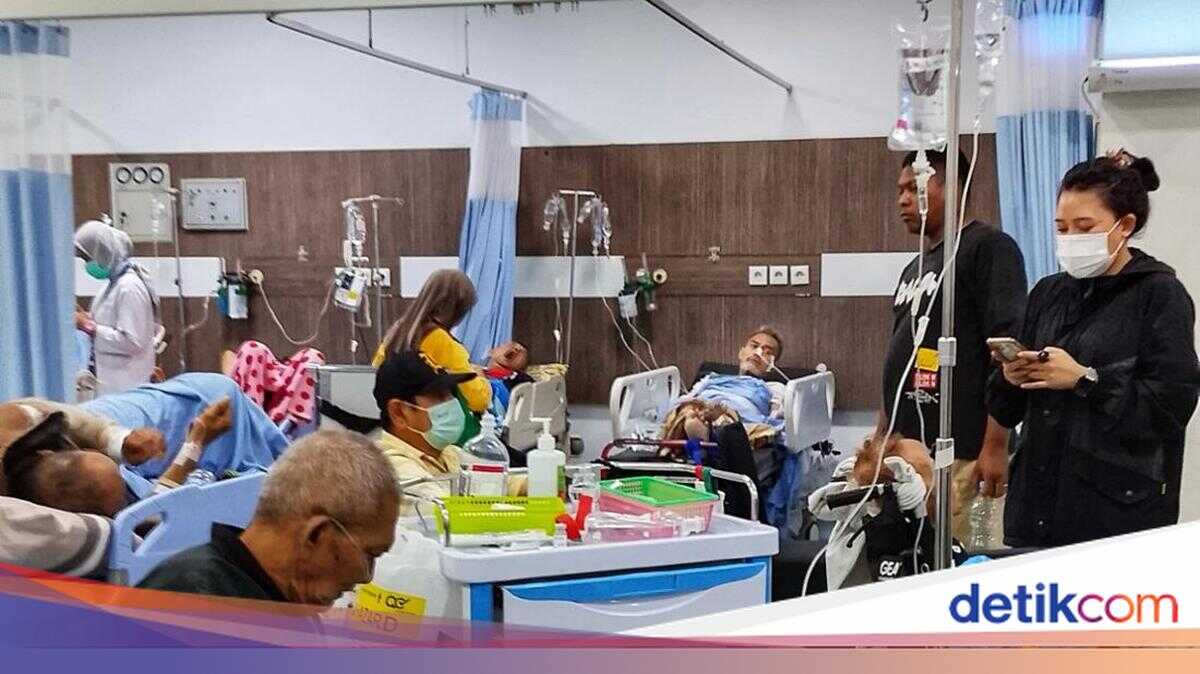
In many hospital wards, the presence of family is not always constant. Some must work, others live far away, and some can only visit occasionally between commitments. It is in these gaps that the figure of the patient companion emerges — not as a replacement for family, but as someone who watches over, waits, and ensures the patient does not feel alone during the most vulnerable period of their life. Najwa Salsabila, known simply as Najwa, has been working as a caregiver since November 2024.
Her decision to become a caregiver was not without reason. At the time, she was on leave and had not yet resumed her studies, though her background was in nursing and she had completed placements at several hospitals. The uncertainty of finding work relevant to her field ultimately led her to a role that has since become her daily life. “I was confused about what kind of work I could do that was related to nursing, so I became a caregiver, because caregivers are greatly needed by patients. It’s also in line with my field of study,” she said.
Behind that decision lay a more personal motivation. She did not merely want to work — she wanted to be present as someone who could help patients as though they were her own family. “What motivated me to offer this service was firstly that I wanted to help many people, and secondly that I wanted to gain experience caring for patients as if they were family,” she explained. Her hospital placement experience became the foundation she applied to her work as a freelance patient companion, which she promotes through TikTok, serving West Jakarta, South Jakarta, and Central Jakarta.
Najwa’s days are filled with tasks that are far from light, yet often invisible to outsiders. She feeds patients, changes nappies, bathes them, helps them eat, cleans their wounds, and even helps patients communicate when they struggle to speak. In many situations, she also accompanies patients to medical appointments, handles registration, collects medication, and assists with small needs such as buying items from a convenience store when patients require them.
However, what she emphasises most is not the physical tasks, but the emotional presence. For Najwa, being a caregiver means ensuring patients do not feel alone in facing their illness. She views patient loneliness as a form of invisible suffering. “I also offer a service where patients can share their worries and concerns about their illness. So they don’t feel alone — they have me. They can tell me anything that weighs on their heart,” she said. From this, the relationship between caregiver and patient gradually shifts from a mere service arrangement to something more personal.
That closeness even continues after the service ends. Najwa acknowledges that one of the most meaningful experiences in her work is the enduring relationships she maintains with patients and their families. “My greatest experience has been gaining many families, because many people who have used my services still consider me family to this day.” After the caregiving period ends, communication does not always cease. “We still maintain good relations,” she said when asked whether those connections endure.
Nevertheless, the journey of being a caregiver is not always met with acceptance. Najwa frequently faces doubt, particularly because of her young age. “I’ve been looked down upon by patients’ families, like ‘Can you really care for my mother until she recovers?’” She also regularly deals with patients who become angry or lash out emotionally. “I’ve been scolded, verbally abused, and patients have said hurtful things to me, but you have to be patient — it always comes back to patience.” For her, the key to this work is not merely technical skill, but patience and sincerity.
That work ethic is also reflected in her payment system. Najwa does not request payment upfront and chooses to be paid only after the work is completed. “I work first, and then they transfer the payment. Sometimes someone transfers at the beginning and I return it, because I haven’t earned my right yet — I haven’t worked. So I don’t want to accept money if I haven’t worked.” For her, being a caregiver is not a profession that can be purely driven by monetary gain. “Caregiver services aren’t just a service where you can expect to earn a lot of money. To offer caregiver services, you must be patient, sincere, and not expect the daily income to be large.”
Her monthly income is not always stable, depending on the number of requests. “It varies, but the most I’ve earned is Rp2.5 million,” she said honestly. She also stressed that her rates already include meals and transport, so patients need not bear additional costs.
Her working hours are never truly fixed. She adapts to the patient’s needs, even if it means arriving at dawn or staying on duty for over a dozen hours. For inpatient care, she typically works a minimum of 12 hours up to a maximum of 20 hours, as she still requires rest. For outpatient accompaniment, the duration may be only around three hours. “The working hours are determined by the patient. For instance, if they want me to accompany them to a medical appointment, it depends on what time the patient wants,” she explained.
Whilst Najwa comes from a healthcare background, a different story is lived by Winda Astariyah Fatimah, a 22-year-old final-year university student who runs a caregiver service whilst completing her thesis. “At the moment, I’m busy with my thesis because it’s the final semester, and I’m taking freelance jobs like this on the side.” She only became fully active in offering patient companion services from January 2026, though her account had been created earlier.