
Accidents at Level Crossings Remain High, Ethics and Compliance Key
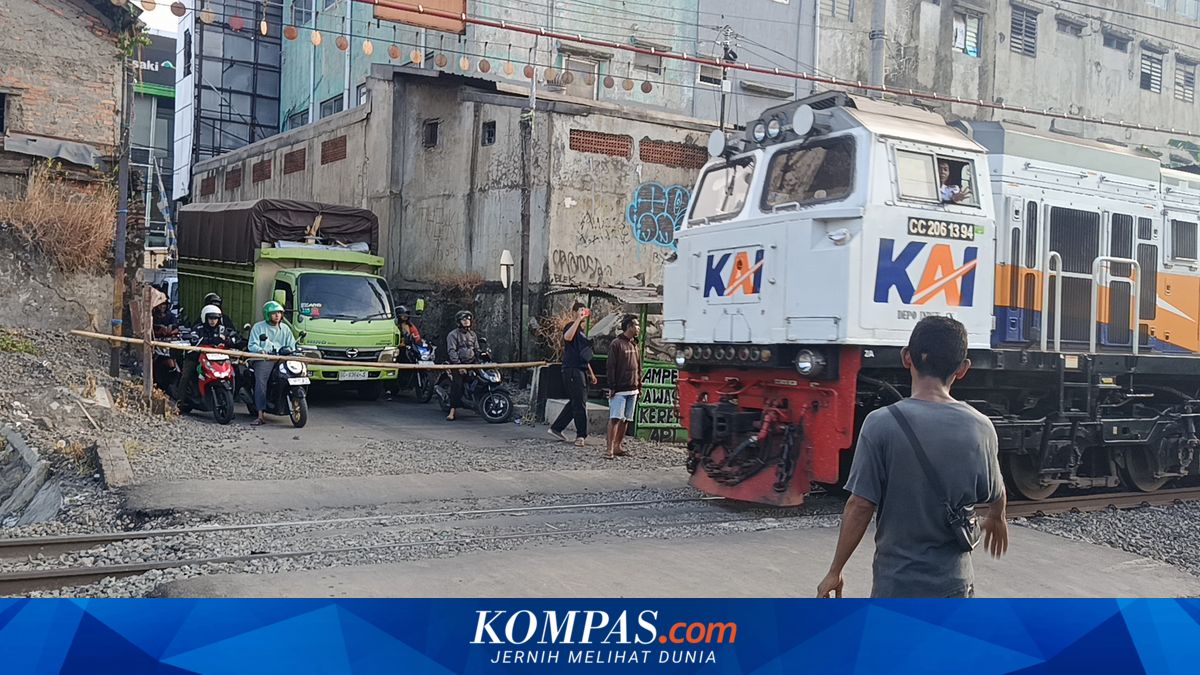
Level crossings are not merely points where roads meet railway tracks, but one of the most accident-prone locations influenced by road users’ behaviour, limited facilities, and infrastructure conditions.
Transportation observer Djoko Setijowarno assesses that the low compliance among road users is the dominant factor in railway crossing accidents.
“Every road user is obliged to prioritise train journeys. However, many accidents occur due to negligence and indiscipline,” Djoko told Kompas.com on Wednesday (29/4/2026).
Djoko stresses that crossing gates at level crossings are not the primary safety device, but merely an aid. This means safety still depends on the behaviour of road users.
“Crossing gates are not traffic signs, but aids to secure train journeys,” he said.
Therefore, drivers are urged to always stop, look left and right, and ensure conditions are safe before crossing, regardless of whether gates are present or not.
Based on data from the Directorate General of Railways under the Ministry of Transportation at the beginning of 2026, 40 accidents were recorded at level crossings.
Of that number, 57.5 per cent occurred at crossings without gates (23 incidents), and 42.5 per cent at gated crossings (17 incidents).
Most accidents were triggered by behaviour of forcing through the crossing (34 cases), followed by stalled vehicles (4 cases) and delayed gate closure (3 cases).
The impacts are not minor. These accidents caused 25 people to die, five with serious injuries, and 11 with minor injuries.
Large loaded trucks can cause dynamic loads when crossing rails, even up to 1.5 to 2 times the vehicle’s weight.
This repeated pressure has the potential to damage rail fasteners, trigger material fatigue, and cause rails to bend or break.
Additionally, excessive pressure can also damage rail foundations and cause subsidence, which ultimately worsens the track conditions.