
Access to Green Electricity Is Increasingly Strategic for Industrial Competitiveness
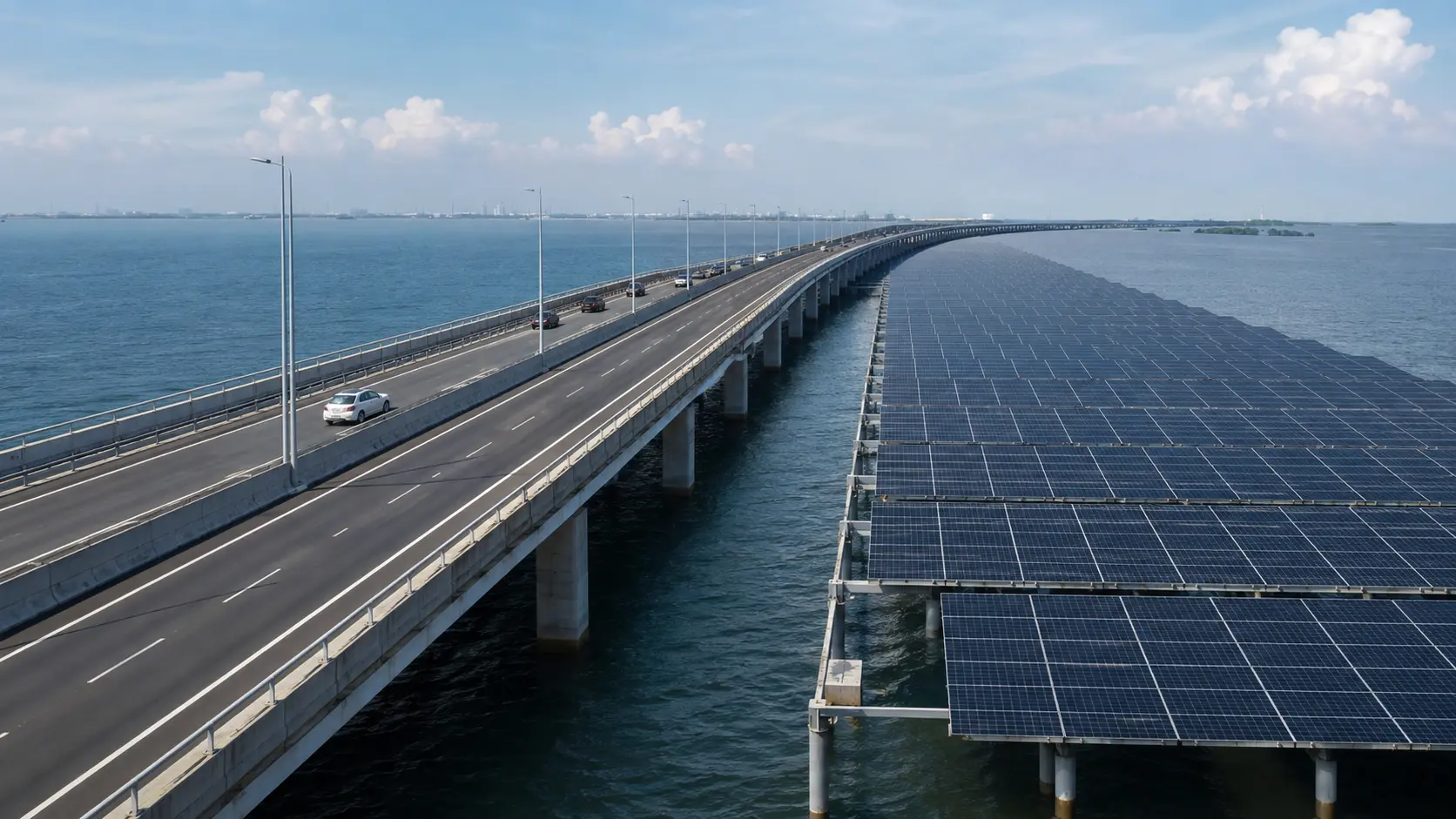
As global markets increasingly demand low-emission products, access to green electricity is becoming part of efforts to safeguard the competitiveness of Indonesian industry. For companies connected to global supply chains, the availability of clean energy is increasingly linked to emissions targets, market access and investment decisions.
As corporate needs evolve, access to green electricity is becoming more relevant to business strategy and meeting market demand. Indonesia needs to ensure that a range of credible and accessible procurement options is available, so that the energy transition can proceed alongside efforts to strengthen industrial competitiveness and investment.
These issues were discussed at a session entitled “How Corporate Demand Can Shape Indonesia’s Green Power Transition”, organised by WRI Indonesia, the Asia Clean Energy Coalition (ACEC) and RE100 as part of the Indonesia International Sustainability Forum (ISF) 2026. The session took place at the Hotel Indonesia Kempinski in Jakarta on Tuesday, 6 October 2026.
“For businesses, access to green electricity is increasingly becoming part of their business strategy. Together, we can expand access to affordable, reliable and credible green electricity, while attracting investment in renewable energy and strengthening Indonesia’s competitiveness,” said Arief Wijaya, Managing Director of WRI Indonesia.
He said companies, as a key market for green electricity, needed to play an important role in developing Indonesia’s renewable energy sector. Measurable and credible demand could drive renewable energy investment, broaden access to reliable and affordable green electricity, and strengthen Indonesia’s competitiveness and investment appeal.
The forum drew on findings from the paper “Corporate Green Power Procurement Options in Indonesia: Taking Stock of Demand & Charting the Path Forward”, presented for the first time that day as a basis for dialogue between demand and supply. The paper was produced by WRI Indonesia and ACEC, with significant contributions from corporate partners and RE100 to improve understanding of companies’ needs and ambitions for green electricity procurement in Indonesia.
“Our study’s findings show that it is important to take the demand-side perspective into account, as more companies are calling for procurement with greater impact. The way we plan energy when dealing with renewables will differ from how we have traditionally planned around fossil fuels,” said Clorinda Wibowo, Senior Manager of Energy and Sustainable Business at WRI Indonesia, during a panel discussion.
The findings underpinned a dialogue bringing together WRI Indonesia, ACEC and RE100 with PLN and the Directorate General of Electricity at the Ministry of Energy and Mineral Resources. The discussion, moderated by Arif Utomo, Engagement Manager for Energy and Sustainable Business at WRI Indonesia, brought together perspectives from business, government and the global electricity market.
A survey of 56 companies found that unbundled renewable energy certificates (RECs)—those not tied to physical electricity supply—are currently the most widely used procurement option, selected by 49 per cent of respondents.
“When designing clean electricity procurement policies in Indonesia, it is important to consider not only companies’ current needs, but also what they will need in three, five and even ten years,” said Mia Nguyen, Chief of Staff and Strategic Initiatives at ACEC.
The paper points to a growing preference for on-site power generation, as well as increased interest in direct contracts with off-site generators over the next five to ten years.
On-site generation was the leading choice at 37 per cent, followed by unbundled RECs at 29 per cent and direct contracts with off-site generators at 23 per cent. Malaysia, Vietnam and Thailand have begun developing new procurement models, and lessons from their experience could inform an assessment of options for Indonesia.
Cost and ease of implementation are important considerations for companies. Seventy-nine per cent of respondents cited the cost of green electricity as a key consideration, while 55 per cent highlighted the ease of obtaining permits.
Source: jawawa.id (https://jawawa.id/newsitem/access-to-green-electricity-is-increasingly-strategic-for-industrial-competitiveness-1791528633)
Originally published by prohealth.id (https://prohealth.id/akses-listrik-hijau-kian-strategis-bagi-daya-saing-industri/), translated from Indonesian