
Access to Financing Opens Room for MSMEs to Grow
Indonesia’s economic growth remains on a positive trajectory. Statistics Indonesia (BPS) recorded the economy grew 5.29 percent year-on-year in the second quarter of 2026. This growth was supported by household consumption, which grew 5.06 percent and remains one of the main pillars of economic growth.
For many ultra-micro entrepreneurs in villages, national economic growth does not always present itself in the form of figures. Rather, it is often felt in matters close to daily life, such as raw material prices, customer numbers, changing consumer tastes, and the need for capital when a business begins to expand.
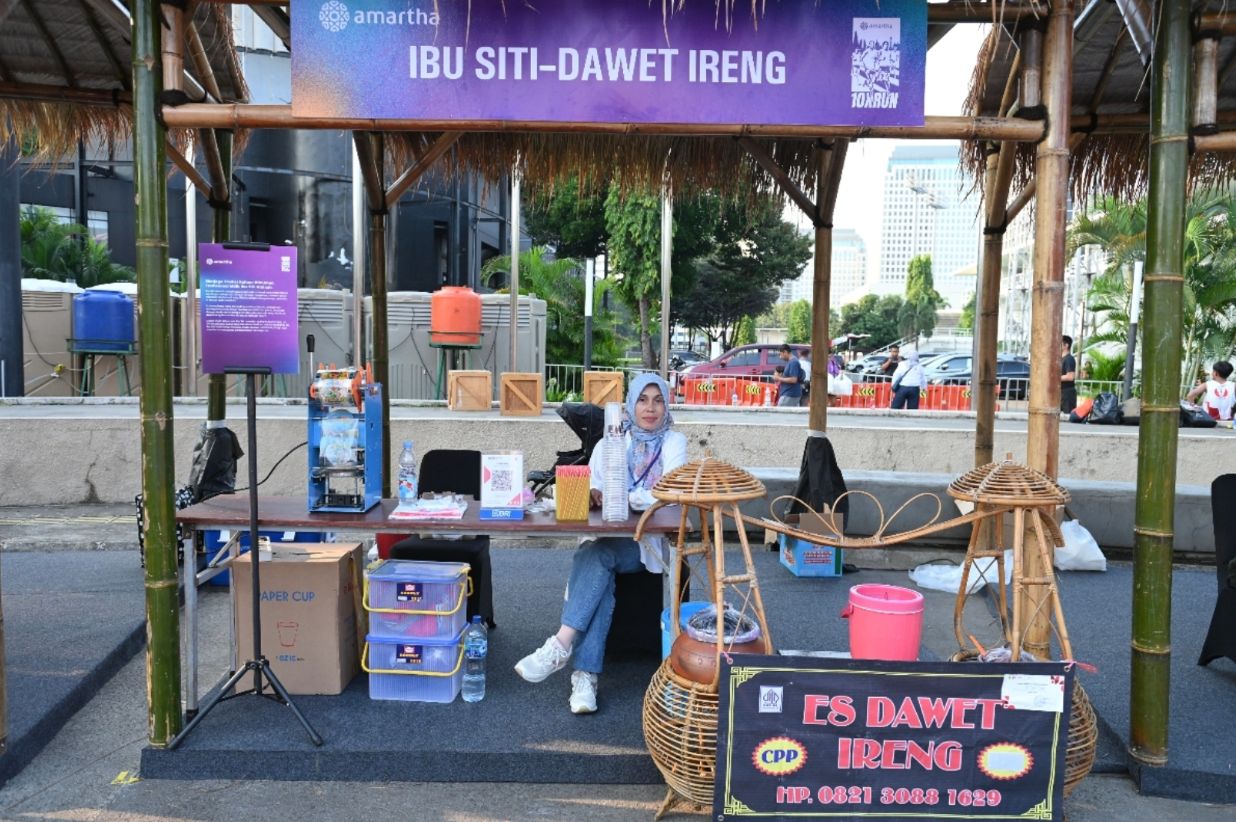
Siti Aminah, owner of Es Dawet Ireng Pawon Jiwandono in Bogor, started her business in 2018 with Rp5 million in capital from her younger sibling. Armed with a family recipe and spotting an opportunity in her area, she began selling to help support her family’s finances. From that simple venture, Siti now records turnover of more than Rp7 million per month during peak sales periods.
However, keeping the business running is no easy matter. Prices of raw materials such as palm sugar, coconut milk and sago have risen several times, squeezing production costs. At the same time, the trend for contemporary drinks such as boba has shifted consumer preferences.
These cost pressures have a broader impact. BPS recorded the Producer Price Index for the Accommodation and Food and Beverage Services sector rose 2.65 percent year-on-year in the second quarter of 2026. On a quarterly basis, the sector index also increased by 1.11 percent.
For Siti, these changes were met by adapting without abandoning her product’s identity. Dawet ireng remains the main product, but she added topping options such as durian, cheese and jackfruit to better align with market tastes. She also expanded her income sources by accepting orders for arisan gatherings, thanksgiving events and birthdays.
“What we maintain is the quality of taste. Customers trust us and keep coming back. Dawet ireng is indeed a traditional drink, but it can be packaged in a more contemporary way without losing its flavour,” said Siti.
When the rainy season causes beverage sales to decline, she pivots to producing peyek as a complementary product to maintain the business’s cash flow.
Years passed and challenges came in turn. The pandemic hit all sectors at that time; her selling activities stopped completely and the family’s income was affected. The opportunity to participate in an MSME bazaar then became one of the turning points for rebuilding the business.
As demand increased, Siti began to need capital to develop her business. Over the past three years or so, financing from Amartha has been used to expand her business reach. “Alhamdulillah, the business has grown, and more people know our products. Business capital from Amartha helped me rent a shop, add employees and expand the business to deliveries outside Bogor,” said Siti.
For MSMEs, access to financing is becoming increasingly important because the sector contributes around 61 percent to GDP and absorbs 97 percent of the national workforce. According to Siti, the financing is part of the process of growing the business and creating jobs for local residents.
Siti’s story is one illustration of how access to financing can provide room for micro-enterprises to grow. Based on Amartha’s 2025 Sustainability Report, 89 percent of assisted MSMEs experienced an increase in income, with average growth reaching 63 percent after obtaining access to financing.
Business growth can also open up employment opportunities. Amartha recorded that more than 90,000 of its partners successfully hired their first employee, with 96 percent of them being women. What happened to Siti is a concrete example of how MSME success can sustain village economies.
Behind the national economic growth figures, there are many small businesses that continue to move in their own ways. Not always large, but real, and it is from there that economic activity continues to run.