
Access to Dream Universities Opens for Children of Labourers Through This Programme
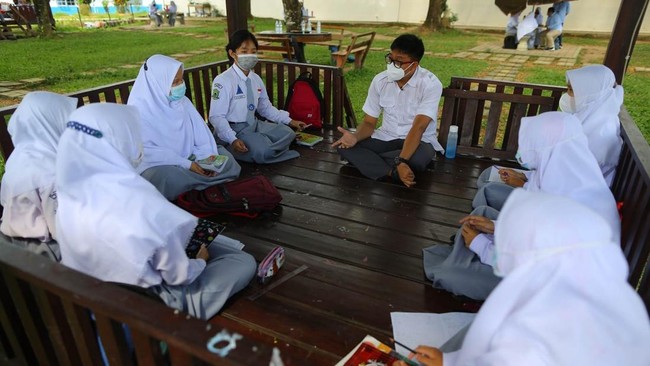
Mornings at the Pemali Boarding School dormitory always begin early. Students wake before sunrise to tidy their beds and prepare for morning activities before heading to school for academic lessons. For them, this routine of early rising is a discipline modelled by their seniors, serving as the foundation for eventually improving their families’ standard of living in their home villages.
Within the dormitory environment, students are provided with the space and opportunity to learn and grow. Through this scholarship-based boarding school programme, children from families of daily labourers, fishermen, and casual workers now have access to education that was previously difficult to reach. The Pemali Boarding School programme, supported by PT Timah—a member of the MIND ID mining industry holding company—has been operational since 2000, reaching areas including Bangka Belitung, Karimun, and Meranti. To date, approximately 952 alumni have benefited from the programme.
Ulul, the Head of Pemali Boarding School, stated that the majority of students come from families with limited economic means. “Many parents were initially hesitant due to cost constraints. They could not imagine their children receiving such educational facilities,” Ulul said in a written statement. However, after understanding that the company provides full support—ranging from education to various coaching programmes—parents have become the primary advocates for their children to participate in the selection process.
As a result, 36 selected students receive full scholarships each year and reside in the dormitory while studying at SMA Negeri 1 Pemali. The selection process involves academic and psychological assessments conducted in collaboration with a team from Padjadjaran University. Ulul emphasised that dormitory coaching focuses on more than just academics; students are also equipped with skills such as public speaking, social media management, and character and leadership strengthening. This training is conducted regularly to help students face challenges outside of school, both in the workforce and in community life. “What we are building is not just academic ability, but also confidence and how they perceive the future,” he added.
The impact of the programme is evident in student achievements. This year, 20 students successfully gained admission to universities through merit-based pathways, while others are undergoing the selection process via entrance exams. Students have also achieved success in Indonesian and English debate competitions at the Bangka Regency level. Furthermore, the long-term impact is even more crucial; many alumni have continued their education or entered the workforce and are gradually beginning to contribute back to their surrounding environments. “They do not only change personally, but they also bring influence to their families and communities. That is what is most palpable,” he said.
According to Ulul, the greatest challenge for students arises during the initial adaptation period, as some have never lived away from their parents and must adjust to a more disciplined learning pattern. “However, that process is what shapes them. Over time, students begin to show change. Those who were initially quiet become bolder in speaking, more confident, and able to follow a more structured learning rhythm,” he explained. For children from coastal and mining areas, this opportunity is not merely about attending school; it serves as a starting point that opens a new future to pursue higher education, assist their families, and view the future through a different lens.