
Access Gates Installed at Malioboro Side Streets in Preparation for Full Pedestrian Zone
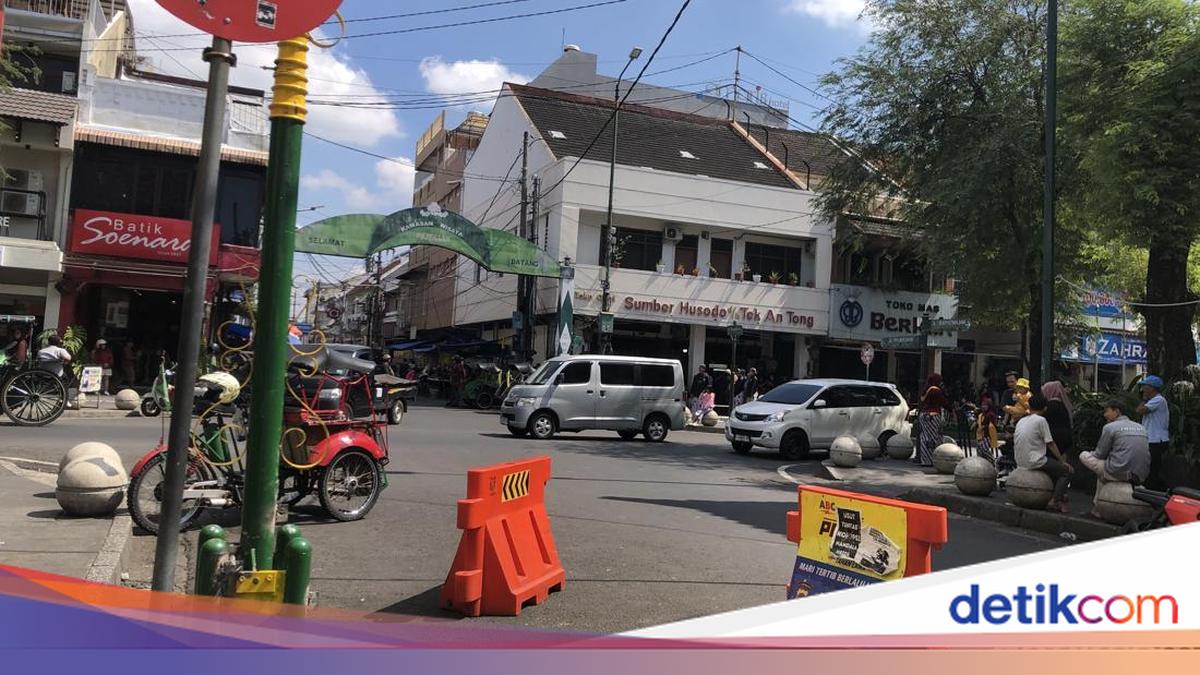
Gate posts have been installed at several access points to the side streets of Malioboro in Yogyakarta. The Yogyakarta Special Region Transportation Agency (Dishub DIY) explained that the gates were installed in preparation for making Malioboro a vehicle-free area, or Malioboro Full Pedestrian. Based on observations, a gate approximately 2 to 3 metres long has been installed at the entrance to Jalan Suryatmajan, on both the north and south sides of the road. The green and yellow gate appears to be unfinished, and similar gates have also been spotted on Jalan Pajeksan. A local parking attendant said the gates seemed to have been installed recently.
When asked for confirmation, Head of Dishub DIY Chrestina Erni Widyastuti stated that the presence of the gates is to prepare for making Malioboro a full pedestrian zone. Erni explained that her agency is currently busy preparing traffic network arrangements, developing buffer zone car parks, improving TransJogja services, regulating logistics distribution, providing pedestrian facilities and access for people with disabilities, and coordinating with government agencies and security forces. “Our focus is not on chasing a percentage of readiness, but on ensuring the entire supporting ecosystem is truly ready so that policy implementation can run effectively, in stages, and without disrupting community activities,” Erni said.
She added that the main principle is that the pedestrian zone must still guarantee the smooth running of public services and security. Therefore, the planned gates are not permanent barriers but part of an access management system whose operation is regulated through standard procedures drawn up jointly with all relevant agencies. Erni explained that in the traffic network arrangement, if the full pedestrian scheme is implemented, vehicles such as emergency vehicles, ambulances, fire engines, and public service vehicles will still be granted access according to operational needs. The mechanism for opening and closing the gates, the timing, and the authorised officers will be determined through joint coordination so that the area’s security is maintained without hindering state duties.
Furthermore, Erni stressed the importance of ensuring that social and economic activities continue to thrive once the full pedestrian zone is implemented, calling this a measure of success beyond simply reducing vehicle numbers. To this end, all aspects from infrastructure to operational schemes are still being refined. The agency continues to involve the police, the military, the city government, and the community to finalise the plans. “We have prepared various mitigation measures, including access arrangements for residents, logistics distribution scheduling through loading and unloading time slots, the provision of drop-off points, service lane improvements, and ongoing communication with the community and business operators,” she explained. “Our approach is people-oriented, so every policy change always considers the needs of those who live, work, and do business in the area. The principle is that we want to reduce the effect of motor vehicles, not the economic activity,” Erni concluded.