
Acceleration of Clean Energy Transition Becomes New Investment Magnet for Indonesia - Green Economy
The government’s policy direction in accelerating the energy transition and commitment to net zero emissions (NZE) has become the primary factor driving the surge in green investment interest in Indonesia.
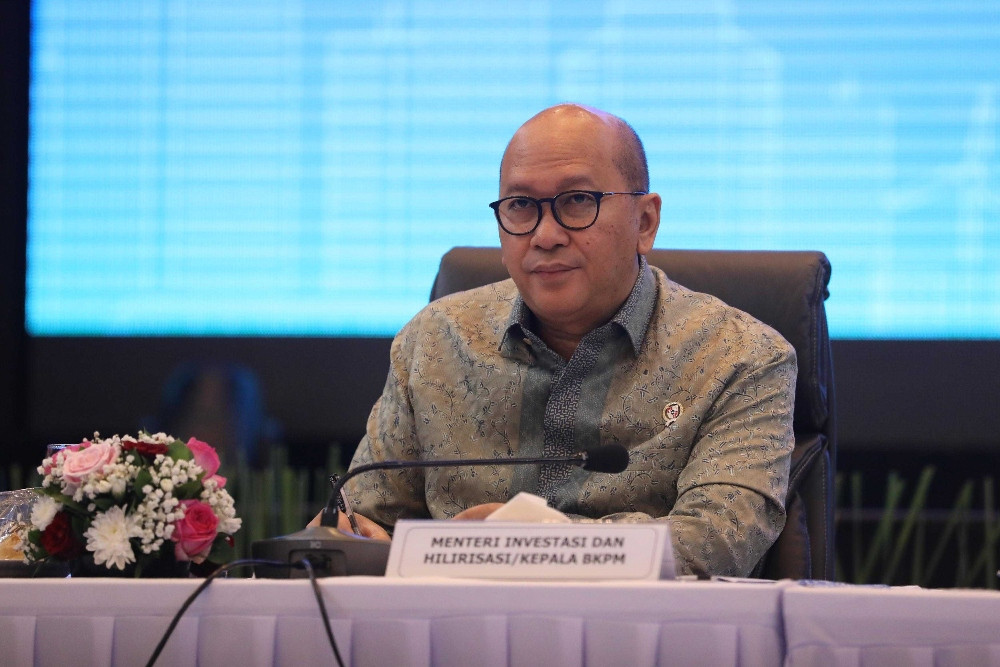
Minister of Investment and Downstreaming/Head of BKPM, Rosan Roeslani, stated that accelerating the NZE target from 2060 to 2050, as targeted by President Prabowo Subianto, serves as a strong signal to global investors. This is accompanied by the acceleration of green economy programmes, which are now a government focus.
This programme is reflected in plans to replace diesel power plants with new renewable energy sources. The government targets the retirement of diesel power plants with a capacity of 13.5 gigawatts (GW), replacing them with solar-powered generation.
According to Rosan, this step aligns with the needs and preferences of foreign investors, who are increasingly emphasising sustainable investments. Green investments are seen not only as providing economic benefits but also positively impacting the environment and quality of life.
“This is certainly in line with investment desires, especially from abroad, because this is an investment that also has a positive impact on life and the environment in the future,” he said during the Q1/2026 Investment Realisation Press Conference, monitored online on Thursday (23/4/2026).
In line with this, Rosan explained that renewable energy projects are beginning to attract concrete investment realisations.
One example is evident in the geothermal sector through an investment from Japan worth around US$900 million in Aceh, which has reached financial closing and begun construction.
Rosan assessed that the alignment between government programmes and investor preferences is a key factor in increasing green investments. In addition to political and economic stability, policy design aligned with global trends strengthens Indonesia’s attractiveness.
“These programmes are in line with their investment appetite. This is also what makes their investments increase,” he said.
On the other hand, the government continues to open opportunities for incentives to accelerate investments in the green sector. Rosan emphasised that incentives will be more selective, particularly for investments that have broad impacts such as job creation and contributions to clean energy.
This policy differs from the previous approach to nickel downstreaming, which was initially driven by large incentives. Currently, incentives will be evaluated in line with the maturity of the industrial ecosystem.
For the renewable energy sector, the government ensures it remains open to providing fiscal support to maintain the momentum of green investments entering the country.
Indonesia’s investment realisation reached Rp498.8 trillion in Q1/2026. This figure equals 24.4% of the 2026 target set at Rp2,041.3 trillion.
In detail, foreign direct investment (PMA) was recorded at Rp250.0 trillion or 50.1% of total investment, growing 8.5% year-on-year (YoY). The rest, domestic investment (PMDN), contributed Rp248.8 trillion or 49.9% of total investment, with 6.0% YoY growth.
By sector, total investment in downstreaming fields in Q1/2026 was recorded at Rp147.5 trillion, growing 8.2% YoY and contributing 29.6% of total investment.
Source: jawawa.id (https://jawawa.id/newsitem/acceleration-of-clean-energy-transition-becomes-new-investment-magnet-for-indonesia-green-economy-1777013662)
Originally published by hijau.bisnis.com (https://hijau.bisnis.com/read/20260423/653/1968776/percepatan-transisi-energi-bersih-jadi-magnet-baru-investasi-ri), translated from Indonesian