
Accelerating Teacher Competency Improvement Requires Comprehensive Strategy
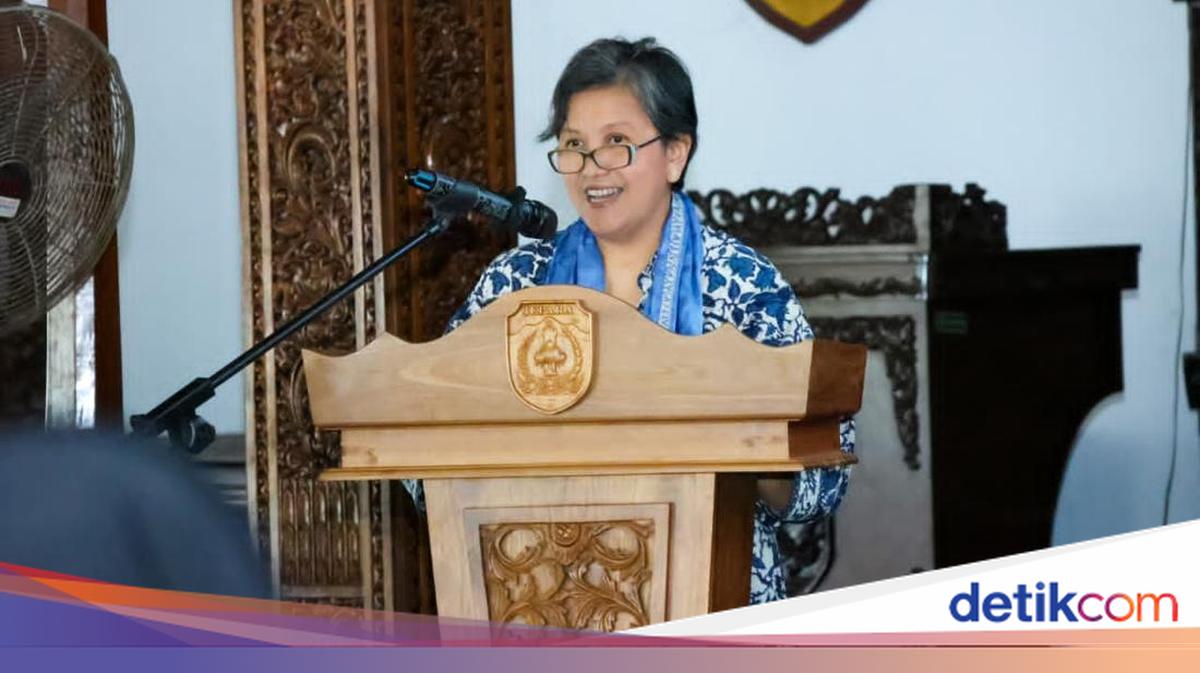
Deputy Speaker of the People’s Consultative Assembly (MPR RI), Lestari Moerdijat, has assessed that efforts to accelerate the strengthening of teacher competence to realise inclusive education must be supported by accurate data and a comprehensive strategy. This is particularly pressing given that the gap between the need for and availability of competent teachers in the field remains very wide.
“At present, the gap between the need for and the availability of competent teachers in the field is still very high, so a comprehensive strategy is needed to accelerate the improvement of teachers’ competence in delivering an inclusive education system,” said Lestari Moerdijat in a statement on Saturday (11 July 2026).
Data from the Ministry of Primary and Secondary Education (Kemendikdasmen) as of September 2025 recorded 363,921 students with disabilities across Indonesia. Of that number, 199,375 students study at 60,910 inclusive education provider institutions (SPPI).
However, she lamented the fact that only around 15% of all SPPI have Special Guidance Teachers (GPK).
“This condition is a serious obstacle to achieving equitable education services. Therefore, efforts to increase the number of teachers capable of educating children with special needs must be realised immediately. This is not only a matter of quantity, but also the quality of competence that must be pursued,” she said.
According to her, accelerating the improvement of teacher competence requires concrete and measurable steps. She fully supports the government programme targeting training for 1,500 teachers across 25 provinces throughout 2026 to reach expert level.
However, she cautioned that this target covers only a small fraction of national needs.
Moreover, according to data from the Directorate General of Teachers and Education Personnel (GTK), 2,663 teachers are currently recorded as meeting the requirements as candidate participants, with the potential addition of up to 5,129 new candidate participants through the equivalence scheme.
“The government must be consistent and aggressive. The training programme launched by Kemendikdasmen is a good first step, but it must not stop there. We need to look at the ideal ratio,” she said.
She stressed that improving teacher competence must not be merely technical in nature. She also reminded that the success of inclusive education is very much determined by teachers’ ability to understand the needs of each child and adapt teaching methods accordingly, not the other way around.
“Teachers are agents of change who must possess critical thinking skills and humanity. They must receive support from all parties so they are able to translate the national education philosophy into inclusive and adaptive learning practice, especially in this digital era,” she concluded.