
Accelerating Solar Power Projects: Land Issues and Regulations Must Be Resolved
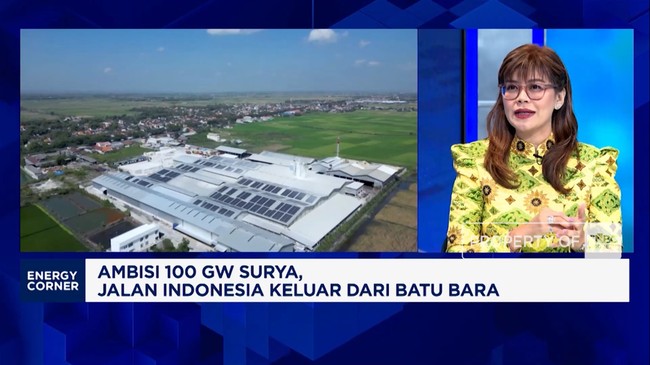
The Chairperson of the Indonesian Solar Energy Association (AESI), Mada Ayu Habsari, expressed optimism regarding Indonesia’s potential to develop new and renewable energy (EBT) through solar power (PLTS), given the nation’s massive solar potential which reaches 3.3 Terawatts.
Nevertheless, several challenges facing solar power projects remain, particularly regarding land availability, necessitating development efforts through floating solar and rooftop solar systems. Furthermore, licensing issues continue to challenge solar energy entrepreneurs, primarily concerning the synchronisation of policies between central and regional governments. Additionally, the small scale of projects in remote areas makes it difficult for businesses to secure access to financing.
Meanwhile, the Program and Policy Manager of CERAH, Wicakso Gitawan, highlighted that Indonesia’s Just Energy Transition Partnership (JETP) programme, intended to accelerate the energy transition and the early retirement of coal-fired power plants (PLTU), has not yet been effective. Launched four years ago, the JETP still faces financing constraints and complexities in planning the early retirement of coal power plants.
It is hoped that the implementation of the second phase of JETP can focus on the early retirement of coal power plants alongside the phase-in of renewable energy. However, a just energy transition must satisfy four variables: distributive justice, procedural justice, recognition justice, and restorative justice.