
Accelerating Halal Certification, Ministry of Home Affairs Strengthens Coordination with Local Governments
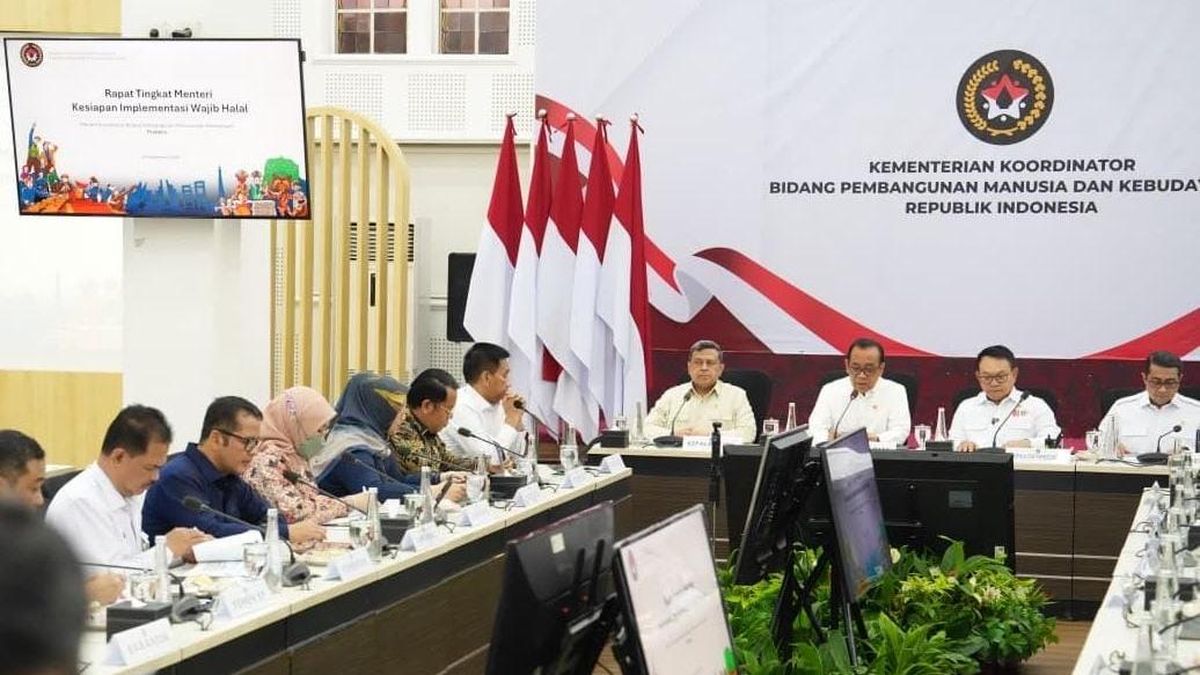
The Ministry of Home Affairs, in collaboration with the Halal Product Assurance Agency (BPJPH), is accelerating the implementation of mandatory halal certification by strengthening coordination with local governments.
Deputy Minister of Home Affairs Akhmad Wiyagus stated that provincial, regency, and municipal governments are requested to take several strategic steps, ranging from socialisation to facilitating halal certification for business actors. This was conveyed by Wiyamin, representing Minister of Home Affairs Muhammad Tito Karnavian, during the Ministerial-Level Meeting on Halal Mandatory Implementation Readiness at the Coordinating Ministry for Human Development and Cultural Affairs in Jakarta.
“Local governments are requested to conduct massive socialisation to the public and business actors regarding the October 2026 Halal Mandate,” Wiyagus said on Wednesday (23/9).
In addition to socialisation, Wiyagus urged local governments to encourage business owners to register their products immediately to obtain halal certificates. Furthermore, local governments can provide support by allocating Regional Revenue and Expenditure Budgets (APBD) to facilitate free halal certification for Micro and Small Enterprises (MSEs), subject to the financial capacity of each region.
“Allocating APBD budgets, particularly from the Cooperatives-MSE and Industry sectors, to facilitate free halal certification for MSEs in accordance with the respective regional financial capabilities,” he added.
According to Wiyagus, local governments play a vital role in overseeing the implementation of halal policies, even though religious matters fall under the absolute authority of the central government. In this context, the Ministry of Home Affairs serves to provide guidance and general supervision to local governments.
“The primary task of the Ministry of Home Affairs is to provide guidance and general supervision to local governments to safeguard the acceleration of halal certification,” he said.
Based on BPJPH data as of 22 September 2026, a total of 4,300,719 halal certificates have been recorded nationally, covering 14,328,755 products across 38 provinces. West Java recorded the highest certification achievement with approximately 1.1 million certificates, followed by Central Java with around 806,000, and East Java with around 690,000.
Meanwhile, several regions still require acceleration, such as West Kalimantan, which recorded 22,605 certificates covering 132,406 products.
Wiyagus noted that while these achievements indicate that the halal certification process is progressing massively, the disparity in achievements between regions must be a shared concern to ensure the implementation of the halal mandate is distributed evenly.
To support this effort, the Ministry of Home Affairs affirmed its readiness to assist local governments in drafting Regional Regulations (Perda) or Regional Head Regulations (Perkada) that align with the specific characteristics of each region.
Source: jawawa.id (https://jawawa.id/newsitem/accelerating-halal-certification-ministry-of-home-affairs-strengthens-coordination-with-local-governments-1790168192)
Originally published by CNN Indonesia (https://www.cnnindonesia.com/nasional/20260923180838-25-1407397/percepat-sertifikasi-halal-kemendagri-perkuat-koordinasi-dengan-pemda), translated from Indonesian