
Accelerating Downstream Processing Seen as Key to Achieving Energy Sovereignty
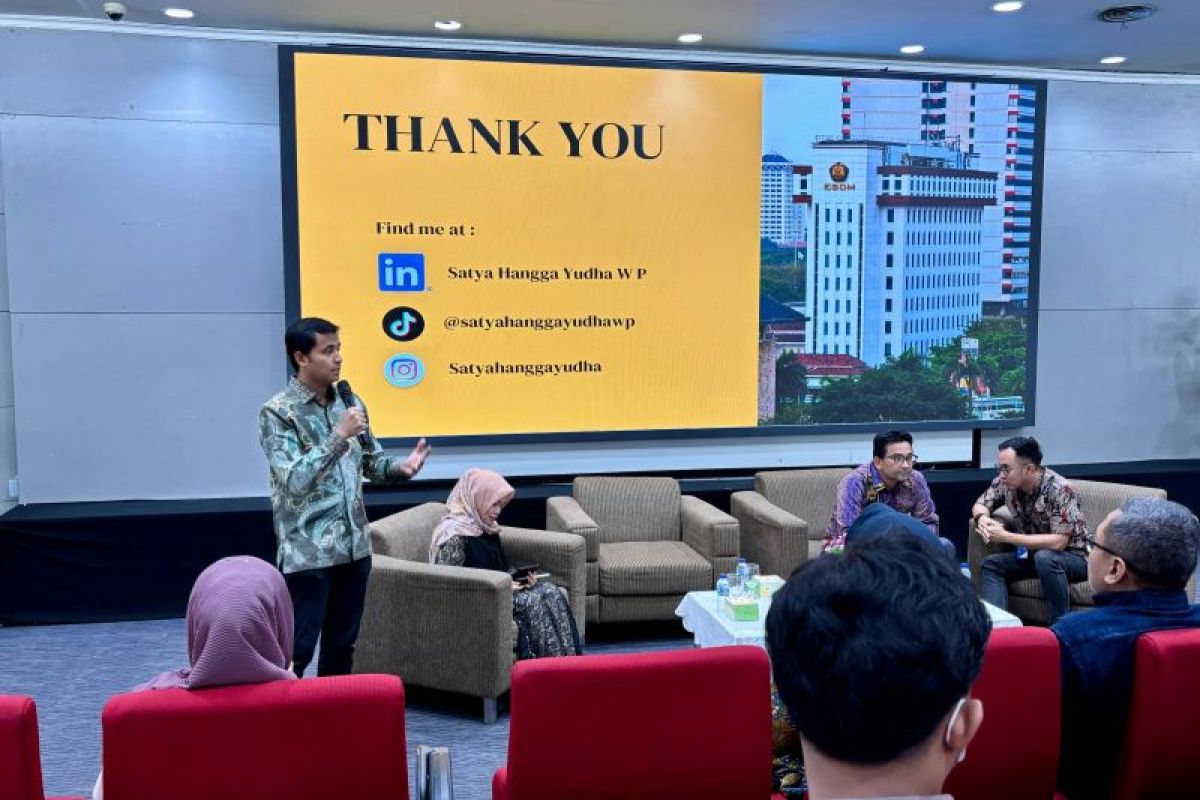
An expert from the Ministry of Energy and Mineral Resources (ESDM), Satya Hangga Yudha Widya Putra, has stated that accelerating downstream processing is a concrete step towards achieving energy sovereignty in the country. Speaking in Jakarta on Tuesday, he said Indonesia must ensure that its natural resources are managed domestically to create added value for the nation, rather than merely exporting raw materials. “Accelerating downstream processing through the Downstream Processing and National Energy Security Task Force, led by Minister of Energy and Mineral Resources Bahlil Lahadalia, is our concrete step to be sovereign in energy,” Hangga said during a public lecture before students of Pertamina University and Budi Luhur University in Jakarta. The public lecture, organised by the Indonesian Association of International Relations Studies (AIHII) in cooperation with the International Relations Study Programme of Pertamina University, presented national energy experts and practitioners to examine Indonesia’s strategic position in facing geopolitical escalation in the Middle East. In his presentation, Hangga stressed that the energy sector is currently in a very dynamic state. With an economic growth target of 8 percent and a population reaching 280 million, national energy consumption is certain to continue increasing significantly. “Energy security is the main pillar of Astacita number 2, while number 5 focuses on downstream processing,” he said. Hangga also highlighted the challenge of national oil lifting. Although Indonesia once reached a production peak of 1.5 million barrels per day in 1977, the current figure stands at 600,000 barrels per day due to mature fields. As a solution, the government continues to optimise oil absorption from community wells and cut diesel imports through the Balikpapan Refinery RDMP. However, the dependence on imported LPG, which still reaches 80 percent, remains a priority that must be intervened through pipe gas substitution and CNG development for the industrial sector. Answering students’ questions about the impact of the closure of the Strait of Hormuz on subsidised fuel prices, Hangga said that as a non-aligned nation, Indonesia continues to expand cooperation with various countries outside the Middle East to diversify energy sources. The government has also guaranteed that until the end of 2026, energy stocks will remain secure and subsidised fuel prices will be kept stable to protect public purchasing power, although the dynamics of the rupiah exchange rate against the dollar are closely monitored. On that occasion, Hangga invited the younger generation, particularly students, to proactively contribute through research and policy studies. “The future of national energy is in the hands of young people, and there must be no sectoral ego. We need cross-generational synergy between regulators, academics, and business actors to solve the challenges of national energy sovereignty,” he stated.