
Accelerating Connectivity in Papua
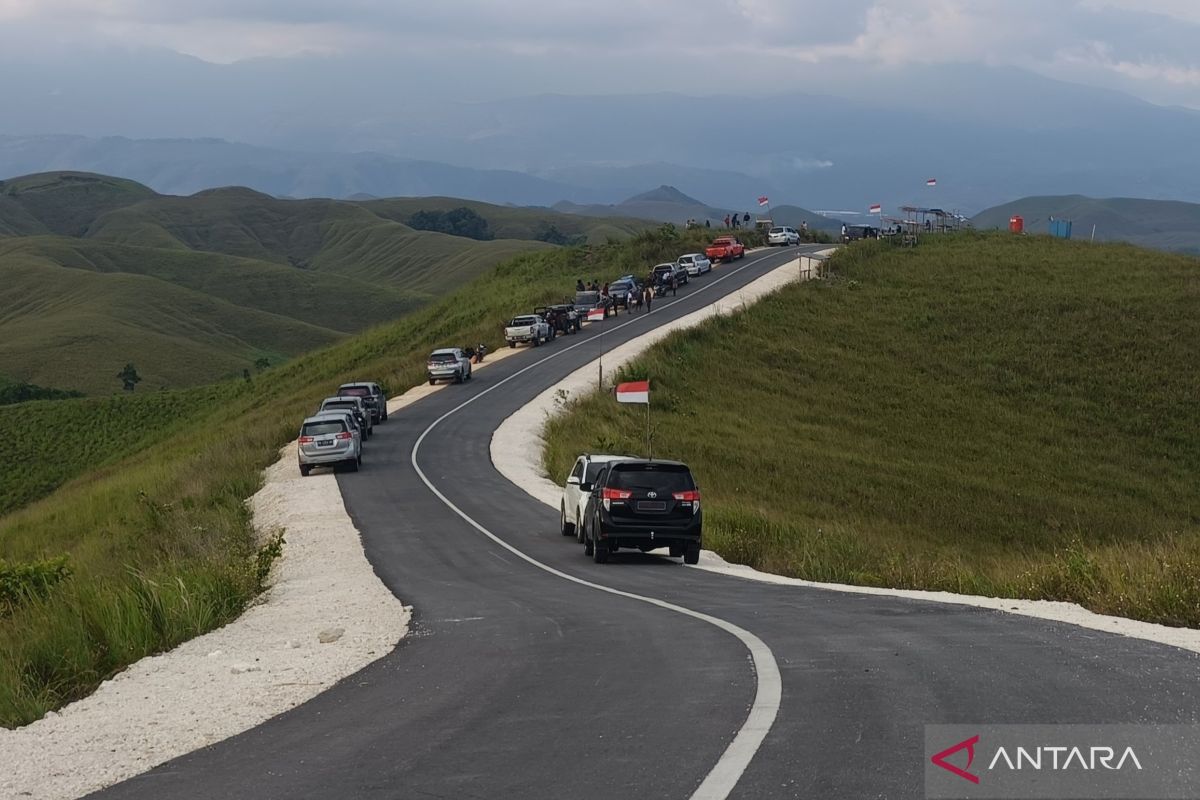
The central government, through relevant ministries, is currently focusing on accelerating development in Papua. One of the primary focuses is the construction and improvement of infrastructure, which is being continuously pushed by the Coordinating Ministry for Infrastructure and Regional Development.
Road construction in Papua is intended not only to improve inter-regional connectivity but also to serve as a means for the community to communicate their welfare conditions to the government. Furthermore, development in Papua requires special attention, given that the region currently comprises six provinces and 42 regencies/cities facing diverse geographical challenges and developmental needs.
Infrastructure development through the Regional Road Presidential Instruction (IJD) programme by the central government in Jayapura Regency serves as a prime example. The Skory-Puay road section, connecting the Kemtuk and East Sentani Districts, has been completed by the Jayapura National Road Implementation Office, providing direct benefits to the local community.
In this project, road improvements were carried out over a length of 7.7 kilometres with a width of approximately 5.5 metres and a five-centimetre asphalt thickness. Additionally, 11 bridges along the road section were rehabilitated. This signifies that infrastructure development in Jayapura Regency is not merely about physical construction but about delivering direct benefits to the lives of the people.
The Coordinating Minister for Infrastructure and Regional Development, Agus Harimurti Yudhoyono (AHY), emphasised the importance of road construction connecting various regions in Papua to ensure that community economic activities flourish through adequate road access, increased mobility, and expanded business opportunities.
This road development has had a tangible impact on community mobility, which previously faced limited access. Travel times that previously took around 40-45 minutes, and were sometimes impassable without off-road motorcycles, can now be completed in approximately 15 minutes.
“This means the reduction in distance or travel time can greatly assist the community in their daily activities, including trade, shopping, farming, as well as for schoolchildren and others,” said AHY.
Collaboration between the central and regional governments in accelerating Papua’s development—including resolving spatial planning and land issues, as well as spatial arrangement—requires special oversight to prevent overlaps that could hinder development, including issues related to customary land.
For the central government, development could be halted or obstructed if issues arise regarding regional spatial planning caused by unclear land or soil status. Therefore, the central and regional governments must work together to identify problems, gather input, and find solutions for various developmental challenges in Papua.
On the other hand, the acceleration of development in Papua must continue to prioritise environmental sustainability. The vast natural resources of the ‘Land of the Cendrawasih’ must provide maximum benefit for the prosperity of the people without through exploitation that damages the environment.
This underscores the commitment of both central and regional governments to continue honouring Papua by not damaging the environment.
The Coordinating Ministry for Infrastructure and Regional Development, together with the provincial governments across Papua, held a meeting at the Papua Governor’s Office to accelerate infrastructure development, connectivity, and regional development in Papua.
In this coordination meeting, the central and regional governments also agreed on the importance of cross-sectoral consolidation by unifying targets, data, policies, programmes, and development budgets.
Budget availability remains a primary constraint in realising large-scale infrastructure projects, such as road construction spanning hundreds or even thousands of kilometres. Nevertheless, the government is committed to continuing the acceleration of infrastructure development in Papua despite national budget limitations.
Establishing priority scales is not an easy task, considering that development needs are widely dispersed across Indonesia, including the six provinces and 42 regencies/cities in Papua. In addition to road and bridge infrastructure, the central government is also committed to accelerating development in Papua through the improvement of human resource (HR) quality.
For the government, improving basic infrastructure, such as housing and sanitation, is crucial to boosting the standard of living for local communities. Furthermore, the education and health sectors are also primary focuses to strengthen human resource capacity in Papua. This programme will be realised through several strategic steps.
Papua Governor Matius Fakhiri emphasised that regional development is fundamental to optimising regional resources oriented towards development. Consequently, the regional government expects the central government to strengthen infrastructure development support in Papua.
The construction of roads and transport networks connecting regional centres with remote areas is not only related to infrastructure but also serves as a gateway to the equitable distribution of education, health, and community economic activities.
To accelerate development and reduce inter-regional disparities, the main strategic framework includes accelerating connectivity, equalising basic services, developing new growth centres, and implementing affirmative and supportive policies.
Strengthening Services
Infrastructure development in Papua is not only oriented towards project completion but is also capable of opening connectivity and strengthening services to communities in areas that have previously faced limited access.