
Accelerating Bioethanol Development, PNRE Prepares Multi-Feedstock Strategy
PT Pertamina New & Renewable Energy (Pertamina NRE) is preparing a multi-feedstock, multi-generation, and multi-region strategy to accelerate national bioethanol development. This move is intended to support bioethanol blending programmes for petrol-based fuels.
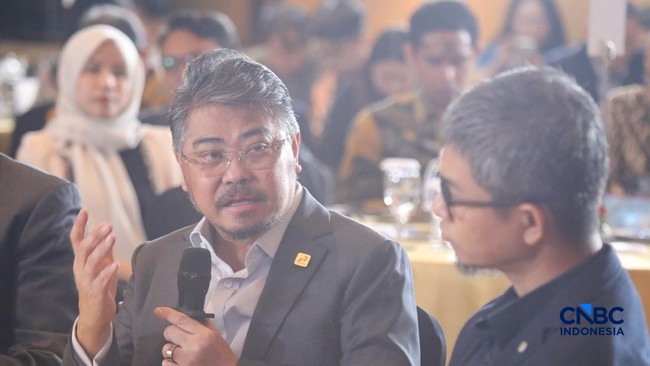
John Anis, President Director of PT Pertamina NRE, stated that bioethanol development cannot rely solely on a single type of raw material. He noted that the current availability of molasses as a primary feedstock is far below what would be required if Indonesia implements E10 or E20 ethanol blends.
“Following the success of B50, we certainly want to replicate that success with ethanol. Although the journey is long, we are not giving up. Our approach involves three strategies: first, multi-feedstock; second, multi-generation; and third, multi-region,” said John during the CNBC Indonesia Energy Forum in Jakarta.
He explained that molasses is the most mature feedstock because it is a byproduct of the sugar industry, meaning it does not compete directly with food supplies. However, its production capacity remains limited.
On the other hand, national bioethanol demand is expected to be much larger. To support the implementation of E10 blends, demand is estimated to reach between 10 million and 20 million kilolitres per year, meaning molasses alone will be insufficient.
Consequently, Pertamina NRE is expanding its bioethanol feedstock sources. One such effort involves a partnership with PT Sinergi Gula Nusantara (SGN) to build a molasses-based bioethanol facility at the Glenmore Sugar Factory in Banyuwangi Regency, East Java, with an estimated production capacity of 3ly 33,000 kilolitres per year.
“We are collaborating with SGN, which will supply molasses to produce 33,000 kilolitres per year as our first molasses-based facility. We plan to add at least five more: one or two in East Java, one in Central Java, one in Lampung, and two in Sulawesi,” he added.
In addition to molasses, Pertamina NRE is developing cassava-based bioethanol through the reactivation of a factory in Lampung, which has a capacity of approximately 50,000 to 60,000 kilolitres per year.
The company is also developing sweet sorghum in collaboration with PTPN in Lampung. Furthermore, Pertamina NRE is currently testing a sorghum variety resulting from Japanese research, which is claimed to have up to three times higher productivity.
“We are also exploring second-generation bioethanol, using the sorghum stalks. Why are we moving towards second-generation? Because first-generation feedstock prices sometimes compete with food crops, making it expensive and uneconomical. In contrast, second-generation uses waste, making the feedstock much cheaper,” he concluded.