
Academics Warn of Dangers as Military Professionalism Erodes
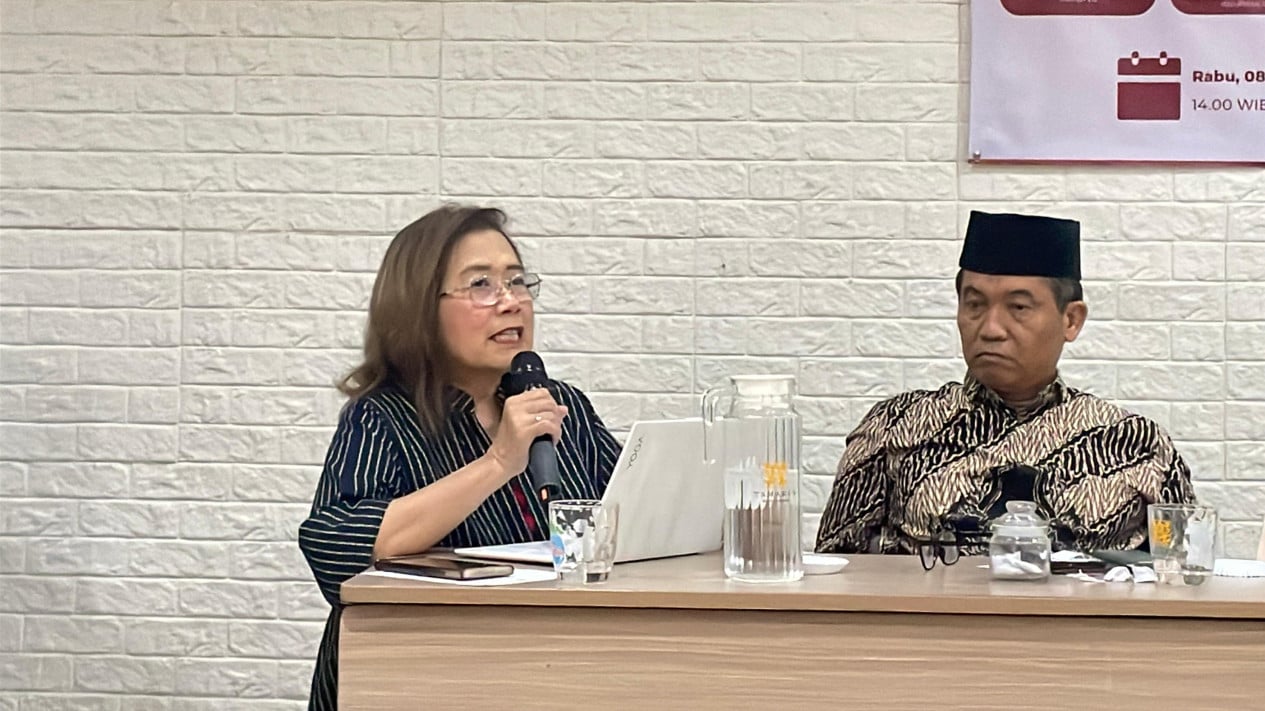
A number of academics and researchers have highlighted the danger of a new style of coup if military professionalism fades. The issue emerged during a public discussion titled ‘Military, Business, and Politics: Lessons from Military Coups in Various Countries’ in Central Jakarta on Wednesday, 8 July 2026.
The Head of the Indonesia 2045 Laboratory (LAB 45), Jaleswari Pramodhawardani, assessed that the more tangible threat to Indonesia today is the control of the rules of the game by certain interest groups through legal channels, such as legislation and commissioner seats. ‘The threat to Indonesia actually operates within a seemingly stable system, through legitimate legal instruments,’ Jaleswari stated. She cited the ratification of the National Police Law No. 5/2026 and the revision of the Indonesian National Armed Forces (TNI) Law No. 3/2025, which broadens the scope for active personnel to hold civilian posts, as a normalisation of military involvement in the bureaucracy.
Echoing this sentiment, Public Policy and Governance Researcher Gian Kasogi presented data indicating that since 2014, Indonesia has entered a phase of expanding non-defence roles. Based on a risk matrix he studied, military involvement in politics and democracy falls into a high-risk zone, potentially weakening civilian supremacy and checks and balances mechanisms. Gian further noted that dozens of active and retired TNI officers currently hold strategic positions, ranging from ministers and agency heads to commissioner seats in major state-owned enterprises such as PT Timah, PT PLN, PT Telkom, and MIND ID. ‘The civil-military relationship in Indonesia has shifted from a paradigm of demilitarisation towards institutional transformation that tests the quality of democracy and good governance,’ he explained.
Meanwhile, Professor Ibnu Sina Chandranegara, a constitutional law expert from the University of Muhammadiyah Jakarta, highlighted structural loopholes left open by civilian authorities. He noted three main post-Reformasi residues that still harbour tension, including the fact that the mandate under the TNI Law of 2004 to fully transfer military businesses to the state within five years has yet to be completely audited and transparently executed.